Aa
  • Read, Watch, Listen
  • TJI Series
  • Community Action
  • Events
  • Zedi
Follow us and continue the conversation
  • LinkedIn
  • Instagram
  • FaceBook
  • X
  • YouTube
Test yourself with the TJI Quiz!

Adjust size of text

Aa

Follow us and continue the conversation

  • LinkedIn
  • Instagram
  • FaceBook
  • X
  • YouTube

Your saved articles

You haven't saved any articles

What are you looking for?

Original reporting, insightful analysis and diverse views, delivered straight to your inbox

  • LinkedIn
  • Instagram
  • FaceBook
  • X
  • YouTube
Your support fuels our mission to inform, entertain and inspire.

The Jewish Independent is bound by the Standards of Practice of the Australian Press Council. If you believe the Standards may have been breached, you may approach The Jewish Independent or make a complaint to the Australian Press Council in writing at www.presscouncil.org.au. The Council may also be contacted on 1800 025 712.

  • Our Story
  • Contact us
  • Our Team
  • Support us
  • Guidelines
  • Pitch your idea
  • Republishing us
  • Community Action
  • Our Awards
  • LinkedIn
  • Instagram
  • FaceBook
  • X
  • YouTube
Aboriginal FlagTorres Strait Islanders Flag

The Jewish Independent acknowledges Aboriginal and Torres Strait Islander peoples as the Traditional Owners and Custodians of Country throughout Australia. We pay our respects to Elders past and present, and strive to honour their rich history of storytelling in our work and mission.

© The Jewish Independent 2026All Rights Reserved
Website design and development by Your Creative, MelbourneTerms & ConditionsPrivacy Policy
HomeRead, Watch, ListenIsrael
Israel Hamas WarNewsIsrael

Only 19% of Israeli Jews now believe a Palestinian state can peacefully coexist with Israel

Ron Kampeas
Print this
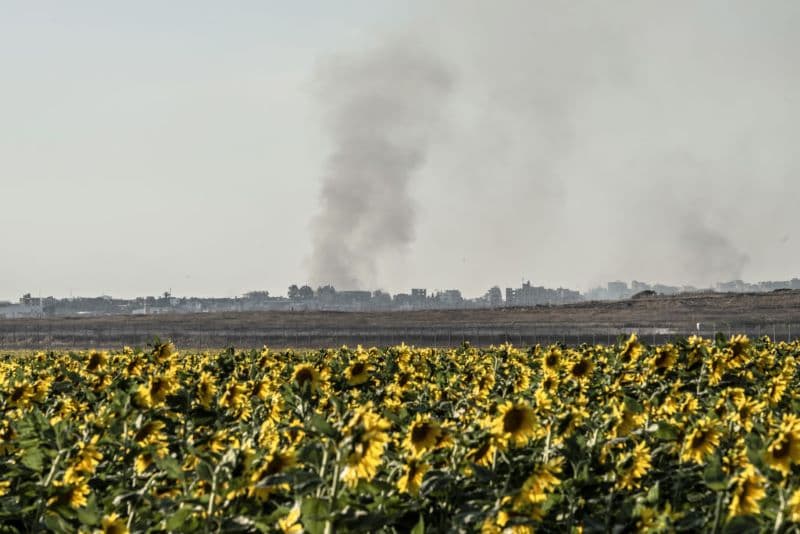
Sunflowers in front of flat ground with buildings and smoke

Rising smoke from Gaza is seen from the border near Rafah last week (Mostafa Alkharouf/Anadolu via Getty Images)

Published: 4 June 2024

Last updated: 4 June 2024

JTA - The share of Israeli Jews who believe an Israeli and a Palestinian state can peacefully coexist has plummeted since Oct. 7, according to a new survey.

The figure of 19%, reported in a study published Thursday by the Pew Research Center, was the lowest since Pew started surveying Israelis in 2013. It is down from 32% in a survey released just weeks before the war broke out.

In 2013, according to Pew, nearly half of Israeli Jews — and a majority of Israelis overall — supported a two-state solution. In 2005, another polling firm found that most Israeli Jews supported the establishment of a Palestinian state.

This year, a quarter of Israeli adults overall — including nearly half of Israeli Arabs  — believe a Palestinian state and Israel can peacefull exist side-by-side. That takeaway is one of a number from Thursday’s Pew survey that show Israelis hunkering down for more conflict as the Israel-Hamas war is about to enter its eighth month. The survey of roughly 1,000 Israeli adults was taken in March and April — before Israel’s invasion of the Gaza city of Rafah and other recent developments — and has a margin of error of 4%.

The survey also shows wide gaps between Jewish and Arab respondents. Among Arab Israelis, for example, 74% say “Israel’s military response against Hamas in Gaza has gone too far.” Only four percent of Jewish Israelis agree.

And while 76% of Jewish Israelis say Israel will achieve its goals in the war, only half as many Arab Israelis, 38%, say the same.


But Israeli Arabs and Jews share some of the same concerns about the war: 61% of both groups are worried about the war spreading to other fronts — a concern that has been top-of-mind for many in the region and beyond after constant exchanges of fire between Israel and Hezbollah in Lebanon, the first direct attacks between Iran and Israel and violence on other fronts.

And at a time when Tzachi Hanegbi, Israel’s national security adviser, said he anticipated the war will last until the end of this year, the poll found that significant majorities of both groups (77% of Arabs, 66% of Jews) are worried about the war “lasting a long time.”

The poll also measured one of the most vexing and divisive questions of the war: Who should control Gaza when the battles are over. The lack of a detailed plan for a postwar scenario has led to rifts within Israel’s government as well as between Israel and the United States.

The poll found that 40% percent of Israelis, including half of the Jewish respondents, believe that Israel should continue to control the territory in a postwar scenario, while 18% believe it should be run by a version of the Palestinian Authority — which governs Palestinian population centers in the West Bank but which Netanyahu has shut out. Meanwhile, 14% say people who live in Gaza should decide who governs them. Nine percent of Arab Israelis, and zero percent of Jewish Israelis, say Hamas should continue to rule the enclave.

In addition to being taken before the launch of the Rafah operation, the poll was conducted before other landmark developments of recent weeks — including a prosecutor for the International Criminal Court announcing he was seeking Netanyahu’s arrest and President Joe Biden saying that he would suspend delivery of some large bombs to Israel in a bid to influence the scope of Israel’s Rafah invasion.

But even before those events, the poll showed disapproval of Biden’s handling of the war rising in Israel. Biden was broadly popular among Israelis for his embrace of the country following Oct. 7, but by the time the poll was taken, 60% percent of Israeli Jews — and 86% of Israeli Arabs — said they did not approve of how he was handling the war.

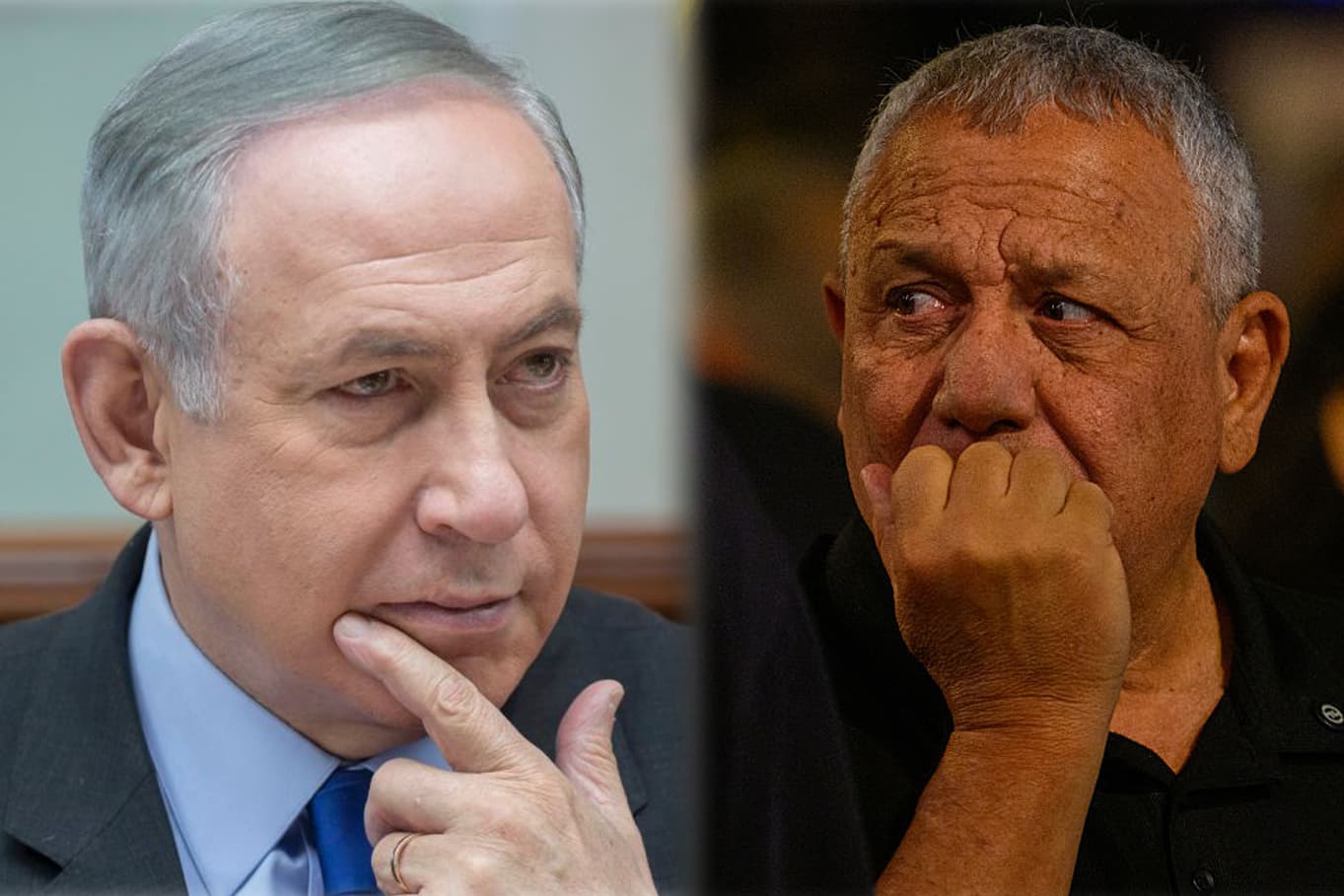
Also unpopular was Netanyahu who, the poll found, had a lower favorability rating than at any point in the 11 years Pew has asked the question, at 41%. The two other leaders in his war cabinet, Defense Minister Yoav Gallant and former Defense Minister Benny Gantz, fared better, with Gantz at 51% and Gallant at 61%. A more recent poll shows that Netanyahu’s popularity, which nosedived after Oct. 7, is recovering among the Israeli public.

You might also like
  • Ten ways to reflect, repair and renew this Yom Kippur
    Hannah Lundberg
  • On despair: A reflection after watching ‘Cancelled’
    Deborah Stone
  • Ash Densham: Building community through Humanistic Judaism
    Gideon Cohen
logomark.67a07ee3
We believe in the free flow of information

Republish our articles for free, online or in print, by using our Creative Commons licence

You might also like

    Btselem
    NewsIsrael

    ‘Israel is systemically eliminating Palestinian collective life’:  Israeli human rights report

    Deborah Stone 1
    Penny Wong
    DebateAustralia

    Sanctions must influence, not just perform disapproval

    Adam Slonim
    Protest against settler violence in Jerusalem
    DebateAustralia

    Sanctioning settlements is a defence of Israel, not an attack

    Elisheva Madar 2

About the author

Ron Kampeas

Ron Kampeas

Ron Kampeas is JTA's Washington Bureau Chief. He worked previously at The Associated Press, where he spent more than a decade in its bureaus in Jerusalem, New York, London and, most recently, Washington.

More from the author

NewsWorld

Jewish voters favor Kamala Harris over Donald Trump 68% to 25%: poll

NewsIsrael

Israel rescues four hostages, including Noa Argamani

AnalysisIsrael

Images of death and devastation in Rafah rattle some of Israel’s most ardent defenders

Comments

No comments on this article yet. Be the first to add your thoughts.