Aa
  • Read, Watch, Listen
  • TJI Series
  • Community Action
  • Events
  • Zedi
Follow us and continue the conversation
  • LinkedIn
  • Instagram
  • FaceBook
  • X
  • YouTube
Test yourself with the TJI Quiz!

Adjust size of text

Aa

Follow us and continue the conversation

  • LinkedIn
  • Instagram
  • FaceBook
  • X
  • YouTube

Your saved articles

You haven't saved any articles

What are you looking for?

Original reporting, insightful analysis and diverse views, delivered straight to your inbox

  • LinkedIn
  • Instagram
  • FaceBook
  • X
  • YouTube
Your support fuels our mission to inform, entertain and inspire.

The Jewish Independent is bound by the Standards of Practice of the Australian Press Council. If you believe the Standards may have been breached, you may approach The Jewish Independent or make a complaint to the Australian Press Council in writing at www.presscouncil.org.au. The Council may also be contacted on 1800 025 712.

  • Our Story
  • Contact us
  • Our Team
  • Support us
  • Guidelines
  • Pitch your idea
  • Republishing us
  • Community Action
  • Our Awards
  • LinkedIn
  • Instagram
  • FaceBook
  • X
  • YouTube
Aboriginal FlagTorres Strait Islanders Flag

The Jewish Independent acknowledges Aboriginal and Torres Strait Islander peoples as the Traditional Owners and Custodians of Country throughout Australia. We pay our respects to Elders past and present, and strive to honour their rich history of storytelling in our work and mission.

© The Jewish Independent 2026All Rights Reserved
Website design and development by Your Creative, MelbourneTerms & ConditionsPrivacy Policy
HomeRead, Watch, ListenAustralia
FeatureAustralia

Parents pull children from Melbourne Jewish schools over special needs failure

Nomi Kaltmann
Print this

Published: 21 July 2023

Last updated: 5 March 2024

Parents report moving their children to public schools because Jewish schools were unwilling or unable to accommodate learning disabilities or individual needs.

A few weeks ago, I set out to write a piece that looked at the cost of Jewish school fees and the fact that Melbourne now has an independent fee assessment board which offers subsidised places for children whose families are struggling to afford the fees. I was curious to know whether this board was being well received by parents.  

When I asked on social media for public school parents to tell me their thoughts on Jewish schooling, I expected most of the responses would talk about affordability. A large number of people responded to my post. But what I found was much more disturbing.

They had pulled their children out of Jewish schools and enrolled them in public schools due to the lack of flexibility or accommodation that Jewish schools in Melbourne had shown for students with special needs or their kids who didn’t fit into a box. The parents were not limited to one particular Jewish school, or age group, and had pulled their children out in equal numbers of both primary and high school.

Not surprisingly, they did not want to identify themselves because of the sensitivity of the subject. But their responses were troubling. As one mother who got in touch via my J-Seek post told me, “My child is non-binary, and the [Jewish school] wasn’t very safe. There was major bullying that didn’t get addressed properly. There was a lot of physical and emotional abuse.”

The parents were not limited to one particular Jewish school, or age group, and had pulled their children out in equal numbers of both primary and high school.

Another mother told me: “My child is dyslexic. The dual curriculum was extremely hard. So hard. The public school was a more supportive environment. My kid didn’t fit into the box. Jewish schools weren’t for them.”

It’s no secret that Jewish schools place lots of emphasis on Year 12 academic results, with advertisements taken out each year highlighting their exceptional students and academic accomplishments.

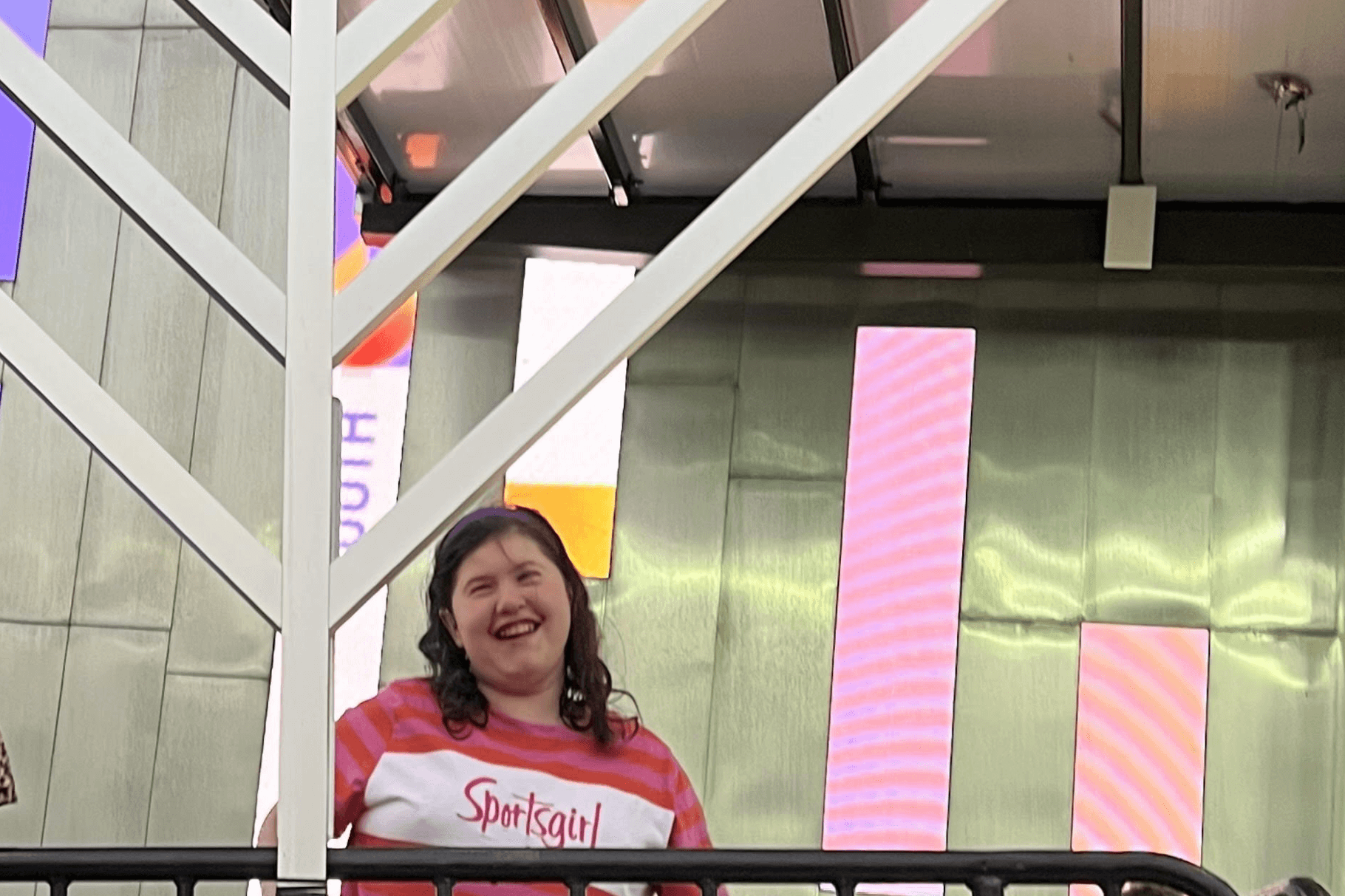
But for many Jewish parents, the lack of accommodation for their children within the Jewish school system can be heartbreaking.

Across my interviews, parents went to great lengths to describe how they had really wanted to send their children to Jewish schools but had not been able to do so because their children had additional needs that Jewish schools were not prepared to deal with.

“I had a lot of problems with Jewish schools who are discriminatory,” said one mother. “My son has a learning disability and needed some further assistance. It wasn’t something that the schools were willing to accommodate in any shape or form.”

Yet another parent of a child with additional needs told me: “[The Jewish School] was very very difficult to deal with. They were a very unsupportive environment. It was very isolating for my son.” After contacting two Jewish schools and being made to feel that her son, due to his learning disability, was too “problematic” to accept, the mother decided to enrol him in a public school.

“Why is it so hard to give my child a Jewish education?” she asked me. “It was such an awful experience. I’m happy he is doing well [at his public school.] They are so supportive … they are just amazing. Outside of Jewish schools, I never had such issues.”

What does it say about the inclusivity of our community if children who are members of the LGBQTI+ community are made to feel unwelcome in Jewish schools or children with learning disabilities are excluded from a Jewish education?

Sometimes children were excluded because their disability was considered too challenging for the school to accommodate. Other times, parents were made to feel bad about the fact their child had additional needs.

After interviewing many parents, I discerned a level of consistency across all their stories about how the exclusion of their children occurred. Sometimes their children were excluded because their disability was considered too challenging for the school to accommodate, despite public schools, with much less funding available, being happy to include and educate their child.

Other times, parents were made to feel bad about their children and the fact they had additional needs. As one parent told me, “They asked me to show [allied health] reports and said, maybe we would take him, but we would have to consider it really carefully, making me feel really bad about my kid.”

Parents revealed that when their children were bullied, many of the Jewish schools were unable to stop the bullying. This was especially clear in discussions with Orthodox families who have children who are members of the LGBQTI+ community. Some of the more religious Jewish day schools in Melbourne were either unwilling or unsure about how to handle the bullying and gave the impression that they almost preferred that these “problem” children left their schools.  

While Orthodox families were open about their LGBQTI+ children feeling unwelcome at Orthodox Jewish schools, the problem was not limited to that cohort. Parents with LGBQTI+ children at non-Orthodox Jewish day schools said their children also experienced bullying.

As one parent told me, “[The Jewish school] we were at, was the worst school for bullying. At public school, my kids haven’t had any issues.”

Now, I am not suggesting that these stories indicate a large percentage of students at Jewish schools. Many Jewish schools in Melbourne do their best to include children of all backgrounds and identities.

Posting in an open forum like J-Seek means that I was more likely to attract parents with a specific gripe against a Jewish school than those parents who are satisfied with their child’s education in a Jewish school. After all, the former group have already pulled their children out. I also understand that the dozen parents that I spoke to are not necessarily indicative of widespread homophobia and exclusion: but in a close-knit community, if there is just one family with a story like this, it is awful and life-changing for parents and child.

All the families I spoke to knew of other families who had experienced similar discrimination and bullying within a Jewish school.

If we agree to tolerate bullying and exclusion against our most vulnerable students in our Jewish schools, what message does that send to these members of our community? Globally, Jewish communities are known as being tightknit and caring. And yet, in a dozen interviews I was shocked at the exclusion that parents described occurring in our schools.

All the families I spoke to knew of other families who had experienced similar discrimination and bullying within a Jewish school.

If we want to do better, we must start to consider what we accept as a community. No family wants their child to feel alone and unloved, with their child unworthy of being educated at a Jewish school.

In the 21st century, attitudes have changed. We understand that LGBQTI+ persons deserve to feel respected and safe in all their environments, especially at school. Students with additional learning needs deserve access to education. While many of our schools are excellent in both areas, there is clearly room for improvement.

If the Jewish community is to retain its reputation for caring for all its members, our schools need to do more to protect their most vulnerable students.

READ MORE

Wake up, community leaders: you can get a good Jewish education in a state school (The Jewish Independent)

Photo: Students at Glen Eira College, which has a large and growing number of Jewish students.

You might also like
  • Antisemitism, homophobia and a radical response to both
    Dennis Altman
  • Facing a new year with the knowledge life can be better
    The Jewish Independent
  • Was the barmi a shemozzle? How Australians use Jewish words 
    Caroline Hendy & Emma Breslow
logomark.67a07ee3
We believe in the free flow of information

Republish our articles for free, online or in print, by using our Creative Commons licence

You might also like

    Generation change Template
    Generation ChangeInterviewAustralia

    Ash Densham: Building community through Humanistic Judaism

    Gideon Cohen
    Tame
    Australia

    Tame apologises – but with little grace

    Deborah Stone 1
    jiff26-cancelled.jpg
    ReflectionArts & Culture

    On despair: A reflection after watching ‘Cancelled’

    Deborah Stone

About the author

Nomi Kaltmann

Nomi Kaltmann

Nomi Kaltmann is an Australian lawyer and journalist. Her writing has appeared in major Australian and international publications including Crikey, Griffith Review, Mamamia, Tablet Magazine, The Australian Financial Review, The Daily Beast, The Forward, The Guardian, The Jewish Telegraphic Agency and The Spectator. She regularly appears on radio and podcasts to discuss Australia’s Jewish community, including NPR (USA), CBC (Canada), LBC (London), Call Me Back, Unholy: Two Jews on the News, SBS and The Times of Israel. An influential Orthodox feminist leader and founding president of the Jewish Orthodox Feminist Alliance (JOFA Australia), she is a sought-after speaker on religion, interfaith and contemporary Jewish life.

More from the author

OpinionAustralia

Mind the mentality: not every rejection is antisemitism

OpinionAustralia

Cancellation backfires but we are at it again

OpinionWorld

From NY to Melbourne, local politicians are whipping up hate 

ReflectionAustralia

I have lost faith in our multicultural institutions