Aa
  • Read, Watch, Listen
  • TJI Series
  • Community Action
  • Events
  • Zedi
Follow us and continue the conversation
  • LinkedIn
  • Instagram
  • FaceBook
  • X
  • YouTube
Test yourself with the TJI Quiz!

Adjust size of text

Aa

Follow us and continue the conversation

  • LinkedIn
  • Instagram
  • FaceBook
  • X
  • YouTube

Your saved articles

You haven't saved any articles

What are you looking for?

Original reporting, insightful analysis and diverse views, delivered straight to your inbox

  • LinkedIn
  • Instagram
  • FaceBook
  • X
  • YouTube
Your support fuels our mission to inform, entertain and inspire.

The Jewish Independent is bound by the Standards of Practice of the Australian Press Council. If you believe the Standards may have been breached, you may approach The Jewish Independent or make a complaint to the Australian Press Council in writing at www.presscouncil.org.au. The Council may also be contacted on 1800 025 712.

  • Our Story
  • Contact us
  • Our Team
  • Support us
  • Guidelines
  • Pitch your idea
  • Republishing us
  • Community Action
  • Our Awards
  • LinkedIn
  • Instagram
  • FaceBook
  • X
  • YouTube
Aboriginal FlagTorres Strait Islanders Flag

The Jewish Independent acknowledges Aboriginal and Torres Strait Islander peoples as the Traditional Owners and Custodians of Country throughout Australia. We pay our respects to Elders past and present, and strive to honour their rich history of storytelling in our work and mission.

© The Jewish Independent 2026All Rights Reserved
Website design and development by Your Creative, MelbourneTerms & ConditionsPrivacy Policy
HomeRead, Watch, ListenArts & Culture
ReflectionArts & Culture

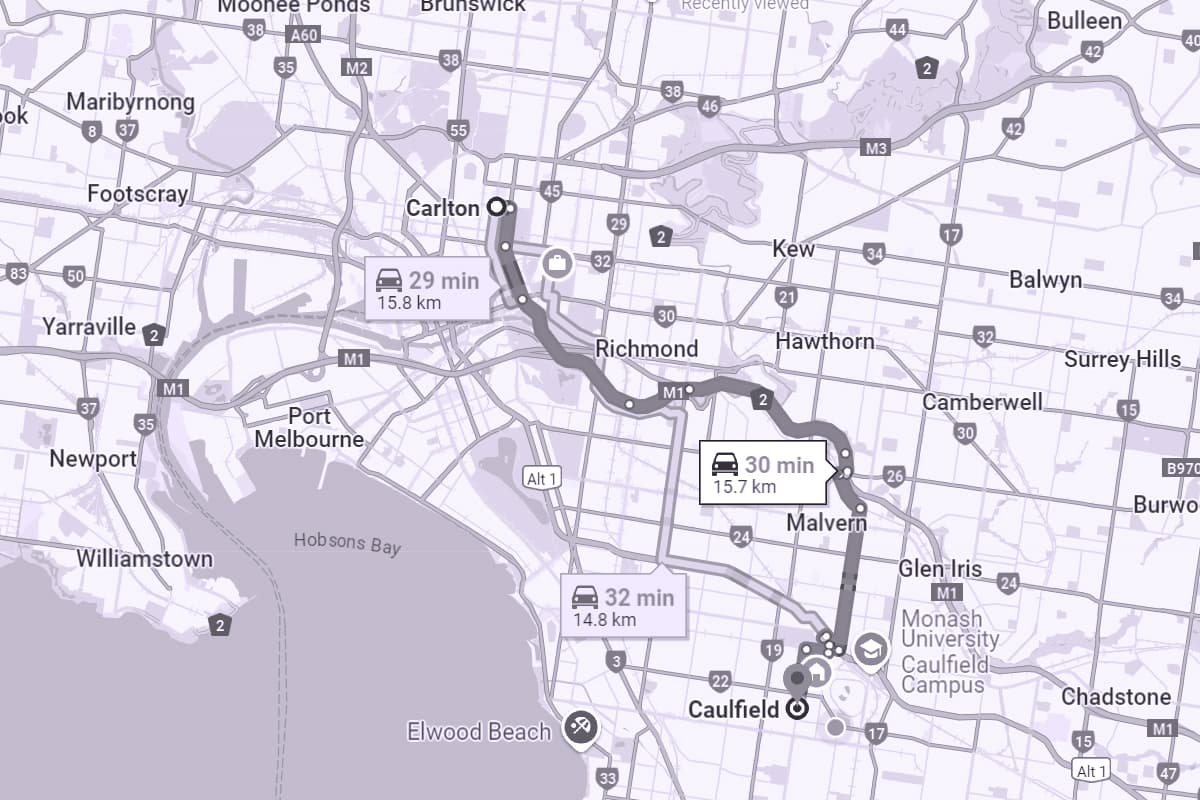
To a Caulfield boy from a Carlton boy

The final page of the Yiddish cabaret program is devoted to one line: 'that the generation to come might know.' In this, despite leaving us all too soon, Mark fulfilled his immense promise.
Arnold Zable
Print this
carlton to caulfield copy

Published: 25 August 2024

Last updated: 23 September 2024

When Rai Gaita asked me to take part in this tribute to Mark, I felt honoured, but hesitated. After discussing it, we agreed there was a specific perspective I could bring to the conversation.

For want of a better name, I’m going to explore the contrast between our upbringings, as “Carlton boy” and “Caulfield boy”, as a means of  tracing the evolution of Mark’s all-embracing sense of being in the world.

First the context. And through it, a reflection on what Mark and I shared in common, before speculating on the differences.

How do we measure a ‘generation’? Twenty years is the biological norm, more or less. But perhaps there are other ways of measuring it.

After many years of reflecting on the experiences of Holocaust survivors, I have come to see that their life-journey can be viewed as a three-act drama. Three distinct periods. Indeed, three generations concentrated within one lifetime.

Act 1:  The time before: Life, far der melkhomeh, before the war: Once I had a home, an extended family, a connection to another place, another community. For my parents it was the shtetlakh of the Polish-Russian borderlands. For Mark’s mother, Genia, it was a rural settlement in present day Ukraine. And for his father, Yosl, a village in South-western Poland.

Act 2: The Rupture:  Lives overturned. Dispossession. Flight. A Shoah, an annihilation — there are countless scenarios.

Act 3: The time after: “Nokh der melkhomeh”. Emigration, putting down roots elsewhere. The roller coaster of rebuilding. The elation of new birth. Again there are many scenarios.

Both Mark and I had parents whose lives can be viewed in this way. And both of us, have explored the phases of their lives, in all their fullness, as writers, educators, travellers, and historians, and above all, as sons. And both of us embarked on journeys to “the time before”, the sites of our parents’ childhood and youth. And we both returned with the maps of their early years, the neighbourhoods, the streets they once inhabited. We were both passionately engaged in a similar mission — to restore the missing link in the ancestral chain. 
But, while Mark and I were of the “second generation”, as it is often characterised, and while we were born just 12 years apart, I in 1947, and Mark in 1959 —  in another sense we belonged to different generations.

I was born in the immediate postwar years. The grief of my parents, and their generation, was very recent. Their focus, as mentioned, was to make a new life. They settled in Carlton. Our parents were so preoccupied making ends meet, we, their children, had a lot of freedom.

We were the children of postwar immigrants pouring in from Eastern Europe, Italy, Greece, the Baltic States, Yugoslavia. Living side by side with the children of working-class Aussie neighbours, many of whom who had resided there for generations.

We enjoyed a rich street life, with all its harmonies and conflicts. We became, by necessity, street wise. We attended local State schools — there were no Jewish day schools back then.  Our Jewish education took place on the weekends — in the secular I.L. Peretz Yiddish school, the Bialik Hebrew school, and the Talmud Torah, for the orthodox.  All three schools, were incidentally, located within the same couple of blocks in Drummond Street.

There were other suburbs where postwar survivors began life anew; St Kilda, for instance. But most lived in the northern suburbs, in rented houses, close to the factories, and the inner city, places of work.

There was a distinct class divide between north-side and south-side. This divide is often overlooked, underplayed, romanticised, or forgotten. The awareness of class difference was far more acute back then.

In the early 1950s, Shaw and Davey, two bureaucrats from the Housing Commission, made their way by car through the streets of Carlton. They recommended a massive “slum clearance” program. Vast swathes of Carlton, the houses we lived in, were to be demolished and replaced by high-rise public housing estates.

It is said, they did not even get out of their car. Hence, their review was popularly called: “The Windshield Report”. It triggered a residents’ action movement that in large part, successfully opposed the plan, and preserved what is now, ironically, expensive, gentrified housing stock. 

By the time Mark was born, the demographics were changing. Immigrant Jewish families were becoming more established — moving to the eastern and southern suburbs. Yosl and his brother Borukh had established a successful business. The Baker family was well on the way to affluence.  

Unlike his brother John, born five years earlier, Mark, experienced, as he himself has said, a more sheltered childhood. The Sunday schools were being transformed into Jewish day schools. Mark attended Mount Scopus. Formed a deep attachment to Zionism. He experienced life within shtetl Caulfield.

Much more can be said about these contrasting worlds. The point I wish to make is, that while Mark may have had a more sheltered childhood, he burst out of the bubble. It was a journey that began in early adulthood, propelled by Mark’s intellectual passions, especially his interest in history, which took him to Melbourne University. Oxford.  Jerusalem. And many other places, intellectually, and physically.

The Mark Baker I knew was driven by a hunger for both knowledge, and experience, underpinned by a sharp intellect.  He was a seeker. He explored many ways of being in both the Jewish world, and the world at large. 

In 1995, Mark called me to discuss a Generation project: A Night of Yiddish Cabaret. Typically, he wanted to translate his curiosity into takhles — practical outcomes.  Typically, he handed the reins to a huge production team, that included many young volunteers.

And typically, he wanted the audience to be both entertained and intellectually enriched. So he got me to write an extensive program essay on the history of Yiddish theatre, both in Australia, and at large.

Mark was always quick on the uptake. He moved into new worlds with inquisitive ease. It was never merely academic. He entered into the spirit of things. In the Yiddish Cabaret project, he felt at home in a progressive, secular, Yiddishist world.

While remaining a committed Zionist, Mark also began to ask questions. Michelle Lesh traces this shift to the time of the second intifada, in the early 2000s.

Mark entered into public conversations with Palestinians. The students he took on study tours of Israel also visited Palestine and listened to speakers presenting the Palestinian view. Mark exposed himself, and his students, to contending narratives. It took immense courage.

Mark also introduced his students to other genocides, took them to Rwanda and South Africa, as well as to Eastern Europe.

Mark Baker may have begun as a Caulfield boy, but he became a citizen of a wider world. While he remained deeply rooted in his Jewish past, and its traditions, he was driven to create meaningful ways of expressing these traditions in a contemporary context. He was also driven to explore that which unites us, both within and beyond our tribal loyalties. A common humanity.

Life is full of paradox. Michelle has told me, that in his final memoir, Mark writes of finally moving beyond shtetl Caulfield. But geographically, he did not move far. He lived his final years in St Kilda — in an apartment with a view of Luna Park. As a child, coincidentally, I saw that gaping clown entrance as the mouth of the world.

Perhaps, this is where Mark’s story culminates. And, in a sense, where it also begins anew — in the legacies that he bequeathed future generations. The final page of the Yiddish cabaret program is devoted to one line. From the Psalms 78-6: “That the generation to come might know.” In this, despite leaving us all too soon, Mark fulfilled his immense promise.

This article is a reprint of the speech given at Melbourne Jewish Book Week. 

You might also like
  • Grappling with Mark Baker’s last words
    Benjamin Preiss
  • On the virtue of patience: a Yom Kippur reflection
    Kim Rubenstein
  • From Generation Journal to The Fiftieth Gate
    Krystyna Duszniak
logomark.67a07ee3
We believe in the free flow of information

Republish our articles for free, online or in print, by using our Creative Commons licence

You might also like

    why main 4th
    PodcastArts & Culture

    Why we need to find our why now: new TJI podcast

    Ittay Flescher and Courtney Winter-Peters 1
    Pearly Spurtle
    FeatureArts & Culture

    Israeli ingredients a recipe for ‘Pearly Spurtle’

    Gideon Cohen
    Eden Bahar
    InterviewArts & Culture

    ‘L’chaim for the next 1,500’: Israeli drummer celebrates Cirque Du Soleil milestone

    Gideon Cohen

Comments

No comments on this article yet. Be the first to add your thoughts.

About the author

Arnold Zable

Arnold Zable

Arnold Zable is a writer and novelist and the recipient of the 2021 Australia Council Award for Lifetime Achievement in Literature. His account of his first journey to Poland, "Jewels and Ashes," was published in 1991.

More from the author

ReflectionAustralia

Arnold Zable remembers Abram Goldberg’s epic life

FeatureArts & Culture

Yentl’s masterstroke takes Yiddish theatre from fiasco to Opera House

World

ARNOLD ZABLE: Remembering the Warsaw Ghetto uprising in an age of growing hate