Published: 30 April 2018
Last updated: 5 March 2024
Bill was alternative; he reclaimed a history of the people which was not the sanitised, respectable account that Jewish leaders liked to present to government ministers. This approach permeates all of these interesting essays. Colin Holmes looks at the case of Morris and Marks Reubens, two brothers sentenced to death for murder in 1909, and the connection in general between Jews and crime.
Jerry White relates the situation of East End Jews — “friendly aliens” during the First World War and the growing xenophobia rising from the depths. “Are they all cowards?”, asked the East London Observer.
David Mazower recovers the story of “Whitechapel’s Yiddish Opera House” — the Feinman Yiddish People’s Theatre — and portrays the richness of a Jewish culture before the erosion by Anglicisation. The East End has of course, changed dramatically.
Hitler’s bombers and “doodlebugs” effectively destroyed the old East End and propelled the Jewish exodus to Hendon and Ilford. As Anne Kershen relates, they were gradually replaced by small numbers of Cypriot, Maltese, Somali, Caribbean and Pakistani immigrants.
However, the greatest number of new East Enders came from Bangladesh — and there are similar patterns to the past, only the name changes.
FULL STORY Book review: An East End legacy (Jewish Chronicle)
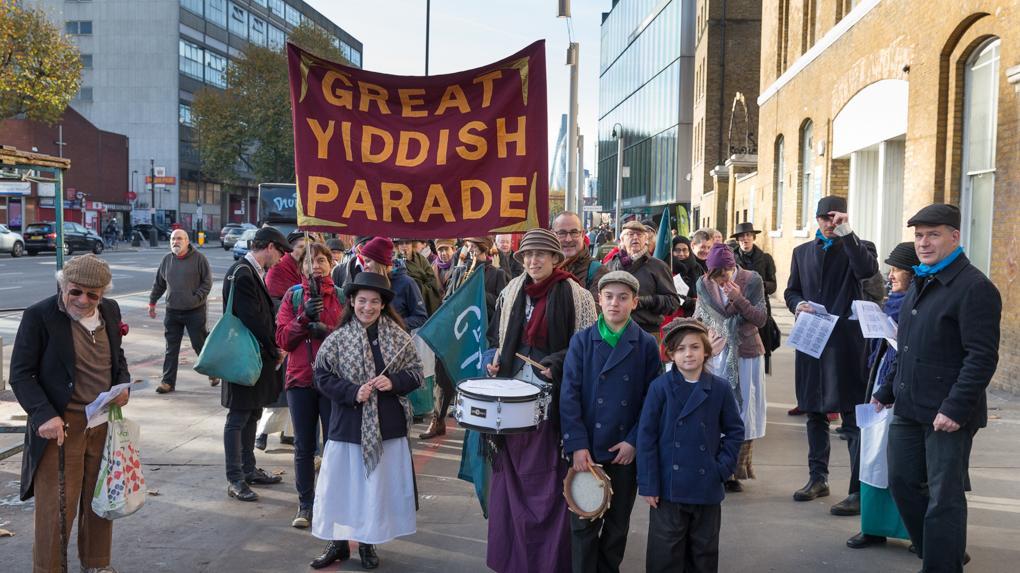
Photo: Marchers in period costume parade through Whitechapel, remembering the Parade of 1889, when East London was gripped by strikes (Ralph Hodgson/Jewish Chronicle)