Published: 30 December 2022
Last updated: 5 March 2024
PAULA TOWERS talks to Michael Neuman, who has partnered with an Indigenous designer to create a special pin as a symbol of support for the Uluru Statement.
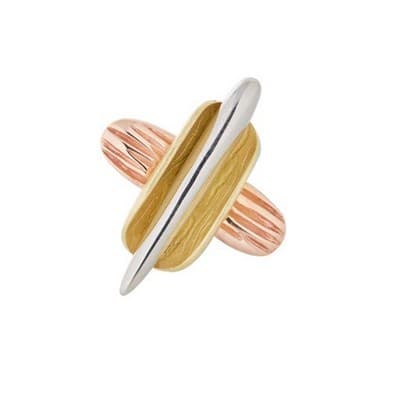
A precious version of the pin created to support the Uluru Statement from the Heart has been created by Sydney jeweller Mondial Pink Diamond Atelier.
“They are customisable in one, two or three colours of gold … yellow, white or rose gold. Owners also have the option to add diamonds or initials,” Mondial Company Director Michael Neuman told The Jewish Independent. “Each element is hand polished and assembled by our jeweller here in Sydney on Eora land.”
The design for the pins derives from a commission given to renowned Indigenous designer Alison Page for a piece of artwork for supporters of the Uluru Statement to wear.
A Walbanga and Wadi Wadi woman, an award-winning designer and film producer, Professor Page is Associate Dean (Indigenous Leadership and Engagement), Executive, UTS Faculty of Design, Architecture and Building as well as founder of the National Aboriginal Design Agency.
Page, who links Indigenous stories and traditional knowledge with contemporary design, was asked to use metalwork that could be fashioned into a lapel pin. Page incorporated the three artefacts that accompanied the presentation of the Uluru Statement from the Heart: a shield; a carrying vessel [‘piti’ or coolamon bag]; and a fighting stick, which symbolised forms of protection and of moving forward the message of the Uluru Statement.
The three artefacts, the Piti (bowls), Tjutinypa (clubs and chisels) and Tjara (shield) were gifted on May 26, 2017 by Pitjantjatjara Elder Sammy Wilson, traditional owner of Uluru, on behalf of the Mutitjulu community to key members of the Referendum Council - Noel Pearson, Aunty Pat Anderson, Professor Megan Davis and Mark Leibler.
The Piti, Wilson explained, was to carry the message across Australia. Of the Tjutinypa, he said: "that's the weapon you use to keep talking with the politicians." The Tjara, he said, were "to defend the Uluru Statement and to keep the message straight".