Published: 22 July 2025
Last updated: 22 July 2025
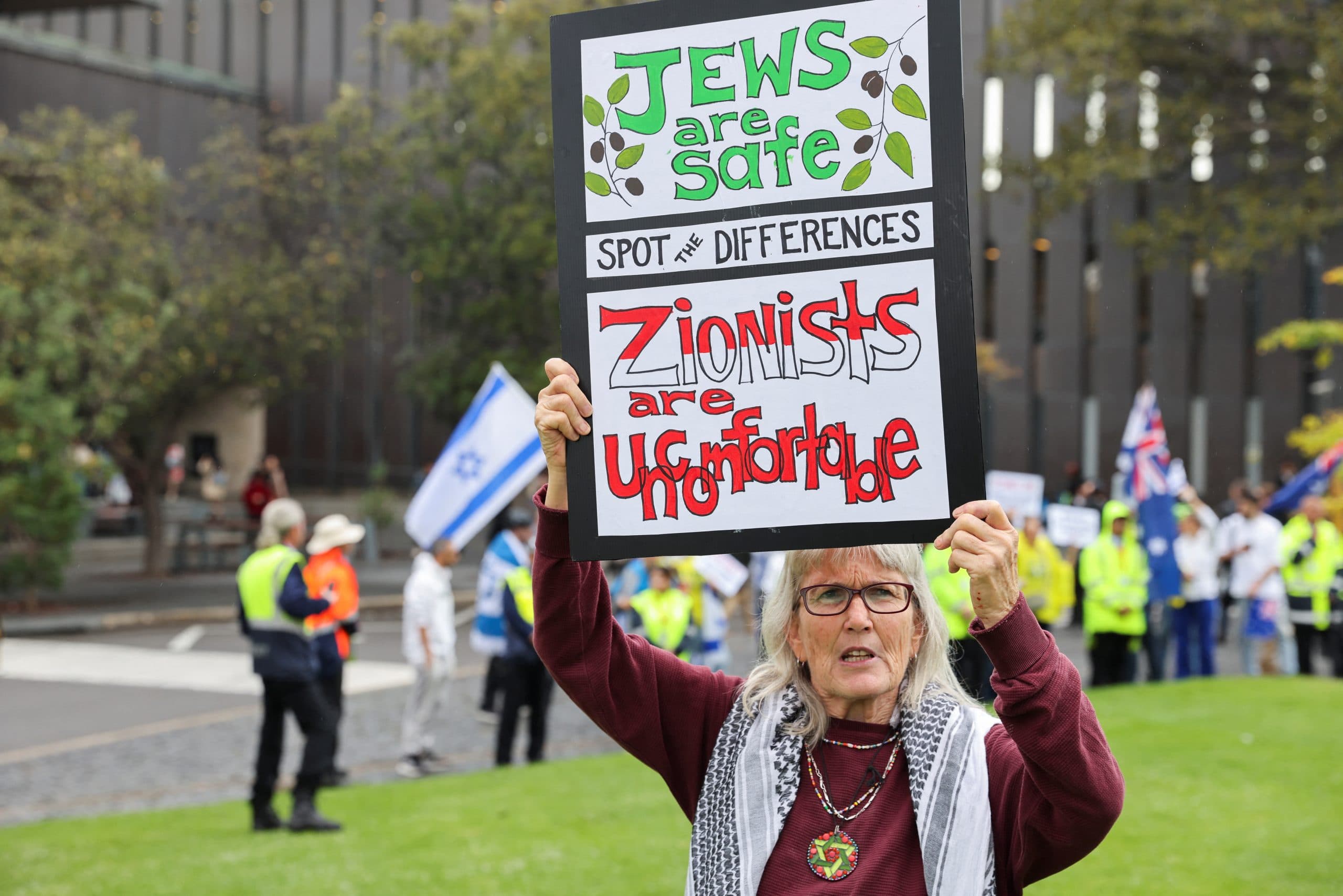
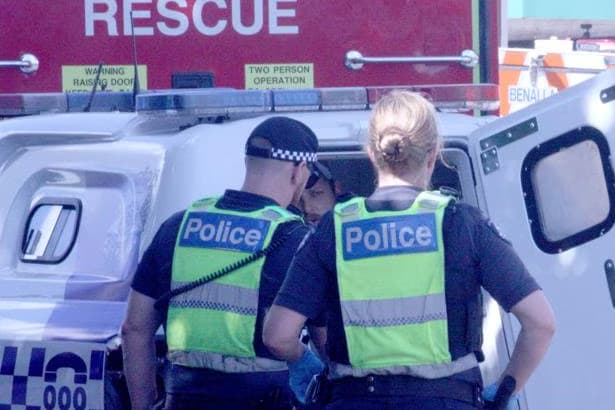
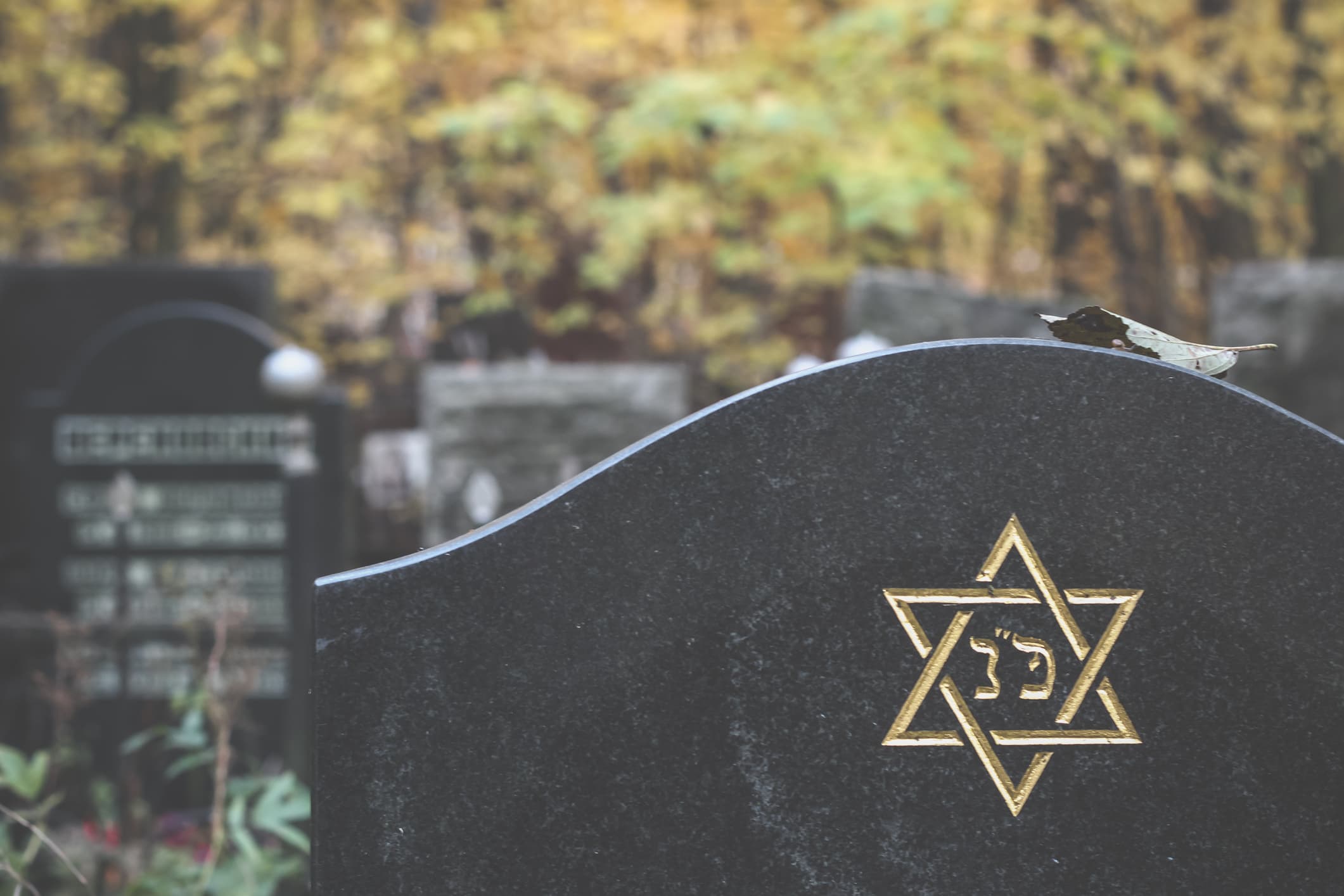
In shocking incidents recently, a synagogue in East Melbourne was firebombed and a mob stormed an Israeli restaurant in the CBD. They were aimed at terrifying the Jewish community and targeting people simply because of their faith.
There is a federal government body tasked with documenting such effects of racism and discrimination on Jewish and Muslim communities after October 7 – the Australian Human Rights Commission’s (AHRC) Seen and Heard project.
Launched after October 7, 2023, and funded by the Department of Home Affairs, this two-million-dollar initiative promised to listen to affected communities and translate those insights into meaningful anti-racism interventions. Australians of all backgrounds should be proud such a commission has been established to monitor our multicultural society.
But do I think the recent antisemitic attacks will be documented by Seen and Heard? Do I think the project will develop any meaningful anti-racism interventions? I very much doubt it.
Reasons for pessimism
Let me wind back a few steps and explain my pessimism. As a child and adult psychologist, I’ve spent much of my professional life listening to stories of pain, trauma, and resilience. Since October 7 and the war in Gaza, the impact of trauma on individuals and communities has been immense. Sadly, the discourse around this trauma has often been polarised – with so many people unable to see and feel compassion for the pain on the other side.
Alongside my work as a psychologist, I’m also a filmmaker and author. My recent documentary, The Narrow Bridge (2022), follows four bereaved Israelis and Palestinians who lost a child or parent in the ongoing conflict. But instead of choosing hate, these people, and many like them, transformed their searing grief into peace activism. Their journeys show how healing and progress are possible when we truly listen to the pain of both sides and strive for compromise and balance, even in the most fraught conflicts.


Comments8
Larry Stillman24 July at 11:28 am
Andre Obeler. I am not disputing blind hate. Thank you for the reference. However, it is the relationship between that hate and political activism in particular that needs to be unpacked. From what I see, it is all conflated into ‘antisemitism’. That’s wrong. I look forward to a n online discussion on methodological issues in particular and ‘ what the data tells us’.
Andre Oboler24 July at 03:38 am
Larry, the figure comes from a report partly sponsored by the Jewish Independent and covered extensively by it. The vast majority of the antisemitism in that report (which was a survey of the state of social media) was traditional antisemitism. You can read the report yourself and see examples of the data. In this new report ALL of the data is shown. You have stated in the post you allude to that you accept ALL of them as antisemitism. Comments that take a general swipe at the research into antisemitism are not helpful. I have answered your specific question on Facebook.
Larry Stillman23 July at 04:55 am
Another comment. The claim is made of 538% increase in antisemitism on line by OHPI. Now I have looked for a source of this — there appears to have been some conflation of numbers. But even if there has been an increase, and sadly, I believe there is, we have to ask of ‘what’? For all we know, these could be posts coming from a couple of sources. Second, there is the general problem of category conflation. We have seen this in other reports where outrageous claims have been made for example, of antisemitism by academic staff . The basis for this was actually very limited research in a small number of institutions with ambiguous questions to boot. This was then multiplied as it it occurred country wide. This is irresponsible.
It’s a critical issue. Real antisemitism is a problem. I like everyone decent is concerned about it. But making widespread claims about generalized antisemitism is not on as far as I am concerned when bad methods are used.
Larry Stillman22 July at 11:31 pm
I’ll only make on specific content. The reports on racist behaviour and incidents produced by a variety of community organisations are not entirely reliable. By and large, they use weak categories, collapsing clearly antisemitic incidents with political protest, statements, posters etc. Of course there can be overlap with antisemitism but that it not always the case. The surveys of particular groups of Jewish students (which are not scientific) cannot be considered representative of the entire population. They engage in ‘rubber numbers’ to put it mildly. Numbers that have no scientific basis are thrown around. There is a conflation of perceptions of antisemitism and discomfort with protest (serious enough when students are distressed) with actual antisemitism. I’ve published a long critique of the recent OHPI report on Facebook. Elements of it are very good, others not.
Leon Orbach22 July at 01:23 pm
So why don’t you say what you really mean. E Takac’s article tears away the polite curtain of academic mumbo jumbo and shows how this so called Heard and Seen project is a Wizard of Oz facade hiding the truth in an attempt to prove “nothing to see here”, “move along”. It’s time to stop listening and make strong recommendations to protect those whose security is being put at risk. This is Australia, the land of the fair go. What has happened that antisemitism has been allowed to raise its ugly head in a land where it had always been kept at the fringe? This is not free speech, this is incitement, this is blood libel, this is hatred of Jews. Heard and Seen, joke more likely!
David Schulberg22 July at 09:27 am
Anti-Palestinian racism (APR) is a contrivance that has affiliations with antisemitism, negating the Jewish experience, identity, and values, while also being used to raise concerns about alleged Islamophobia.
APR lacks scrutiny by experts, academics, jurists and lawyers, diplomats, civil servants, and elected officials. It’s driven by a select group advocating specific political views lacking both consensus and rigorous evaluation.
APR introduces categories based on national origin and political opinion that diverge from established anti-racism definitions and conflates racism and discrimination.
APR is used to silence dissenting viewpoints on issues such as the Israeli-Palestinian conflict.
As for Islamophobia, it has been said that it’s a word “invented by fascists and used by cowards to manipulate morons,” and that’s not far from the truth. Its purpose is to conflate any criticism of Islam, which is a doctrine of religious beliefs, with bigotry against Muslims as people. In fact, it equates secularism itself—the commitment to keeping religion out of our laws and public policy—with hatred. It is now so widely used making it impossible to speak honestly about the true consequences of dangerous ideas.
Hilary22 July at 08:36 am
Thankyou for this thoughtful, measured and informed article. I found the US statistic comparing reported incidents in a range of minority communities illuminating. David Baddiel’s ‘Jews Don’t Count’ book of 2021 only becomes more universally true, if that is possible.
Simon Krite22 July at 07:47 am
This piece is spot on. There is no moral or statistical equivalence between antisemitism and Islamophobia, and trying to force one is dishonest and socially dangerous. Jewish Australians are being firebombed, mobbed, threatened out of their professions and yet the AHRC’s “Seen and Heard” project chooses to dilute that reality under a fog of false balance. If you can’t even name the problem clearly, you’re not solving it. You’re part of it.