Aa
  • Read, Watch, Listen
  • TJI Series
  • Community Action
  • Events
  • Zedi
Follow us and continue the conversation
  • LinkedIn
  • Instagram
  • FaceBook
  • X
  • YouTube
Test yourself with the TJI Quiz!

Adjust size of text

Aa

Follow us and continue the conversation

  • LinkedIn
  • Instagram
  • FaceBook
  • X
  • YouTube

Your saved articles

You haven't saved any articles

What are you looking for?

Original reporting, insightful analysis and diverse views, delivered straight to your inbox

  • LinkedIn
  • Instagram
  • FaceBook
  • X
  • YouTube
Your support fuels our mission to inform, entertain and inspire.

The Jewish Independent is bound by the Standards of Practice of the Australian Press Council. If you believe the Standards may have been breached, you may approach The Jewish Independent or make a complaint to the Australian Press Council in writing at www.presscouncil.org.au. The Council may also be contacted on 1800 025 712.

  • Our Story
  • Contact us
  • Our Team
  • Support us
  • Guidelines
  • Pitch your idea
  • Republishing us
  • Community Action
  • Our Awards
  • LinkedIn
  • Instagram
  • FaceBook
  • X
  • YouTube
Aboriginal FlagTorres Strait Islanders Flag

The Jewish Independent acknowledges Aboriginal and Torres Strait Islander peoples as the Traditional Owners and Custodians of Country throughout Australia. We pay our respects to Elders past and present, and strive to honour their rich history of storytelling in our work and mission.

© The Jewish Independent 2026All Rights Reserved
Website design and development by Your Creative, MelbourneTerms & ConditionsPrivacy Policy
HomeRead, Watch, ListenWorld
World

The moral battleground between South Africa’s stayers and leavers

Gillian Klawansky
Print this

Published: 20 September 2022

Last updated: 5 March 2024

While the exodus to Israel and elsewhere has gained intensity, there are still many with no plans to leave. How do the stayers really feel about the leavers?

“To stay or to leave has been a question that has vexed our community for decades, because most of us are patriotic South Africans who would love nothing more than to watch future generations of our families enjoy and build this magnificent country.”

So says Mary Kluk, Vice President of the South African Jewish Board of Deputies, the political voice and human rights lobby of South African Jewry and the umbrella body of its communal organisations.

Yet there’s no denying the challenges South Africans face – be they economic, political, or crime-related – and the resultant high rate of emigration. In the face of ever-rising aliyah numbers – with an estimated 500 South African Jews departing for Israel this year – and continued emigration to counties throughout the diaspora, both those who leave and those who stay experience mixed emotions.

“In the past you had questions around people being annoyed that others left or stayed – natural feelings on both sides – but I don’t think it’s as acute now as it was in the 90s,” says Benji Shulman, director of public policy for the South African Zionist Federation.
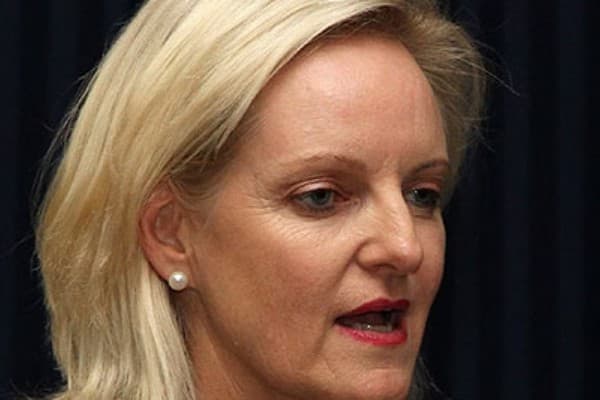
Mary Kluk
Mary Kluk

To stay or to leave has been a question that has vexed our community for decades - MARY KLUK

During the early 1990s, marked by the abolition of apartheid and the beginning of ANC political rule, many white South Africans left the country, fearing a violent transition, or one that would offer limited opportunities for white citizens. Conversely, those who stayed had hope in a future marked by political and racial freedom. People on either side of the fence were dramatically divided.

Yet, there have been fluctuating waves of emigration for decades. “Emigration patterns of Jewish South Africans have always tended to be fragmented, both geographically and temporally,” Shulman says. “Those who leave during different waves of emigration are not necessarily very aware of one another and also end up in very different places.”


“For example, Jewish South Africans who left between the ’60s and the ‘80s, particularly to the United States, may have ended up in places like Atlanta, Texas, or Boston. Now we have more people who are going to Israel – those who make aliyah now constitute one out of every two people who are leaving – and increasingly Amsterdam, so there’s a disconnect between the timing and the place.” Australia, the United Kingdom and more recently Canada, also remain popular destinations.

Today, just over 50,000 Jews are estimated to remain in South Africa.

“The South African diaspora, which is not really big to begin with – there were only 120,000 Jews in South Africa at the community’s peak – is far from united,” Shulman says.  “I think global South African Jewry needs to start thinking of itself collectively as a broader South African diaspora.”

Today, there seems to be a more open-minded approach to emigration, he adds.  “We all understand that if people are leaving or staying, they’re doing that for their own reasons.”

Kluk agrees and stresses the complexities that come with making such a decision. “Wherever we can find our purpose and peace of mind is where we need to live, but it’s not simple or easy wherever one lands. It’s not about who has done the ‘right thing’, it’s about what is the best for your family.” 

On both sides, saying goodbye to loved ones is heart-wrenching. Stayers may also feel like they’re missing the boat, especially during emigration waves, the latest of which is gaining momentum. It’s when leavers persistently push others to follow their example or leave South Africa and then constantly badmouth the country, that tension arises.

The people who don't want to come back for a visit because ‘it’s too dangerous’ or come back and say ‘everything is a mess' are the ones who give expats a bad name.

Amanda Blankfield-Koseff, a social entrepreneur from Johannesburg who is committed to staying,  says conflict – or a lack thereof – comes down to expats’ attitudes. “I hate it when people leave and then start finding evidence to justify why they left,” she says.

“The people who don't want to come back for a visit because ‘it’s too dangerous’ or come back and say, ‘everything is a mess and nothing works, I am so glad we left when we did,’ are the ones who give expats a bad name.”

Those who are committed to staying value being part of an internationally lauded Jewish community and believe in maximising the country’s innate potential, so it is natural that they feel defensive when faced by such statements.

Yet leavers themselves sometimes experience backlash when they announce their emigration plans. “Most of my family and friends in South Africa are very supportive and understanding, but I did receive a few barbed comments here and there when we left, such as, ‘you can no longer comment on the politics here’, and was even jokingly called a traitor,” says Carrie Miller, a finance professional who has been living in the UK for the past eight years.

Like many expats, Miller still feels a deep connection to the country, mainly because of those she has left behind. “Most of my family is still in South Africa so I have very strong ties. Until Covid-19 struck I would try to visit once or twice a year. When I’m in the country there’s a sense of being able to slot right back in as if I never left.”

In the UK, Miller and her family live in the particularly South African town of Borehamwood, just outside of London, which intensifies this connection – a commonality among the country’s expat communities throughout the world who tend to band together.

Shulman argues that drawing a line under any enduring animosity between stayers and leavers would help turn emigration waves into a more positive movement for change. “We need to move international South African global Jewry into a more organised front so expats are increasingly connected, understand the country and community’s needs and can make a contribution,” he suggests.

“Ultimately, we’re all South Africans looking at how we can make a change either for the South African Jewish community, for Africa, for Israel or for our adopted communities.”

Indeed, many expats do remain involved in South Africa, whether it be through continuing business interests or by assisting numerous communal organisations. A key example is the King David Schools Foundation (KDSF), which raises funds to ensure the sustainability of Johannesburg’s King David Schools – the largest Jewish day school network in the southern hemisphere. 

Settling into a new country or remaining in a country with problems are both difficult prospects. Leavers are brave to go, and stayers are brave to stay - MARY KLUK

“The rise of emigration has affected the entire Johannesburg [and wider South African] Jewish community,” says KDSF executive director Raelene Tradonsky. “The remaining community will increasingly require support from external sources and that makes the need to reconnect with expats even stronger.”

Yet the link between global alumni and the school is powerful, evidenced by substantial expat donations and popular school reunions – and more recently online “rezoomions” – held around the world. “A large percentage of our donations come from expats,” Tradonsky says. The exchange rate makes overseas donations particularly lucrative.

“I often get asked why expats donate to the KDSF? They have their own schools, shuls, and communities. Why do they even give back to South Africa? I think there is a ha-karat hatov (debt of gratitude) to the school that afforded them the education to get where they are in the world today. This presents an opportunity to share with those less fortunate.”

Kluk adds: “Settling into a new country or remaining in a country with problems are both difficult prospects. Leavers are brave to go, and stayers are brave to stay!”

Photo: South African Jews in Addis Ababa airport en route to Israel (Gillian Klawansky)

You might also like
  • Israel election explainer: the main parties
    Shahar Burla
  • Sanctioning settlements is a defence of Israel, not an attack
    Elisheva Madar
  • Sanctions must influence, not just perform disapproval
    Adam Slonim
logomark.67a07ee3
We believe in the free flow of information

Republish our articles for free, online or in print, by using our Creative Commons licence

You might also like

    Shocked New Yorker Watches the World Trade Center on September 11, 2001
    ReflectionWorld

    A new generation reckons with 9/11

    Gideon Cohen
    Rozana Beit Oula
    PeacebuildingOpinionIsrael

    Peacebuilding through the eyes of a sceptic

    Ron Finkel
    Protest
    AnalysisIsrael

    Western ‘Palestinianism’ colonises everything – and hurts Palestinians

    Andres Spokoiny 5

About the author

Gillian Klawansky

Gillian Klawansky

Born in Johannesburg, Gillian Klawansky is a freelance journalist and editor. A former lifestyle features editor at Destiny Magazine, she has written for the South African Jewish Report, the Sunday Times and magazines including Marie Claire and Sawubona.

More from the author

World

Film touches nerve in revealing truth about Lithuanian Holocaust cover-up

Feature

A voice for Jewish victims of sexual abuse in South Africa

‘It’s push and pull’: Why South African Jews are making aliyah in droves