Published: 26 May 2025
Last updated: 26 May 2025
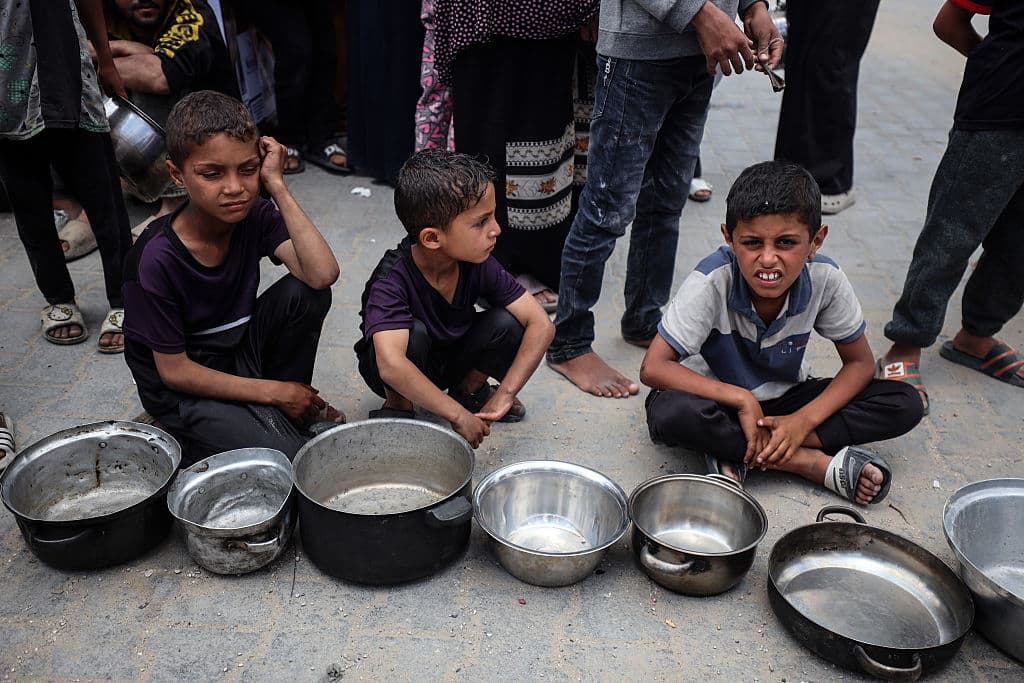
It is approaching three months since the Gaza Strip was sealed – once more during this conflict – to food and aid. The dire consequences are obvious to all but the most cynical denialist, and represent the starkest possible reminder that every instance of a starving child is the result of callous political choice. Not fate, and not cruel happenstance, but choice.
Last week, Netanyahu announced a very partial lifting of the siege. We must hope that there is no such thing as too late with a situation as catastrophic as this. But the meagre allowance is certainly too little, and the predictions of humanitarian experts remain justifiably apocalyptic.”
Nor should the fate of hungry children hinge on the whims and political calculations of American senators, whose belated qualms were Bibi’s seeming motivation for the measure. Even the meagre flow of aid which has now resumed was too much for Ben Gvir, for whom, apparently, only the death of every last Gazan will be enough.
Humanitarian law and the realities of war
Warfare must not target civilians. This ought-to-be-obvious moral imperative underpins international humanitarian law. Where civilian harm is an assured or likely consequence of military action, the advantage to be gained must be proportionate to the harm inflicted. This, too, is axiomatic. The denial of food and other resources vital to life to an entire population can, by definition, make no distinction between the combatant and the civilian. Nor can the guaranteed impact on an entire population possibly align with any sane definition of proportionality. It is thus definitionally illegal. It is also utterly unconscionable.