Aa
  • Read, Watch, Listen
  • TJI Series
  • Community Action
  • Events
  • Zedi
Follow us and continue the conversation
  • LinkedIn
  • Instagram
  • FaceBook
  • X
  • YouTube
Test yourself with the TJI Quiz!

Adjust size of text

Aa

Follow us and continue the conversation

  • LinkedIn
  • Instagram
  • FaceBook
  • X
  • YouTube

Your saved articles

You haven't saved any articles

What are you looking for?

Original reporting, insightful analysis and diverse views, delivered straight to your inbox

  • LinkedIn
  • Instagram
  • FaceBook
  • X
  • YouTube
Your support fuels our mission to inform, entertain and inspire.

The Jewish Independent is bound by the Standards of Practice of the Australian Press Council. If you believe the Standards may have been breached, you may approach The Jewish Independent or make a complaint to the Australian Press Council in writing at www.presscouncil.org.au. The Council may also be contacted on 1800 025 712.

  • Our Story
  • Contact us
  • Our Team
  • Support us
  • Guidelines
  • Pitch your idea
  • Republishing us
  • Community Action
  • Our Awards
  • LinkedIn
  • Instagram
  • FaceBook
  • X
  • YouTube
Aboriginal FlagTorres Strait Islanders Flag

The Jewish Independent acknowledges Aboriginal and Torres Strait Islander peoples as the Traditional Owners and Custodians of Country throughout Australia. We pay our respects to Elders past and present, and strive to honour their rich history of storytelling in our work and mission.

© The Jewish Independent 2026All Rights Reserved
Website design and development by Your Creative, MelbourneTerms & ConditionsPrivacy Policy
HomeRead, Watch, ListenArts & Culture
ReflectionArts & CultureAustralia

On despair: A reflection after watching ‘Cancelled’

watch. Harder still is living with reality it depicts.
Deborah Stone
Print this
jiff26-cancelled.jpg

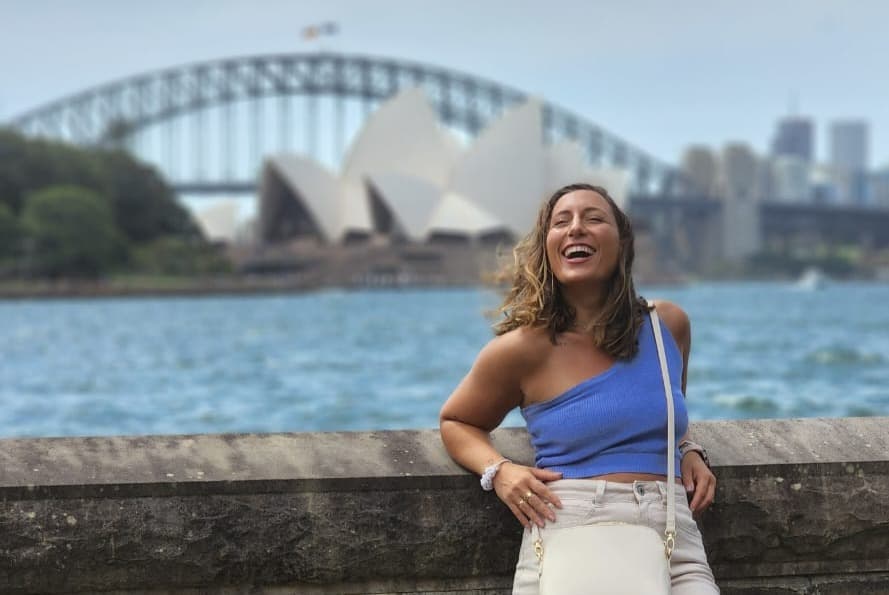
Nina Sanadze in a still from Cancelled (Image: JIFF/2026)

Published: 18 September 2026

Last updated: 18 September 2026

Last night I attended the Melbourne premiere of Cancelled, a documentary about the treatment of Jewish artists in Australia since October 7 and the Gaza War.

In a panel after the film, director Danny Ben Moshe and producer Jamie Bialkower spoke about the film’s rejection by public broadcasters and film festivals and their conviction that it results from an unwillingness to platform Jewish voices in the current climate.

The whole experience was traumatising.  I left feeling physical ill.              

That’s strange because there was nothing in the film I didn’t already know. As Editor of The Jewish Independent I’ve been confronting all of this for almost three years.  

The Jewish Independent was the first media outlet to break the story of the doxing of Jewish creatives. We’ve covered the exclusion of Jewish creatives extensively, including the  opening of Nina Sanadze’s Goldstone Gallery for cancelled artists and the abuse of Deborah Conway, key foci of the film.  No one reading TJI could doubt the existence of growing antisemitism, particularly in the creative sector.

Perhaps the impact was in the power of film as a medium or in seeing all the content together rather than being drip fed it over two years. Or maybe it was the bruise on bruise of hearing again the stories that already hurt.

Perhaps it was the ideological whiplash I am frequently subject to as Editor, platforming contrary views and taking flak from both sides. I’d just published Nomi Kaltmann’s argument that Australian Jews are too inclined to identify as victims, and the film brought me back to the depth of the victim experience for many Australian Jews over the past two years.

Perhaps these emotions just come at you. I was already having a bad day.
It’s a time of the year when we are sensitised by the reflection of Rosh Hashanah and Yom Kippur, too. The refrains of the High Holydays haunt us. Talia Slonim’s devastating reflection on facing Yom Kippur with a life-threatening illness, which I published yesterday, is a stark reminder that the invocation "who shall live and who shall die" is no metaphor. We are all vulnerable. It could have been any of us on Bondi beach on December 14.

Át the end of that long day, as I tried to calm myself before bed, a refrain kept running through my head: “Despair is a sin.”

It did not come to me initially from a Jewish source. I remember it from an admonition given to a suicidal nun in the Australian drama Brides of Christ, a Catholic story that aired 25 years ago but somehow still lives in my head. I guess it’s advice I still need.

There are parallels in Jewish thinking. The Chasidic master Rabbi Nachman of Breslov taught that giving in to despair or emotional paralysis is a trap of the yetzer hara, the evil inclination, telling his students assur l’hit’ya-esh (it is forbidden to despair). Nachman famously taught that it is great mitzvah to be happy always, which seems to be an unreasonable ask.

But some of his other teachings on the subject have since been verified by modern neuroscience in their capacity to act on depression: the value of meditation to stabilise mood, the impact of gratitude, even the positive effect of faking happiness in certain contexts.  

Contemporary Jewish experience – like much of historical Jewish experience – may point us towards despair but Judaism as a religion and cultural practice nudges us towards gratitude and celebration.

“God would like us to be joyful even when our hearts are panting on the floor,” sings Tevye in Fiddler on the Roof, a modern fiction of course but one based on both the work of a 19th Century Jewish author deeply embedded in traditional culture (if frequently satirical towards it).

Cancelled won’t make you joyful – which doesn’t mean you shouldn’t see it. It’s a powerful, important documentary. It is a great pity that it is not running on the ABC or SBS or at least in a festival where it is more likely to be seen by a non-Jewish audience.

Last night’s screening was also the program launch the Jewish International Film Festival (JIFF). The program, broken down for TJI by Kathy Lastar, inevitably contains some confronting films, particularly those focused on October 7 and antisemitism.

But I, for one, appreciate the effort that’s been made to screen films focused on resilience, joy and humour from a celebration of Mel Brooks to a doco about Catskills culture Life at Grossingers. They are the films I need if I am not to succumb to despair.

You might also like
  • What to see at the 2026 Jewish International Film Festival
    Kathy Laster
  • Spotlight: Gideon Heine
    Doron Chester
  • The Sea: deserving award-winning film or one-sided disgrace?
    Eetta Prince-Gibson
logomark.67a07ee3
We believe in the free flow of information

Republish our articles for free, online or in print, by using our Creative Commons licence

You might also like

    antisemitism online
    NewsAustralia

    Proposed digital care law to offer protection against online antisemitism

    Deborah Stone
    bialik Jewish schools shabbat
    OpinionAustralia

    Jewish schools are the marinade that infuses continuity

    Jeremy Stowe-Lindner
    Penny Wong
    DebateAustralia

    Sanctions must influence, not just perform disapproval

    Adam Slonim

About the author

Deborah Stone

Deborah Stone

Deborah Stone is Editor-in-Chief of TJI. She has more than 30 years experience as a journalist and editor, including as a reporter and feature writer on The Age and The Sunday Age, as Editor of the Australian Jewish News and as Editor of ArtsHub.

More from the author

NewsAustralia

Proposed digital care law to offer protection against online antisemitism

NewsIsrael

‘Israel is systemically eliminating Palestinian collective life’:  Israeli human rights report

Australia

Tame apologises – but with little grace

NewsAustralia

Australia to increase sanctions against West Bank settlements

Comments

No comments on this article yet. Be the first to add your thoughts.