Published: 29 April 2025
Last updated: 29 April 2025
I am a Jew because our ancestors were the first to see that the world is driven by a moral purpose, that reality is not a ceaseless war of the elements, to be worshipped as gods, nor history in a battle in which might is right and power is to be appeased. The Judaic tradition shaped the moral civilisation of the West, teaching for the first time that human life is sacred, that the individual may not be sacrificed for the mass, and that rich and poor, great and small, are all equal before God.
Rabbi Jonathan Sacks, Radical Then, Radical Now (London 2000).
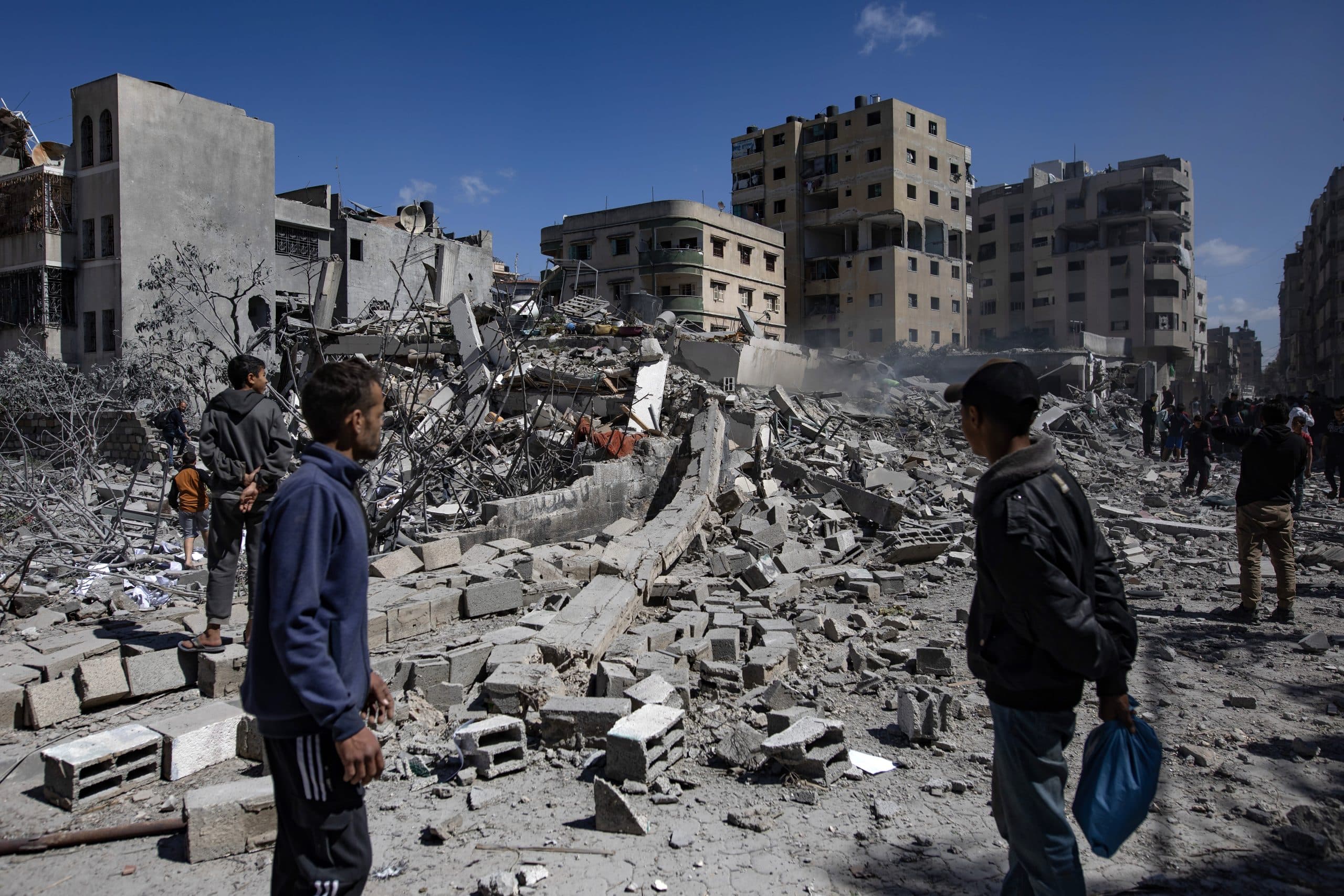
Many of Jonathan Sacks’s admirers in Britain easily quote from his insightful teachings but remain silent when it comes to the war in Gaza – now approaching 600 days of hostilities. They telescope fidelity to the state of Israel with lack of comment about its government.
In a recent radio interview on Galei Israel, Finance Minister Bezalel Smotrich commented that “we need to say the truth: Bringing the hostages home is not the most important goal.” He placed the priority of destroying Hamas before enabling the release of the remaining hostages from the tunnels of Gaza. At least Smotrich was being transparently honest in lauding the aims of the war – an issue which Netanyahu’s rhetoric has studiously circumvented.
Jonathan Sacks, his predecessor Immanuel Jakobovits and his successor, Ephraim Mirvis, were far more perceptive than their flock in understanding how to handle the relationship with successive Israeli governments. Jakobovits was privately critical of Menahem Begin and his policies during the 1980s. Mirvis recently withdrew from an international conference on antisemitism, organised by the Israeli ministry of the Diaspora because European far Right organisations – not noted historically for their love of Jews – were invited. Sacks himself was associated with figures in the religious peace movement prior to his appointment as Chief Rabbi.