Books: 100 Israeli lives, German traitors, passion for romance
New books from Lee Yaron, Jonathan Freedland, Etgar Keret, Alice Fraser, Josh Gad and Elizabeth Finkel.
Aviva Lowy
Published: 14 October 2025
Last updated: 14 October 2025
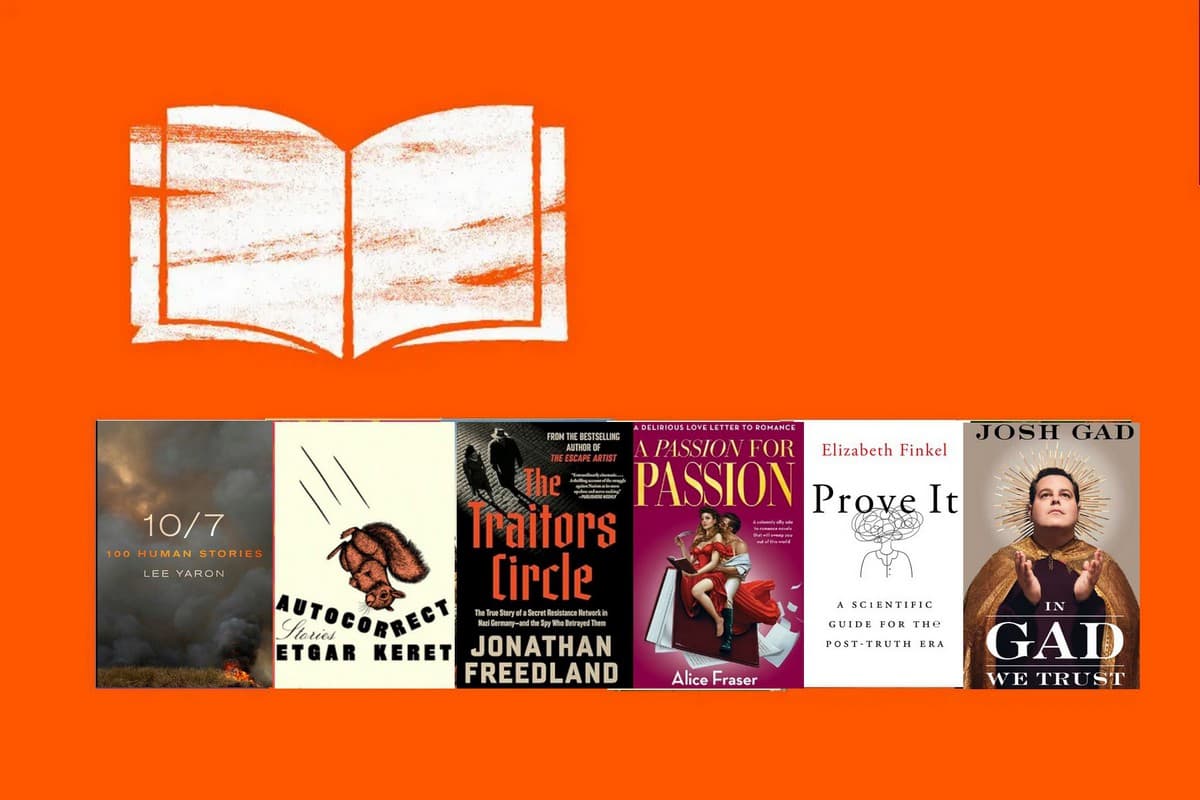
10/7: 100 Human Stories - Lee Yaron (St Martin’s Press)
October 7 has become a date freighted with anguish. It was the worst terror attack in Israel’s history, and with over 1,200 slaughtered, it was also the deadliest day since the Holocaust. And the misery did not end. With thousands injured and 251 hostages taken, the ensuing war continues two years later.
How does one come to terms with such an overwhelming event? Lee Yaron, award-winning investigative journalist with Haaretz, does it through the very specific stories of its victims. She situates them on the day - what each was doing and how they came to be in the wrong place at the wrong time - and tells us the story of their lives.
10/7: 100 Human Stories (the title uses the US month before day) won the National Jewish Book of the Year Award for 2024 - making Yaron the youngest ever recipient. New Yorker journalist Adam Gopnik described it as “aa masterpiece of journalism, and what can only be called humanism”.
Yaron wrote this book quickly, even as the aftershocks of October 7 were still being felt. “This book comes early, and in a way it’s a first line of defence,” she writes, “a defence against distortion, a defence against forgetting.”
The book is the result of extensive interviews Yaron undertook with survivors and the bereaved. The victims came from all walks of life, among them those from the radical right, peace makers, Negev Bedouins, Israeli Arabs, kibbutzniks and, ironically, Ukrainian refugees fleeing the current Russian hostilities.
Every single story is poignant and affecting. One heartbreaking example is the pregnant woman who encountered terrorist gunfire while desperately trying to get to hospital to give birth. The unborn baby absorbed the bullets, saving her mother’s life, but dying hours after taking her first breath.
History in the style of an airport thriller
The Traitors Circle - Jonathan Freedland (John Murray)
While we know of the French Resistance and other European underground movements against the Nazis, many presume that the entire German population were willing accomplices to their country’s regime.
“And yet that’s not quite right,” writes Guardian columnist and best-selling author Jonathan Freedland. “There were Germans who defied the Third Reich and throughout the Nazi dictatorship.” One such group is the focus of his new book The Traitor’s Circle.
That circle comprised unlikely rebels who came from the ranks of German high society and the administrative elite. One member, countess Maria von Maltzen, had been raised in a castle by English nannies and French governesses. She found the cult of Nazism both ludicrous and frightening.
Two others, Arthur Zarden, a former mandarin at the Ministry of Finance, and his daughter Irmgard, led a life of luxury with a staff of butlers, cooks and footmen.
These resisters were in the privileged position of observing close up the terrible forces controlling their country, but this meant they had much to lose. And lose they did. The subtitle of the book says it all - the rebels against the Nazis and the spy who betrayed them. Indeed, the book opens with the dreaded knock on the door by the Gestapo.
As Freedland writes, they could have kept their heads down and stayed safe. Instead, the price they paid for their heroism in saving Jews and fighting tyranny, was huge: imprisonment, torture and execution.
The Guardian’s review of this book declares: “Freedland has produced that elusive thing – an impeccably sourced history book that reads as propulsively as an airport thriller.”
In addition to writing for The Guardian, Freedland is presenter of the BBC’s modern history series, The Long View, and co-presents the podcast Unholy: Two Jews on the News, with Israeli broadcaster Yonit Levi.
Quirky and profound short stories
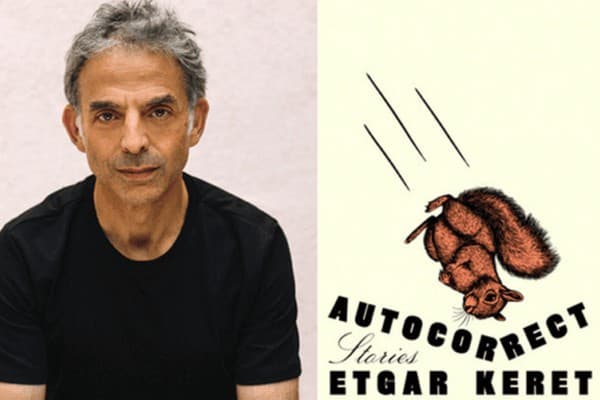
Autocorrect - Etgar Keret (Scribe)
On the face of it, the short stories of Israeli author Etgar Keret are quirky, often funny, and exist in a universe where strange, impossible things can happen. But don’t be fooled: Keret is a master craftsman whose little tales, each a polished gem, are philosophical thought experiments, inviting the reader to question and imagine. They are proof of the impact a few brief pages can make.
The stories in this collection cover a dark time for Keret, both personally and as an Israeli. He talks about the judicial revolution, the “crazy war” that still goes on, and the death of his mother. And, of course, Covid.
In one story, he writes about the pandemic curfew going on so long that police have to make people go outside when it’s lifted. Isolation has become the new normal. In another, a religious man undertakes a personal prayer marathon to secure the release of the October 7 hostages.
Other stories seem more absurd but, nevertheless, speak to the human condition. Imagine a university faculty of loneliness which creates a computerised twin soul for every person in the world. Or a time travel machine that can’t bring you back to the present but can help you lose weight. Or a parallel universe in which game show contestants visit earth and have to find the one thing which is missing from their world. Spoiler: it’s selfie sticks.
Most affecting is the story of a son who keeps winding back time to stop his father from dying, only to realise he can’t change the inevitable outcome. All he can do is let his dad know that he loves him.
Keret says it was easy to choose the stories for this collection because they fit so well together. Or as the writer says, lyrically, they were “moving around the same sun”.
A satirical look at romance novels
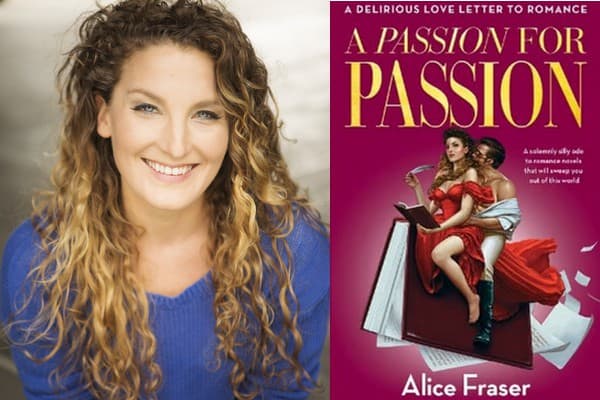
A Passion for Passion - Alice Fraser (Unbound)
Ever since Australian comedian Alice Fraser discovered a cache of Mills & Boon romance novels at the age of 10, she has been in love with the “solemn silliness” of the genre. This has eventually led to her creating the character D’Ancey LaGuarde, a prolific romance writer whose implausible titles started to appear on The Bugle comedy podcast which she co-hosted with the British comedian Andy Zaltzman.
This book is a collection of blurbs, excerpts and cover art from a range of the fictional LaGuarde’s works, covering all the romance sub-genres. Scattered throughout are explainers and insights (she has a Masters in English literature from Cambridge) into romance’s enduring popularity.
Fraser is witty and enjoys word play, so in these pages you’ll find a violent viking with a longing for cuddles; little red riding werewolf and Jack the lumberjack; and a mercenary who is quick with a whip and a quip. Whether nobles and knights, time travellers or cowboys, the heroes have rock-hard abs and the heroines are creamy bosomed.
Unlike the genre she parodies, Fraser does not aim to titillate. The most explicit depictions refer to “sexy sex” and “smooches”. Hers is a delightfully humorous romp through the sublimely ridiculous reaches of romance fiction, one of the biggest categories in the book publishing world.
And lest you think these cameos of the fictional LaGuarde’s oeuvre just too silly, there are real romance books that tell the stories of a minotaur who falls in lust with the woman who is ‘milking’ him for semen, and a wereoctopus who couples with a tattoo artist.
Fraser, who says she was raised a Buddhist by an ex-Catholic and a Jew, has been named one of the top 50 comedians of the 21st century by The Telegraph in England. Her stand-up comedy specials are on Amazon Prime and the ABC.
Entertainer’s humorous autobiography
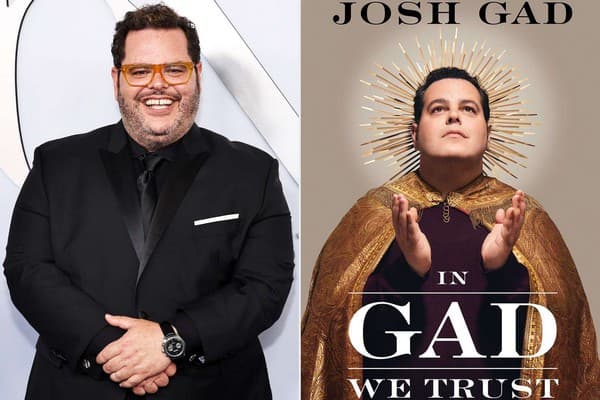
In Gad We Trust - Josh Gad (Simon & Schuster)
You may not realise you know actor, singer and comedian Josh Gad. He’s the voice of Olaf the snowman in Disney’s hugely popular franchise Frozen; he was the original Elder Cunnigham in the Broadway hit The Book of Mormon and has a long list of film and TV credits to his name.
Gad’s father was an Afghani Jew and his mother a German child of the Holocaust. His parents’ separation when he was just five years old derailed the young Gad, and to remedy this, his mother enrolled him in a local childrens’ theatre group. He was immediately smitten but while he was excelling at acting, he was “decelling at school… I was an absolute train wreck of a student.”
Gad managed to get back on the rails when he won a national speech competition for school students two years in a row, including in the humour category. The die was cast.
His story provides an insight into the precarity of a life in theatre. Shows can take years to get to the stage or the screen, and sometimes fall over at the last hurdle. Some appear to have the winning formula but flop, and others succeed from left field. We also get a behind-the-scenes look at the workings of Broadway and Hollywood.
Gad also talks about the effects of Covid on the acting fraternity, his battles with generalised anxiety disorder, and dealing with antisemitism which, “never stops hiding out in the open… even if our eyes remain closed to it”.
Well loved by his peers, Gad manages to enlist showbiz royalty to his cause. There’s a “foreword” by Sacha Baron Cohen, an “onward” by Mel Brooks, and a “howard” by, well, Ron Howard. There are also endorsements from Billy Crystal and Adam Sandler, who writes: “Josh Gad is a tremendous funny-as-hell genius who makes the world a better place.”
Five significant scientific theories
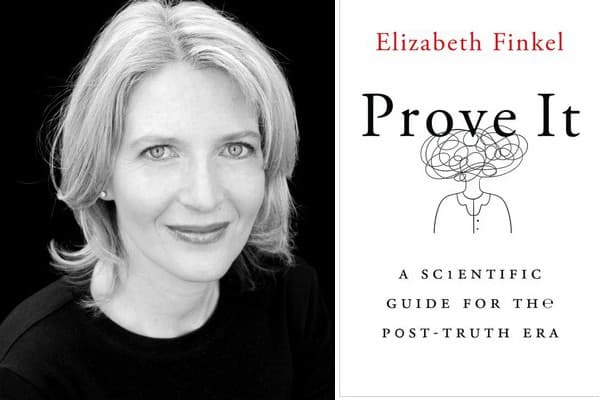
Prove It - Elizabeth Finkel (La Trobe University Press)
Australian science journalist Elizabeth Finkel says the idea for her latest book was “hatched during the first Trump presidency, as a response to the attack on truth. Now… the first hundred days of Trump’s second presidency have passed and it is not just truth but science that is under attack.”
Prove It, subtitled “a scientific guide for the post-truth era”, is Finkel’s attempt to show how science pursues knowledge. She does this by selecting five contentious case studies, or theories, and discusses how they have been tested through scientific rigour. As she notes, science is not so much about proving a theory as trying one’s hardest to disprove it and see if it can withstand the intense scrutiny.
As a framework for her studies, Finkel looks to the philosophy of knowledge: how we know what we know? She assigns to each of the theories covered here a philosopher “patron saint”. Philosopher Karl Popper is invoked as champion of the first chapter dealing with debate over the origins of Covid. “Popperian” scientists who had proposed the Wuhan lab as the source tried to disprove their own theory and succeeded. The evidence they collected supported the market outbreak theory.
Finkel writes in a clear journalistic style with a nice sense of humour. In the chapter on human origins, she notes, “Europe and Asia would be a blast, dominated by the likes of hunky Neanderthals, hefty Homo Erectus… and gatecrashing Denisovians. The parties would be a riot.” One of the archaeologists is described as “Talmudic” for his ability to deal with conflicting things being true.
We learn in these pages that science offers no easy answers. Unlike the simplistic sloganeering of conspiracy theorists and deniers, arriving at the truth is messy, littered with false starts, retracing of steps, and disagreements by experts. There’s a lot of argy-bargy and we may not be quick to arrive at our destination.
About the author
Aviva Lowy started her career as a radio journalist with 2JJJ and the ABC. She has written on a broad range of subjects, from food and travel to science and health.