Aa
  • Read, Watch, Listen
  • TJI Series
  • Community Action
  • Events
  • Zedi
Follow us and continue the conversation
  • LinkedIn
  • Instagram
  • FaceBook
  • X
  • YouTube
Test yourself with the TJI Quiz!

Adjust size of text

Aa

Follow us and continue the conversation

  • LinkedIn
  • Instagram
  • FaceBook
  • X
  • YouTube

Your saved articles

You haven't saved any articles

What are you looking for?

Original reporting, insightful analysis and diverse views, delivered straight to your inbox

  • LinkedIn
  • Instagram
  • FaceBook
  • X
  • YouTube
Your support fuels our mission to inform, entertain and inspire.

The Jewish Independent is bound by the Standards of Practice of the Australian Press Council. If you believe the Standards may have been breached, you may approach The Jewish Independent or make a complaint to the Australian Press Council in writing at www.presscouncil.org.au. The Council may also be contacted on 1800 025 712.

  • Our Story
  • Contact us
  • Our Team
  • Support us
  • Guidelines
  • Pitch your idea
  • Republishing us
  • Community Action
  • Our Awards
  • LinkedIn
  • Instagram
  • FaceBook
  • X
  • YouTube
Aboriginal FlagTorres Strait Islanders Flag

The Jewish Independent acknowledges Aboriginal and Torres Strait Islander peoples as the Traditional Owners and Custodians of Country throughout Australia. We pay our respects to Elders past and present, and strive to honour their rich history of storytelling in our work and mission.

© The Jewish Independent 2026All Rights Reserved
Website design and development by Your Creative, MelbourneTerms & ConditionsPrivacy Policy
HomeRead, Watch, ListenArts & Culture
FeatureArts & Culture

The boys who lived

For over 60 years, Australian survivors have gathered in Melbourne to celebrate their liberation. Now, an exhibition about the ‘Buchenwald Ball’ is on show at the camp memorial in Germany
Aviva Lowy
Print this
Boys main high res

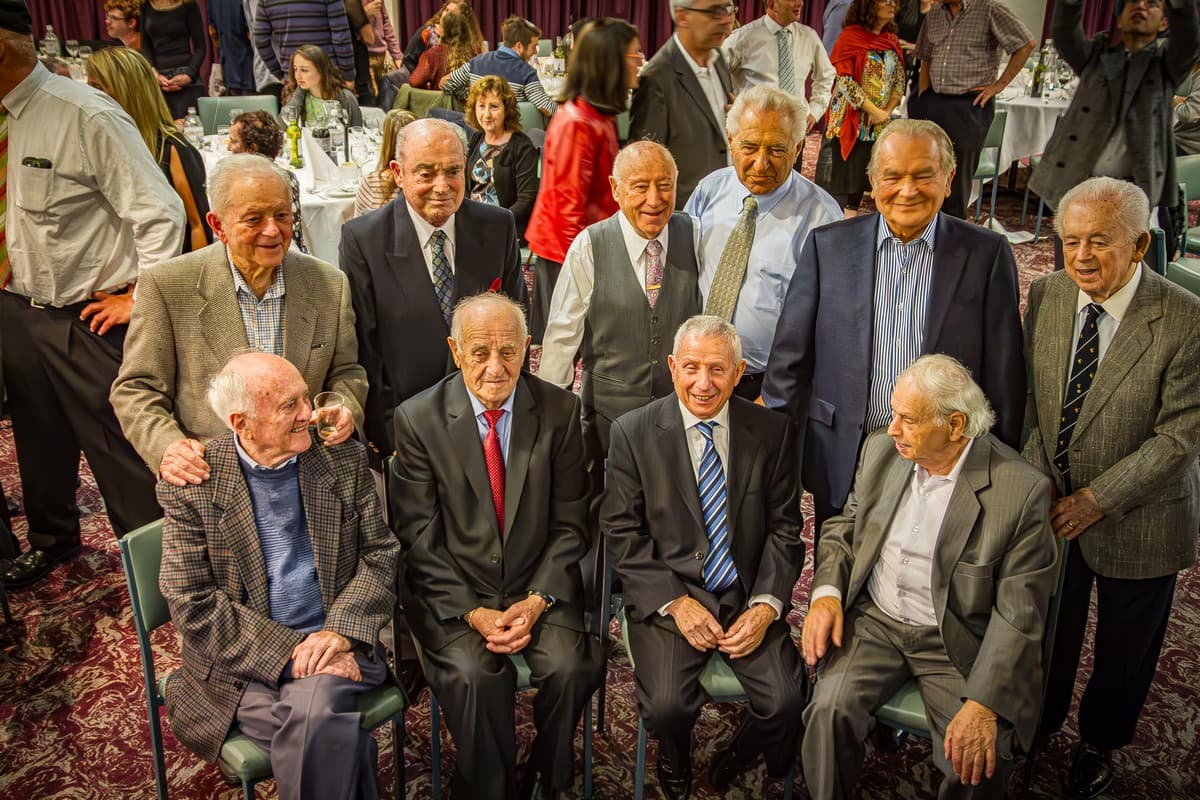
Buchenwald survivors at the 2015 Ball

Published: 19 May 2026

Last updated: 20 May 2026

My father, Ted Lowy, celebrated two birthdays. The first was the day he was born as an adored child of two loving parents in Poland. His second “birthday” marks the day he was liberated by the US army from Buchenwald concentration camp in Germany. The date was April 11, 1945. The Holocaust had claimed nearly a third of his childhood. He re-entered the world as a 16-year-old orphan.

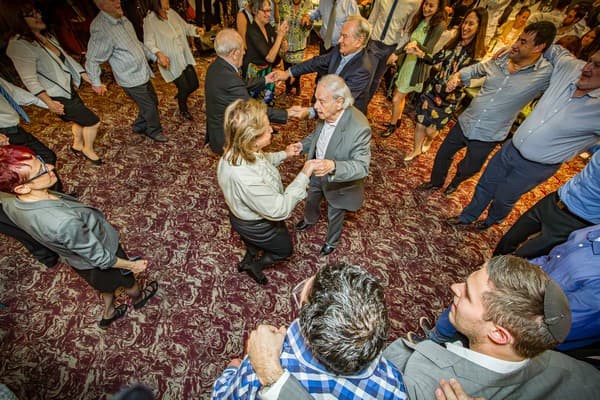
He shared that birthday with all the survivors of the camp, including a group of about 900 mostly orphaned youths, 65 of whom eventually found their different ways to Australia, most of them fetching up in Melbourne. They became known as the Buchenwald Boys, and for over 60 years they have celebrated their collective liberation birthday with a ball: dancing, singing Yiddish songs, and always drinking a l’chaim – to life!

From the beginning, the balls were flashy affairs, with professional entertainers and everyone dressed to the nines. An invitation from 1953 highlights a guest appearance by a star of the Folies Bergère revue (which was touring Australia at the time), and music by the Continental Orchestra with cabaret singer Ben Gurgel, who was one of the Boys. 
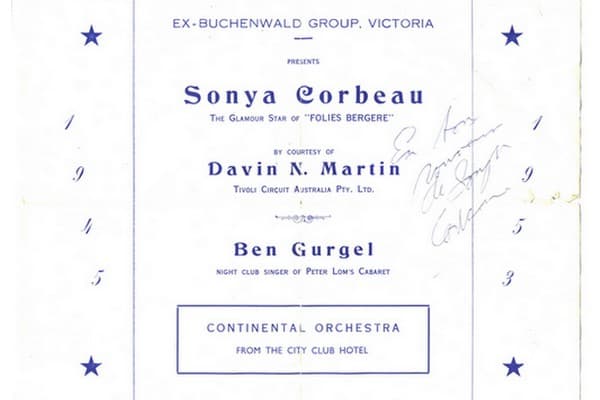
Invitation from 1953
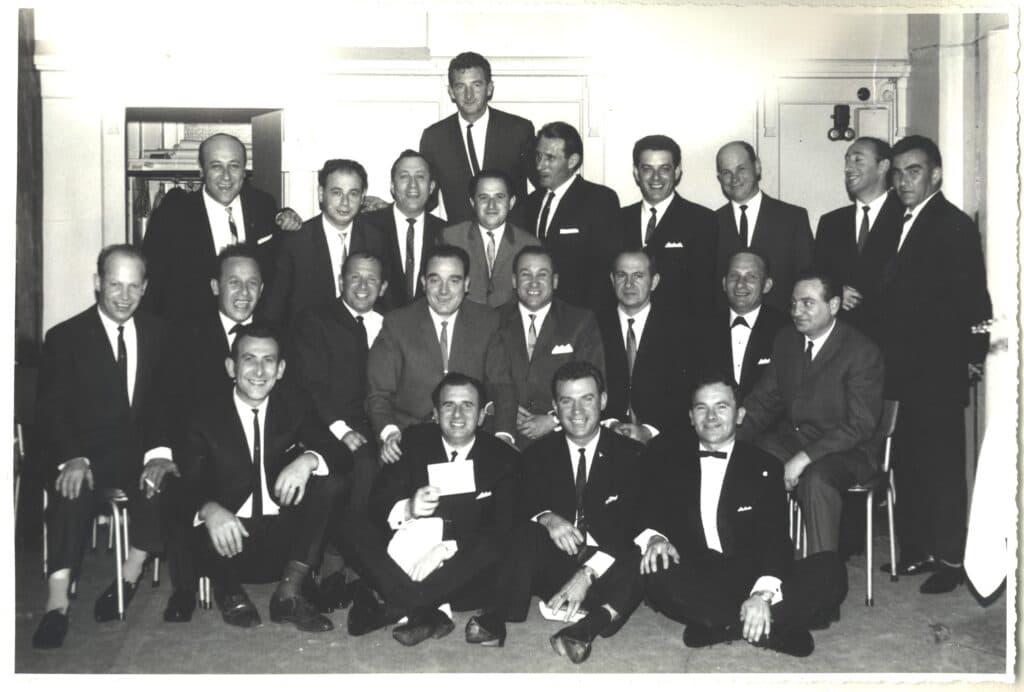
Reunion c1965
Reunion c1965

Now, in a belated twist, an exhibition celebrating the ball and the stories of the last of the Boys, is on show at the Buchenwald Memorial in Germany, where visitors to the site of the former camp will be able to view it over the coming year – a symbol that Jewish life has made a resurgence from under its shadow. 
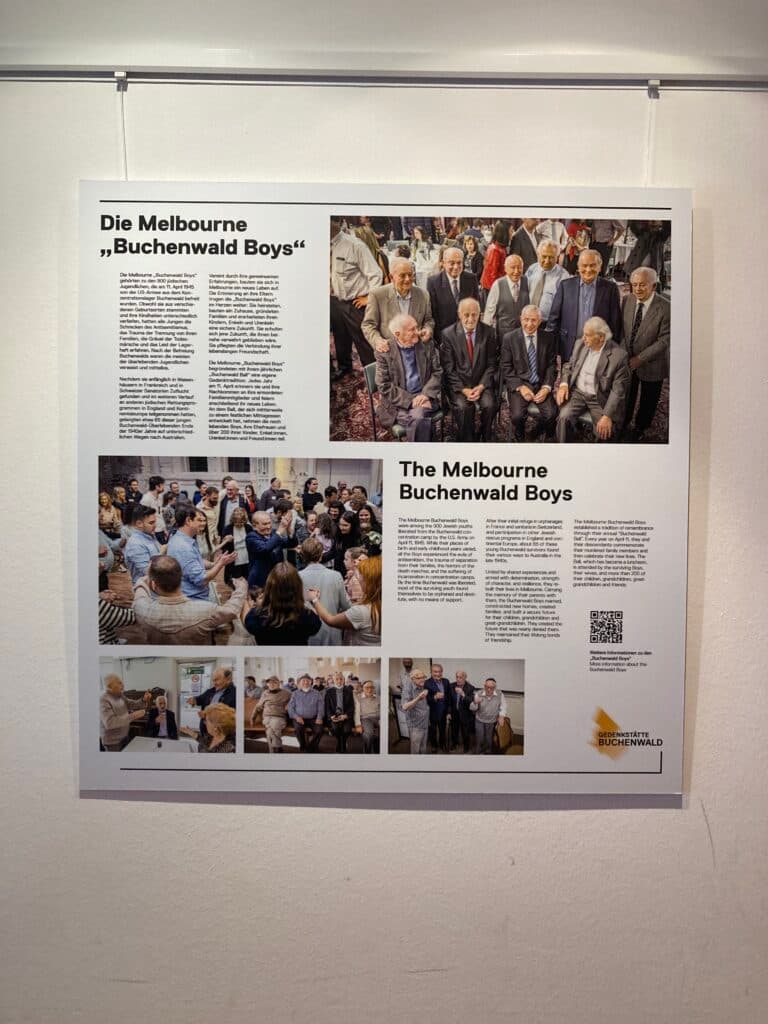
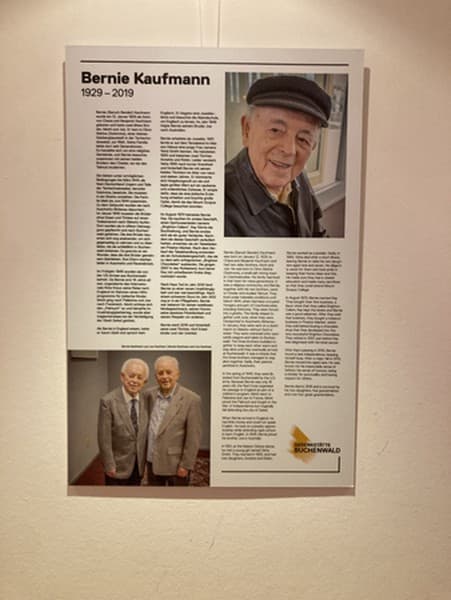
This coup is due to the combined efforts of two people. Dr Anita Frayman, daughter of one of the Boys, Joe Kaufman, applied her research skills as an academic to unearth her father’s story, then started teaching Holocaust courses and has since taken on the role as custodian of the Boys’ history. The other prime mover is Andrew Harris, who accidentally became the “unofficial official” photographer of the annual gatherings.

The Jewish Independent

Harris’s involvement with the group dates to 2015 and the 70th anniversary of liberation. Though he had made a career move from journalism to the corporate world, Harris let it be known that he was still up for writing the occasional Jewish story that piqued his interest. So when his old Melbourne schoolmate Elissa Goldstein, who was then working for The Tablet in New York, asked him to cover the ball for the magazine, he jumped at the assignment.

Genia and Yossl Baker
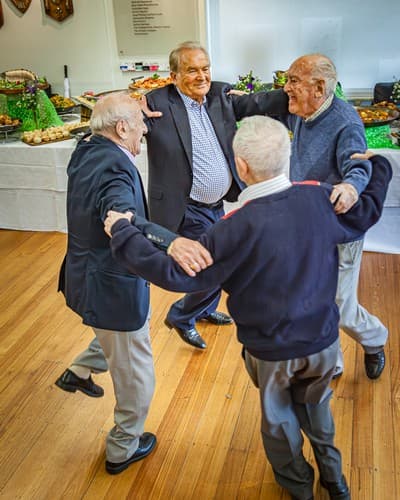
Szaja Chaskiel dancing for freedom

“It was just an amazing story,” says Harris of the 2015 Buchenwald Ball. “I felt such a strong connection being there.” And the article he wrote also resonated with readers. “On the Tablet website it became the most viewed story, very, very, quickly.” The piece was translated into German and ran in the online news magazine, Krautreporter. “It got so much attention that they were sort of shocked. It really hit that German audience too. It became this huge thing,” he says.

Born in South Africa, Harris emigrated to Australia as a child and didn’t have much of a family connection to the Holocaust. But when he turned up at his first ball over a decade ago, he saw so many familiar faces in the room. There was Szaja Chaskiel, whom he’d photographed some years earlier for the Jewish Holocaust Centre project on survivors and their tattoos.

There was Yossl Baker (father of Johnny and Mark) – “living in Melbourne, you get to know the Baker family, one way or another.” And there was Bernie Kaufmann (Anita’s uncle) from Brighton Chocolates where Harris had his first job as a teenager. “I suddenly realised I knew everyone,” he says.

“I was so moved by the experience that before the articles were published, I decided I would continue to attend. The Buchenwald Ball made sense to me. I wanted to be part of it.” 

Szaja Chaskiel, Joe Szwarcberg, Salek Roth and Emil Kopel

So Harris kept turning up and taking photos. No longer on assignment, he did it for the Boys and their families. 

“He just kept taking these fabulous photos and sending them to us every year,” says Anita Frayman. “Then, in the build up to the 80th anniversary in 2025 he said, ‘I’ve got so many photos. What can I do with them?’. And I said, ‘Let's exhibit them’.”

That exhibition was launched in March last year at the Jewish Museum in Melbourne and ran until the end of the year. It was a great success and attracted a lot of people, but when it finished, the pair thought, “what now?”. They decided to approach the Buchenwald Memorial and sent off the brochure from the Melbourne exhibition.

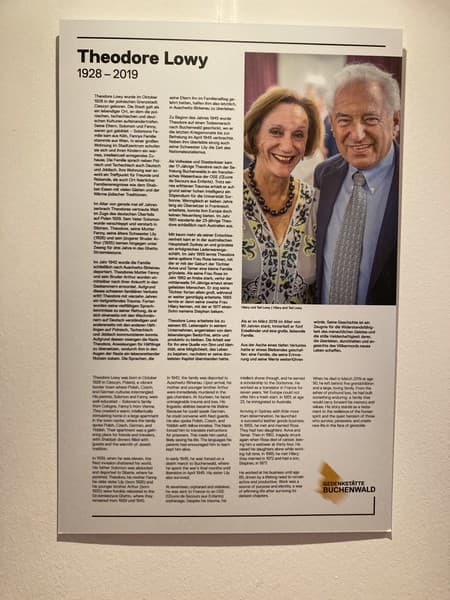
The response was so positive that the Memorial wanted to include the personal stories of the last 11 boys who had still been alive in 2015, when Harris had taken his first pictures at the ball (that group included my father, and Frayman’s father and uncle).

The Jewish Independent

Photos and biographies were sent over to Germany, but Frayman wasn’t completely sure the exhibition was going ahead. She only learned that it had opened when she read their email on April 11 this year – the very day of the Boys’ shared liberation birthday! “I like coincidences,” says Frayman.

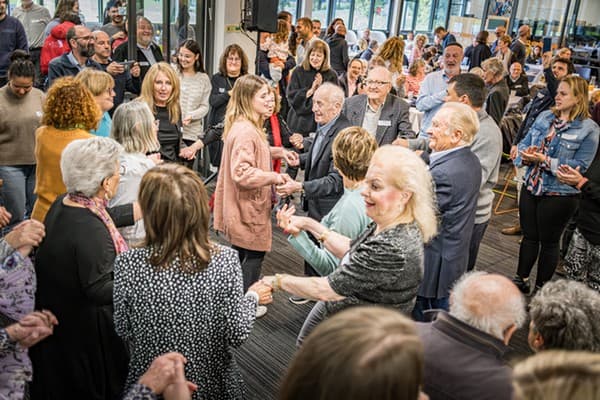
Frayman herself started attending the balls in 2000, when the Boys asked her generation to come for the first time. “They always thought dancing was the best cure for everything. They remembered the songs they sang from the children’s block in camp,” she says. Then, as it became more difficult for them to stay up late dancing, the event became a luncheon, and grandchildren could join the party. This year, a member of the fourth generation, Frayman’s 14-year-old great niece, Phoebe Cherny, spoke at the gathering.

About five years ago, Harris also started taking his oldest son along and “now we all go and it’s part of what we do for our Holocaust commemoration. Even though it’s all about remembering the past, the Buchenwald Ball evokes family and the future. It’s about what it means to survive.”

All photos of the 2015 Ball, and since, by Andrew Harris; other photos courtesy Anita Frayman

Main photo caption: Back row, from left: Joe Kaufman, Henry Salter, Jack Unikowski, Ted Lowy (from Sydney), Joe Szwarcberg, Bernie Kaufmann. Front row, from left: Salek Roth, Szaja Chaskiel, Emil Kopel, Yossl Baker.

LISTEN: Anita Frayman and Andrew Harris interviewed on J-Air

You might also like
  • When the state faltered, civil society and Diaspora Jewry stepped up
    Shahar Burla
  • The case for leaving graffiti up for a while
    Adam Slonim
  • ‘To bring joy where there is no joy’: the show goes on for a lost composer
    Zeddy Lawrence
logomark.67a07ee3
We believe in the free flow of information

Republish our articles for free, online or in print, by using our Creative Commons licence

You might also like

    Copy of Website books template (2)
    FeatureArts & Culture

    The winning Jewish books by Australians in the past year

    Gideon Cohen
    Eden Bahar
    InterviewArts & Culture

    ‘L’chaim for the next 1,500’: Israeli drummer celebrates Cirque Du Soleil milestone

    Gideon Cohen
    haredi street guitar
    Photo EssayArts & Culture

    Jerusalemites through the lens

    Sharon Gabay

About the author

Aviva Lowy

Aviva Lowy

Aviva Lowy started her career as a radio journalist with 2JJJ and the ABC. She has written on a broad range of subjects, from food and travel to science and health.

More from the author

ReviewArts & Culture

Books: Noble orphan, a hotel nightmare and Miriam’s wisdom

ReviewArts & Culture

Books: Austrian ghosts, a New Yorker’s joyride, intrigue in Istanbul

ReviewArts & Culture

Books: 100 Israeli lives, German traitors, passion for romance

Comments

No comments on this article yet. Be the first to add your thoughts.