Jessica Palti: helping young Cambodians achieve a bright future
At 34-years-old, Jewish Melburnian Palti is laying the groundwork for rural Cambodian students to break the poverty cycle, access education and become role models in their country through her NGO, Cambodia Rural Students Trust.
Peter Kohn
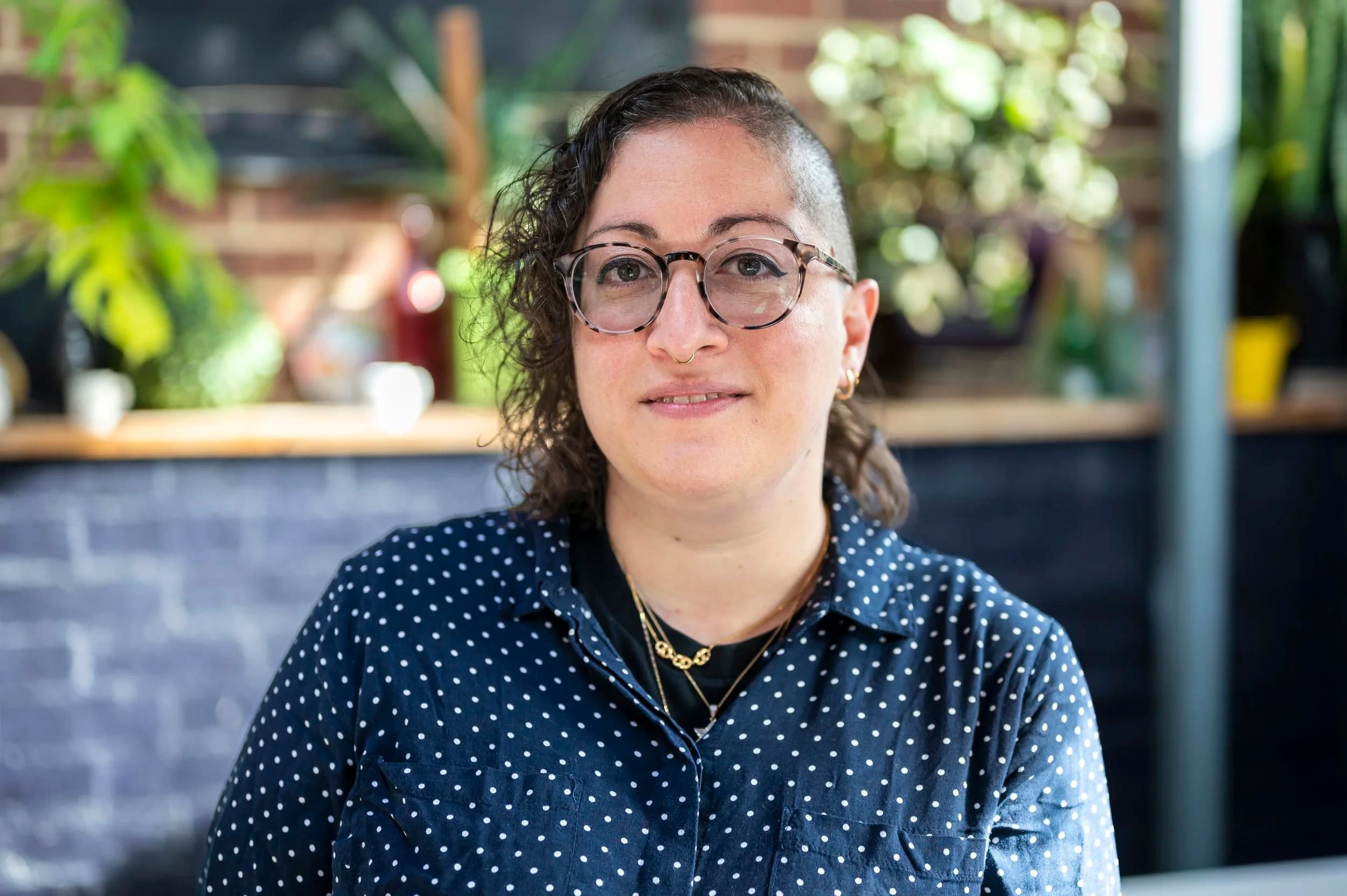
Jessica Palti is co-founder of the Cambodia Rural Students Trust (Image: TJI).
Published: 11 December 2025
Last updated: 11 December 2025
Your involvement with Cambodia began in 2009 when some members of your family, including your sister Stephanie, travelled to Cambodia to teach in Siem Reap. From Australia, you followed their trip closely. Did you think at that point that you’d become involved in a major initiative to help young Cambodians break the poverty cycle?
Back in 2009, I was in Year 12 at Mount Scopus and couldn’t join my family on that first trip to Cambodia. The trip began as a family mission, teaching at a free English school in the rural countryside outside Siem Reap. I remember following along with their blog and seeing how meaningful the experience was for everyone. None of us could have imagined the impact that two weeks of volunteering as a family would have on our lives.
When I visited in 2010, what struck me most was the huge gap in opportunity. Just 20 minutes outside Siem Reap, it felt like a completely different world. The students we met were bright, passionate, and deeply committed to their education, but opportunities for further study simply didn’t exist.
We never set out to start an NGO — it all evolved naturally from wanting to help a few students continue their education. Looking back now, it’s incredible to see how something that began as a family volunteering trip has grown into a long-term mission to help young Cambodians break the poverty cycle through education and empowerment.
After volunteering in Cambodia five more times over two years at that same free English school, we realised short-term volunteering alone wasn’t enough. The students we met were bright, motivated, and determined to learn. They came from very poor and disadvantaged rural families, many still living with the generational impact of the Khmer Rouge era that had shaped the lives of almost all Cambodians.
In 2011, we decided that if we wanted to make a lasting impact, we needed to do more than teach English for a few weeks a year. That’s when we registered the Cambodia Rural Students Trust (CRST) with the Ministry of Interior in Cambodia — a student-led NGO created to help break the poverty cycle through education.

Jessica running a workshop with all students at the CRST Campus in Siem Reap (Image: supplied).
Many of those first generation of 22 students became the first in their families, and even in their villages, to graduate from high school and then go on to university. That moment marked the beginning of what has since become a movement transforming lives across rural Cambodia.
In September this year, we welcomed CRST’s 14th student generation. Over the past 14 years, more than 200 students have been CRST members, changing the course of their lives, their families’ lives and their communities.
In 2016, CRST was also registered as a charity with the Australian Charities and Not-for-Profits Commission (ACNC), strengthening our accountability and enabling supporters in Australia to contribute with confidence.
A yoghurt retail shop in Siem Reap was a major component in the early years. How did this help the students?
Project Y Frozen Yoghurt was our first social enterprise, launched in 2015. It was a self-serve frozen yoghurt shop in Siem Reap, fully run and managed by our university students. The goal was to give them real, hands-on business experience while generating income to sponsor more students.
Seeing our students’ progress fills me with so much pride and gratitude. Watching them grow from shy rural teenagers into confident young leaders is incredibly moving.
The shop operated with all the key departments of a real business — sales, marketing, operations, finance, production and HR. Every six months, students rotated roles so they experienced every department, developing practical skills and a clearer idea of their passions and possible future career paths. Upstairs, the seating area doubled as a classroom where they studied, ran lessons, and held meetings.
Project Y became a living classroom that built confidence, leadership and teamwork. It closed in March 2020 after COVID-19 struck, but its impact on our students’ growth continues to this day.
How has CRST evolved since those early days? Talk us through some of its programs.
CRST has grown far beyond what we first imagined. What began as a small scholarship program has evolved into a student-led organisation with multiple community projects designed to educate, empower and inspire. Each year, our students impact more than 20,000 rural students through community service and leadership initiatives.

Primary school students receiving their SolarBuddy lights through Project L – Light for Education (Image: supplied).
Alongside their studies, students lead projects that create lasting change. These include:
- Project B – Bicycles for Education distributes and repairs over 1,000 bicycles each year, helping rural students stay in school and reduce travel time.
- Project G – Empowering Girls provides health and hygiene education and distributes reusable Days for Girls kits sewn in Siem Reap, helping girls stay in school with dignity. Nearly 30,000 kits have been distributed since 2018.
- Project L – Light for Education delivers SolarBuddy study lights and learning materials to students living in energy poverty.
- Project T – Trees for Life plants over 5,000 trees annually across rural and urban areas, promoting cleaner air and soil preservation.
- Project W – WASH (Water Sanitation and Hygiene) for Education installs clean water filtration systems, toilets and incinerators in rural schools, improving health, hygiene and productivity for thousands of students.
Together, these projects reflect CRST’s mission to educate, empower and inspire — creating opportunity and brighter futures across Cambodia, as our core 100 students create a far-reaching ripple effect.
In 2023, Israel’s ambassador to Cambodia and Thailand, Orna Sagiv, committed to Israeli funding for the bicycle and tree programs. The Middle East war intervened, but she was able to launch the aid drive in 2024. In what ways has it helped?
We were delighted to host Ambassador Orna Sagiv during her visit to Siem Reap in September 2024, marking the beginning of a meaningful partnership with the Embassy of Israel in Cambodia and Thailand. The funding provided practical support — 40 bicycles for rural students who had been walking long distances to school, and 70 semi-mature trees planted across Siem Reap city to improve shade and promote environmental awareness.
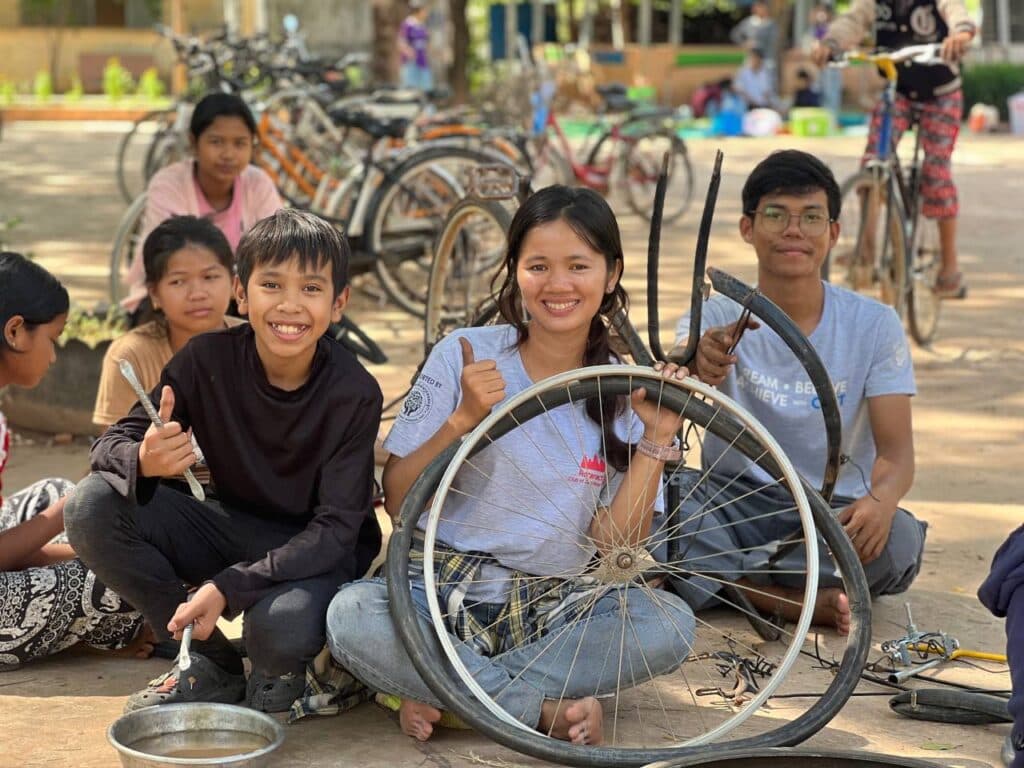
CRST students volunteering with Project B – Bicycles for Education, reparing bicycles for rural students (Image: supplied).
Beyond the numbers, this collaboration represents something much greater — a shared belief in international development that transcends borders, religion and conflict. It’s a powerful reminder that compassion and education can unite people everywhere in building a brighter future.
When students visit Australia to update CRST supporters by relating their experiences and their progress, what impact does this have on the whole project?
When our students visit Australia through our Ambassador Program, it’s always life-changing. It’s their first time leaving Cambodia, their first flight, and their first opportunity to share their story with supporters, schools, community groups and businesses. Experiencing a new world of opportunity opens their eyes to what’s possible and inspires them to dream bigger for themselves and their communities.
Meeting people face-to-face makes that connection real. Our students see that others across the world genuinely believe in them — a feeling that stays long after they return home. They come back more confident and purposeful, eager to share what they’ve learned with their families and younger students, and to inspire others to believe that change is possible.
How does the students’ progress make you feel personally?
Seeing our students’ progress fills me with so much pride and gratitude. Watching them grow from shy rural teenagers into confident young leaders is incredibly moving. Every milestone — whether it’s taking on a new role within the NGO, graduating, starting a first job, or becoming an alumni mentor — makes it all deeply rewarding.
The idea of repairing the world, even in small ways, has guided so much of what we do.
What touches me most is how they carry those values forward. They don’t forget where they came from — they give back, lift others, and lead with kindness and purpose. That ripple effect is what keeps me inspired every single day. It’s a reminder that what started as a small act of giving can change lives, families and entire communities.
What do you think inspired you to this work in the first place? Was it a sense of ‘tikkun olam’?
The idea of repairing the world, even in small ways, has guided so much of what we do. From the beginning, it wasn’t about building something big — it was simply about helping a few students who deserved an opportunity to uplift themselves and their families. That sense of responsibility to give back, create opportunity, and leave things better than we found them has always been important. It’s been at the heart of CRST since day one, and while it’s grown far beyond what we imagined, its core is still that same belief — that we all have a role to play in making the world a little better, fairer and kinder.

CRST students build a new home in just one day in the countryside for a rural family (Image: supplied).
What are some future projects in store for CRST?
We’re about to launch a new initiative called Project E – Empowered for Life. Like all our projects, it began with students identifying a real need in their communities. Project E focuses on empowering rural high school students with essential life skills in financial literacy, career planning and mind-body wellbeing. The goal is to help young people build confidence, make informed decisions, and develop the practical tools they need to thrive beyond the classroom.
How about for your own future?
Alongside my work with CRST, I also work in our family business as Creative Director, which allows me to express another side of my passion — design, storytelling and bringing ideas to life. I love that both roles connect through creativity and purpose: one builds beautiful things, and the other builds brighter futures.
Going forward, I hope to keep growing in both spaces — continuing to develop our business creatively while expanding CRST’s reach and mentoring the next generation of student leaders. Both inspire me in different ways, and together they keep me balanced, motivated, and grateful for the work I get to do every day.
About the author
Peter Kohn is an Australian journalist who began his career at the Herald & Weekly Times. For 43 years, he was associated with The Australian Jewish News. For the past decade, he held the title of Senior Journalist at the newspaper. He is the author of two novels. Rachel’s Chance is the story of his family’s experiences as Jewish refugees in Shanghai during World War II, and View From A Sandcastle is based on his own story, growing up in Melbourne suburbia during the 1960s and 1970s.