Aa
  • Read, Watch, Listen
  • TJI Series
  • Community Action
  • Events
  • Zedi
Follow us and continue the conversation
  • LinkedIn
  • Instagram
  • FaceBook
  • X
  • YouTube
Test yourself with the TJI Quiz!

Adjust size of text

Aa

Follow us and continue the conversation

  • LinkedIn
  • Instagram
  • FaceBook
  • X
  • YouTube

Your saved articles

You haven't saved any articles

What are you looking for?

Original reporting, insightful analysis and diverse views, delivered straight to your inbox

  • LinkedIn
  • Instagram
  • FaceBook
  • X
  • YouTube
Your support fuels our mission to inform, entertain and inspire.

The Jewish Independent is bound by the Standards of Practice of the Australian Press Council. If you believe the Standards may have been breached, you may approach The Jewish Independent or make a complaint to the Australian Press Council in writing at www.presscouncil.org.au. The Council may also be contacted on 1800 025 712.

  • Our Story
  • Contact us
  • Our Team
  • Support us
  • Guidelines
  • Pitch your idea
  • Republishing us
  • Community Action
  • Our Awards
  • LinkedIn
  • Instagram
  • FaceBook
  • X
  • YouTube
Aboriginal FlagTorres Strait Islanders Flag

The Jewish Independent acknowledges Aboriginal and Torres Strait Islander peoples as the Traditional Owners and Custodians of Country throughout Australia. We pay our respects to Elders past and present, and strive to honour their rich history of storytelling in our work and mission.

© The Jewish Independent 2026All Rights Reserved
Website design and development by Your Creative, MelbourneTerms & ConditionsPrivacy Policy
HomeRead, Watch, ListenAustralia
AnalysisAustralia

Diagnosing the antisemitic troll

A psychiatrist targeted by online hate has an analysis of symptoms and a conclusive diagnosis
Lynette Chazan
Print this
troll hate internet

Hate through the screen (Getty Creative)

Published: 20 May 2026

Last updated: 21 May 2026

I wrote an essay on antisemitism as a manifestation of the politicisation of psychotherapy since October 7, 2023. It was published in The Australian. The essay documented a pattern: three vignettes, each involving a patient's longstanding psychotherapeutic relationship focused primarily on family matters, now faced with corrective political commentary or complete rejection as soon as Israel entered the room – or even, in one case, when the patient had deliberately kept it out. The therapist was unable to tolerate her "Jewishness." 

When The Australian’s Facebook page posted a link to the essay, hundreds of comments arrived within hours. The thread was populated with Holocaust references, genocidal dog-whistles, and open celebration of the therapists. It is direct evidence for the Royal Commission on Antisemitism and Social Cohesion. This is an account of what I found and experienced. 

The Facebook response 

Roughly 75 per cent were hostile. There was Holocaust mockery: "Never again unless I want beachfront property"; "Juice victim card has expired"; the "109 countries" trope; conspiracy theories about the control of media and the psychotherapy professions – "a $7,000 genocide-sponsored post." The Australian relabelled "The Israelian" (a derogatory renaming that recurred across multiple threads); anticipation of a "false flag" to "silence us again" on Anzac Day – and plain cruelty: "Love that therapist – do it again!" 

But flat-out denial was the most numerous category: "Great story, what else didn't happen to you?" "Lol this didn't happen." "Yeah sureeeeeeee ... any proof? None." No engagement with the essay's content required. 

According to Facebook: Jewish suffering didn't happen; if it did, it doesn't matter; if it matters, it's your fault. Or perhaps it should happen. This was material that might have been lifted straight from the Protocols of the Elders of Zion or Der Stürmer – in 2026, surfacing on the screen as a response to the stories of the courageous patients who had stepped forward to describe what was happening to them in therapy. 
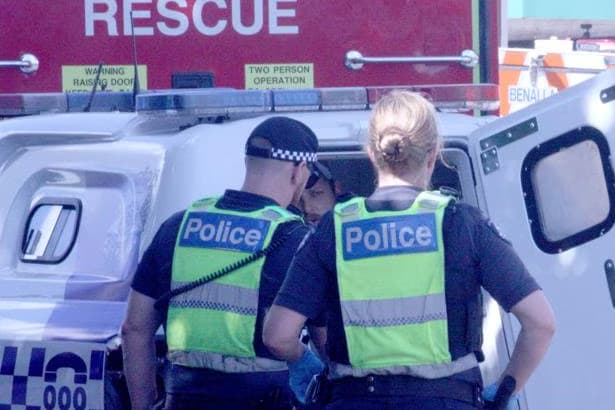
The highest ranking result, because Facebook selects for outrage, was this comment:

"So – the Austrian painter was the greatest therapist of all time?"

It was almost certainly posted by what is called a "sock-puppet account" – a false online identity created to manipulate public opinion, in this case a genocidal dog-whistle. 

Another account offers a ‘Jewish proverb’ about money with a profile picture of Harvey Weinstein; "allcolholic and raapist." [sic] 

These classical antisemitic tropes predate the State of Israel. They predate Zionism. My essay was irrelevant to them. The response was not triggered by the argument. It was not a debate. It required only a Jewish person to speak. 

It was an old hatred with a new reach. 

Two ecosystems 

The Australian's own website – paywalled, moderated, read by people who had chosen to engage with the argument – produced a revealing contrast. The response there was professional concern and independent corroboration. A non-Jewish reader wrote that her own therapist had assumed it was to be taken for granted that the IDF's conduct was despicable – she never went back. Another asked: "How many Russians are being frozen out by their professional peers as a result of the Russia-Ukraine war, or is this privilege reserved for Jews?" There was a desire for accountability, calls for Royal Commission scrutiny, expressions of solidarity. 

These were two different ecosystems – a manifestation not only of antisemitism and anti-Zionism, but of the way platform design polarises public discourse. The paywalled site selects for people willing to read carefully about subjects that reflect their own concerns. Facebook selects for sensation. What it delivers is a specimen from the virtual public square: human reaction unfiltered, a pile-on. 

Erasure disguised as ethics 

In roughly 20 per cent of hostile comments, Jewish suffering was not denied outright – it was cancelled by the suffering of others. 

These commentators invoked Gaza or Palestinian suffering: "Genocide"; "Apartheid"; "8 decades of ethnic cleansing"; "You can't be a good Jew and a Zionist”. This is the wolf in sheep's clothing: erasure disguised as conscience. 

The classical antisemitic move achieves cancellation through denial – it never happened – or through murderous wish: it should happen. This more conditional cancellation works through moral arithmetic: even if it happened, Gaza overrules it. What these commenters did at scale was precisely what my essay described happening in the consulting room. 

The platform and the troll

A similar pattern was reflected in the Facebook comments under other articles in The Australian that week. Greg Sheridan's piece arguing that Israel and Lebanon were both victims of Iranian proxies attracted a similar pile-on. 

Even an article on immigration – not about Jews at all – surfaced antisemitic comments, including the extraordinary claim that the Bondi shooter was "stopping a Mossad agent from shooting down more 'juice.'"  

Facebook's architecture was designed for engagement. It was not designed to distinguish between connection and cruelty. In that design, the troll finds a perfect habitat. Associate Professor Evita March, a psychologist at Federation University Australia, whose research on trolling behaviour was an Australian first, identifies high trait sadism combined with psychopathy as the defining characteristics of the internet troll. Her research confirms trolls are usually men, and that – counter-intuitively – they tend to have high rather than low self-esteem: it is trait sadism interacting with high self-esteem, not insecurity or isolation, which most reliably predicts trolling behaviour.  

They roam the internet in packs, cloaking their identities, posting disruptions aimed at attention-seeking and getting under other posters' skin. Acting from a cool, deliberate enjoyment of others' pain, assured by the knowledge that the target cannot answer back, they flourish in anonymous environments where the personal cost of cruelty is zero. The emojis – the laughing faces, the contemptuous shrugs – are the purest expression of this. They are unanswerable by design. It is pleasure, and presumably the dip in mood after a high, that drives the next post – and the next. 

The mental health toll on targets is well documented: online antisocial behaviour is associated with the same psychological outcomes as face-to-face harassment – depression, social anxiety, diminished self-esteem. For members of a targeted minority, each post carries the additional weight of collective threat. 

Dr Andre Oboler's Online Hate Prevention Institute documented a 539 per cent increase in online antisemitism following October 7, across ten platforms including Facebook – finding that social media had become a primary vehicle for normalising hostility toward Jewish communities in ways that incite real-world harm.  

My experience is a demonstration of the viciousness of that online world. But beyond the cacophony, there were private messages from colleagues and strangers who had read the essay carefully and wanted to say so. They were a reminder that the Facebook comments emerged from one particular ecosystem – algorithmically selected and unrepresentative. It does not reflect the majority of Australians. Holding that knowledge while facing the vile squarely and seriously is, I think, what Jewish Australians are trying to do right now. 

You might also like
  • Antisemitism, homophobia and a radical response to both
    Dennis Altman
  • Confronting Richard Flanagan and the myth of the Israel lobby
    Mary Garden
  • Facing a new year with the knowledge life can be better
    The Jewish Independent
logomark.67a07ee3
We believe in the free flow of information

Republish our articles for free, online or in print, by using our Creative Commons licence

You might also like

    Woman with land and houses behind her
    NewsAustralia

    Australia to increase sanctions against West Bank settlements

    Deborah Stone 2
    funding handouts
    NewsAustralia

    Who will get the money from the Cranbourne windfall?

    Gideon Cohen
    Tame
    Australia

    Tame apologises – but with little grace

    Deborah Stone 1

About the author

Lynette Chazan

Lynette Chazan

Dr Lynette Chazan is a Psychiatrist and Psychoanalytic Psychotherapist, and Clinical Lead of Medical Psychotherapy at a major teaching hospital in Melbourne. She has submitted evidence to the Royal Commission on Antisemitism and Social Cohesion and was a contributor to Ruptured: Jewish Women in Australia Reflect on Life Post-October 7 with an essay entitled "The Pain of Others."

Comments5

  • Avatar of Victoria E. Wilson

    Victoria E. Wilson4 July at 06:21 am

    Sending you support.

  • Avatar of Larry Stillman

    Larry Stillman28 May at 02:15 pm

    Regrettably, we need to get used to the fact that there is a percentage of psychopathic people in the population. Social media and the capacity to amplify makes for a field day. Jews, gays, indigenous, it doesn’t matter. And I’ve also experienced trolling from Jews – all men- who clearly relish demeaning & hurting. So this can’t just be called an antisemitism problem. These awful people exist everywhere and latch on wherever they can

  • Avatar of Corinne

    Corinne28 May at 07:59 am

    Great article Lynette. We are living in deeply frightening times.

  • Avatar of Merryn

    Merryn28 May at 02:50 am

    I’m a narrative analyst with a PhD in critical psychology and I am very interested in your work and analysis. I’d like to understand how social media co-constructs hostile identities through online discourse. It’s a rapidly spreading phenomena and one that we haven’t caught up with.

  • Avatar of judy

    judy22 May at 05:43 pm

    if there is any way to make The Australian essay available to the public, i would appreciate it greatly. it would provide a context to this article i wish i had! thank you for the views shared …

    peace,
    judy