David Zwier: delivering comfort with a conscience
When 30-year-old Zwier walked away from an Australian toy giant without a backup plan, he didn’t know where his path would lead. Two months later, Bonny was born — a purpose-driven company turning the humble doona into a force for good.
Ruby Kraner-Tucci
David Zwier is the founder of ethical bedding brand, Bonny (Image: TJI).
Published: 11 November 2025
Last updated: 11 November 2025
My background is firmly in marketing. I studied business marketing at RMIT and chose the four-year degree stream, which has a year of work experience. I ended up at another Jewish business, Moose Toys, where my placement turned into a job. I was there for five years, predominantly in brand marketing and product development. I started in a junior marketing coordinator role and by time I left, I was a global brand manager.
When I decided to leave Moose in mid-2021, I wasn't sure what I wanted to do next. I didn't have a job lined up, and so I just started talking to people. I think one of the great things about our community is that there are so many people working across different areas and everyone is willing to help each other. I spoke to so many people. I went to job interviews, but I wasn't sure if I wanted to stay in marketing, move into an agency, venture capital, start-ups – eventually I decided that I wanted to start my own business.
I started coming up with all these ideas. Some of them were great, some of them were terrible. I stepped back and thought, what am I passionate about? What am I really good at? I realised that with my background being in marketing and product, and with my experience at Moose and doing a lot of work with Amazon, Walmart and Target, it made sense that I focus on e-commerce.
How did you settle on doonas?
Going into e-commerce with low price items makes no sense, it's not a viable business. I knew I wanted to create a product that was hundreds of dollars, not tens of dollars. I also wanted a product that didn't have a big incumbent in the market, a brand in a world that didn't have any other brands competing against it. With that framework, I spent two weeks thinking about it, and then one day I'm going for a walk, and it came to me – doonas.
Just like that! I remember calling my now wife Samantha and she said it was a great idea – and she would tell me if it wasn’t a good idea! When you think about it, who really knows a doona brand?
I’m struggling to think of one!
That’s common. When you talk to pretty much anyone under 30 or 40, they really struggle. Lots of people think of Adairs, IKEA or Kmart, but they’re more retailers and particularly the latter two, they’re selling at the lower end of the market. The opportunity in my head was to create a strong brand with products that had the same, if not better, quality than the highest end brands already out there.
There were also a few things that gave me confidence along the way. I love skiing and I know that it really matters what you wear. You need a down jacket for freezing alpine climates. I had a sense of what buying down entails – how complicated it is to sift through the technical information, how much the quality of the material matters and how hard it is to find ethical down.

Zwier: "I think for a brand to be successful, you need people to be raving about your product" (Image: supplied).
I remember my wife, back when we first started dating, used my doona over winter and couldn’t believe how soft and fluffy it was. She honestly couldn’t stop talking about it, she had that ‘wow’ moment. I think for a brand to be successful, you need people to be raving about your product. I could see the potential for someone to be really excited about their doona.
A large focus of Bonny is its sustainability. You use ethical materials including responsibly sourced down and certified organic cotton; you donate your doona returns through partner charities; and you avoid single-use plastic and waste. Was this intentional?
Once I landed on the idea, I knew I very quickly had to work out Bonny's direction and target market. I wanted to imprint my own personal values onto the brand. I wanted to be proud of the brand I was representing.
I’m okay with our doonas using an animal product, largely because there's no product or material in the world that is comparable to down. But noting that it is an animal product, I believe that as a brand owner, and particularly as a new brand, I've got a responsibility to execute the fairest, safest, most environmentally friendly way of sourcing that down as possible.
One of the best pieces of advice I got from my one of my old bosses. She said to me, you can always learn what to do from someone, but you can also learn what not to do.
I started searching for suppliers with critical ethical certifications in everything from farming and factories through to packaging. Being a product worth hundreds of dollars and sold online, we had the budget and the room to be able to invest in packaging, and to avoid being so heavily reliant on plastic like other brands.
What about Bonny’s social impact?
Before I launched Bonny, a friend of mine challenged me to think about the social mission, the impact, that I wanted to execute as part of my brand – and to do this in a realistic way. We’re a business, not a social enterprise or a charity, so we can’t spend 100% of our time on changing the planet. But we can think about putting 10% of our time or budget into helping others in some way.
We ended up defining our impact mission as everyone deserves to have a warm and cozy sleep. We partner with two main charities, ReLove and You Matter, which help women and families fleeing domestic violence and are starting again from nothing. These charities provide safe homes, which are beautifully decorated and empowering spaces, they’re safe havens. We take our returns – doonas that are otherwise in perfect condition but cannot be resold – and we give them to our partners for these houses. To be able to contribute in that way really does serve our impact mission.
What are some of the biggest lessons that you took from Moose Toys into Bonny?
When I came into Bonny, I'd never worked in textiles before. I remember thinking about all my blind spots, but having the experience of working with complicated plastic and electronic-based toys gave me confidence that I could figure it out for textiles. And truthfully, the manufacturing process is very similar.
This is also my first time managing a team. I look back on so many mentors I've had at my time at Moose, and I've learned so much from them. One of the best pieces of advice I got from my one of my old bosses. She said to me, you can always learn what to do from someone, but you can also learn what not to do. I think it's a great mantra, because sometimes you get really frustrated and hit roadblocks, but you can still learn from those experiences.
How are you finding being a manager today?
There’s three of us in the team at the moment. When I started, I did everything. From packing the orders, sticking on labels and putting them in the truck, through to designing the website and our logo, and managing our strategy work. My head was everywhere and I was working on a million things, but that is part of what I love about the role.
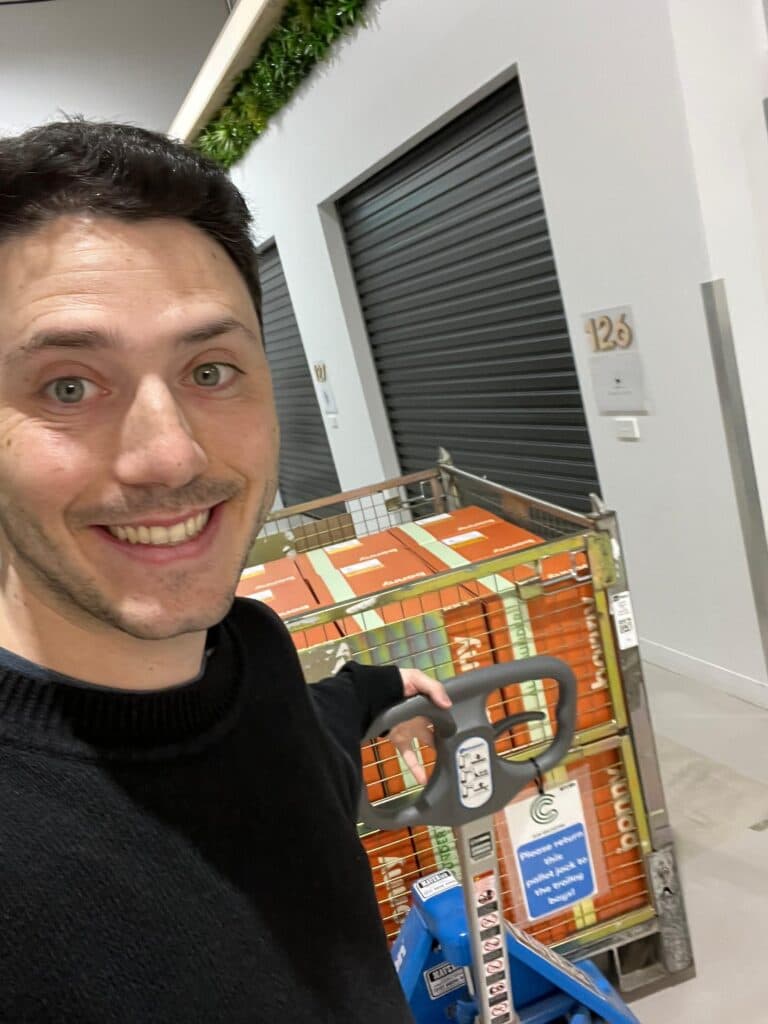
A busy day packing Bonny orders in 2023 (Image: supplied).
Bonny's first hire was in marketing and socials. We then added a Head of Operations, which is a senior role. Both roles have increased Bonny’s capability and allowed us to achieve more. They’ve also freed up my time to work on other things when I didn’t have the bandwidth to complete it.
I love being a manager. It’s so brilliant to see my team succeed in their work. I get so much nachas from seeing them love coming in and thriving every day.
What are some of the challenges of running Bonny and working in this ethical bedding space?
There are three key values that guide Bonny’s overall direction. The first is around having exceptional products and making sure that we're always the best in that respect. The second is a commitment to continually doing better. The third is around transparency and being honest, which goes through every touchpoint.
I think it’s really lovely being exposed to and having connections with different parts of the Jewish community.
We launched bed sheets recently, and we had a vision that we wanted to use organic cotton. We went through the certification process and audited every part of our supply chain. Along the way, we found out that our mill wasn’t compliant, and the alternative supplier didn’t have the right machinery. This meant we would have to change some of our sizing options. We were back to the drawing board and had to find a new supplier.
That example is about manufacturing, but those sorts of challenges happen across every part of our business. Our commitment to change and to do better regularly creates challenges, often because we are in new, unchartered territory.
Transparency in business is especially important to younger generations. We understand that prices go up, for example, but we want to be prepared for it and understand why.
That’s exactly right. We recently had to put our prices up and our customers took it well because we were on the front foot. But you would never believe the reason why. In China, the price of pork has gone down so people are eating more pork. That means there’s less demand for ducks, and so there are fewer ducks being bred, which means there’s less duck down – which impacts the price we pay for our raw materials.
Yes, it’s totally out of our hands. And it’s also totally not kosher!
Let’s switch gears – tell me about your Jewish identity.
Growing up, I went to Bialik and I went to synagogue on the High Holidays. My family moved between being traditional and secular – a lot of my extended family keeps kosher and we always had Shabbat each week, so I was exposed to some of the Orthodox rituals.
Being Jewish means so many different things to different people – there’s a range of interpretations and there’s no right or wrong. I think it’s really lovely being exposed to and having connections with different parts of the Jewish community.
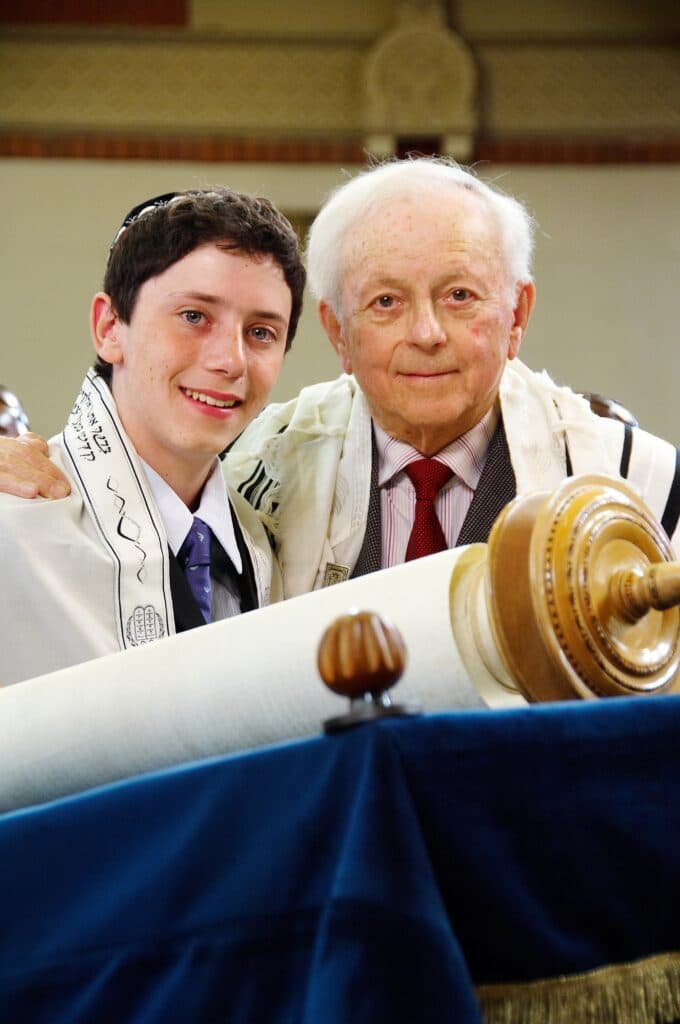
Zwier and his grandfather Joe Kaufman at his Bar Mitzvah in 2008 (Image: supplied).
As an adult, I think my connection to Judaism is more of a cultural feeling than a religious feeling. I'll still go to synagogue on the High Holidays, I still have Shabbat dinner and say the prayers in the traditional way, and I’ve had meaningful experiences with my friends at Havdalah services for example. Culturally, I definitely identify as a Jew, and it is an important part of who I am as a person.
My upbringing involved being with my grandparents – my mum’s parents – a lot. My grandfather Joe was a Holocaust survivor. He survived the camps and came here with nothing, not even the English language. He was able to start his own business, a small grocery store, which turned into a few supermarkets. He died at 95-years-old, but he was working right up until then. It gave him a lot of meaning.
He was able to provide not just for his family, but for his extended family. Seeing him as the patriarch of our family, he really was a shining light as to the difference that you can make in business. He was an amazing example of mentoring and helping people around you. I think it’s easy to forget how one fleeting conversation can make such a small difference in someone’s life. I reflect on that a lot in my journey. I had conversations with people who genuinely helped shape what I’ve done with Bonny.
We end all our Generation Change columns with the same question: what does social impact mean to you?
I remember learning at school that there's three different ways to make impact. The first is to give money, the second is to give time, and the third is to help educate people around you. I think the nice thing about social impact is that it isn't limited to just one of these things. We all have a responsibility to think about our world, and it's up to us to figure out how we can make the most impact.
About the author
Ruby Kraner-Tucci is a journalist and TJI's assistant editor. Her writing has appeared in The Age, Australian Jewish News, Time Out and Broadsheet, among others. Ruby was awarded Multicultural NSW’s Best Report in Multicultural Media 2025 and has been named a Top 36 Under 36 Jewish Changemaker by B'nai B'rith.