Aa
  • Read, Watch, Listen
  • TJI Series
  • Community Action
  • Events
  • Zedi
Follow us and continue the conversation
  • LinkedIn
  • Instagram
  • FaceBook
  • X
  • YouTube
Test yourself with the TJI Quiz!

Adjust size of text

Aa

Follow us and continue the conversation

  • LinkedIn
  • Instagram
  • FaceBook
  • X
  • YouTube

Your saved articles

You haven't saved any articles

What are you looking for?

Original reporting, insightful analysis and diverse views, delivered straight to your inbox

  • LinkedIn
  • Instagram
  • FaceBook
  • X
  • YouTube
Your support fuels our mission to inform, entertain and inspire.

The Jewish Independent is bound by the Standards of Practice of the Australian Press Council. If you believe the Standards may have been breached, you may approach The Jewish Independent or make a complaint to the Australian Press Council in writing at www.presscouncil.org.au. The Council may also be contacted on 1800 025 712.

  • Our Story
  • Contact us
  • Our Team
  • Support us
  • Guidelines
  • Pitch your idea
  • Republishing us
  • Community Action
  • Our Awards
  • LinkedIn
  • Instagram
  • FaceBook
  • X
  • YouTube
Aboriginal FlagTorres Strait Islanders Flag

The Jewish Independent acknowledges Aboriginal and Torres Strait Islander peoples as the Traditional Owners and Custodians of Country throughout Australia. We pay our respects to Elders past and present, and strive to honour their rich history of storytelling in our work and mission.

© The Jewish Independent 2026All Rights Reserved
Website design and development by Your Creative, MelbourneTerms & ConditionsPrivacy Policy
HomeRead, Watch, ListenIsrael
Israel Hamas WarOpinionIsrael

The reasons Israelis have closed their eyes to Gaza

Israelis must look beyond their own prism of pain, ignore the double standards at play and recognise the harsh reality in Gaza and Israel’s responsibility for it.
Shira Efron
Print this
Thin children

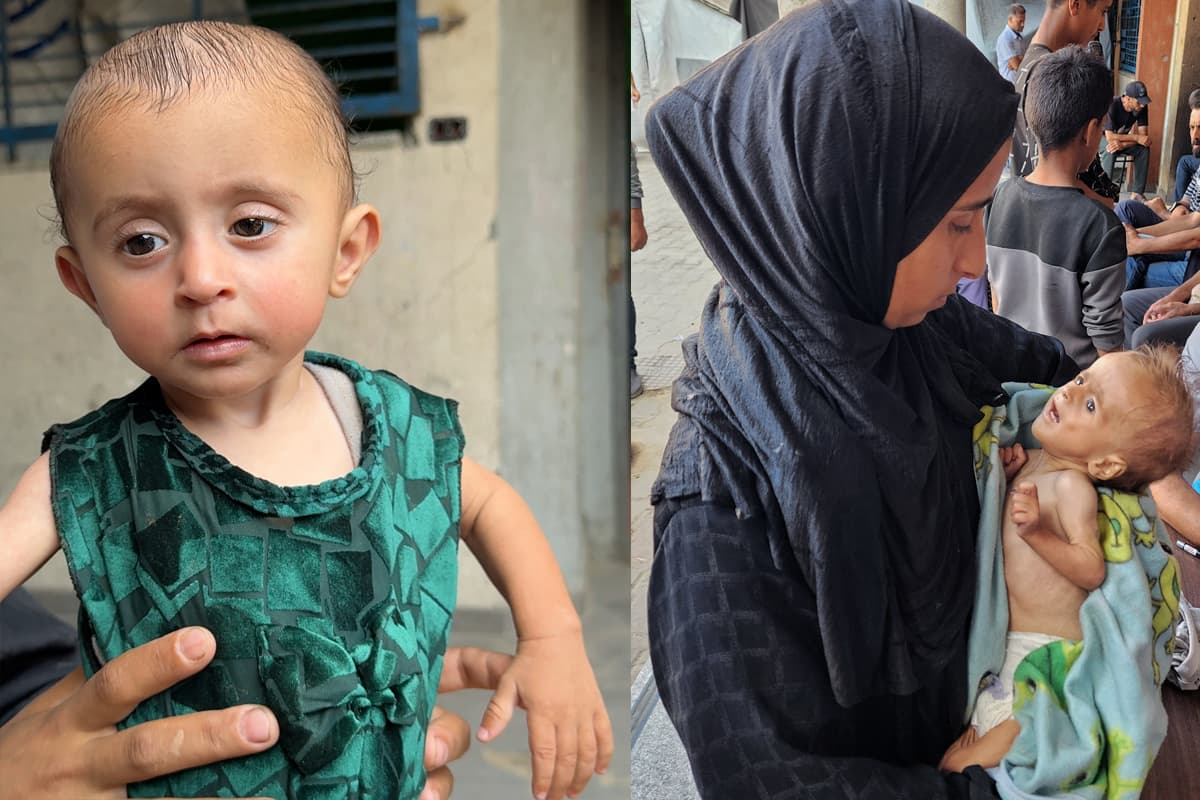
Ahlam, eight months (left), and Salam, six months, are among the children being treated for Severe Acute Malnutrition in a Gaza City clinic (Image: UNRWA).

Published: 17 September 2025

Last updated: 17 September 2025

A stream of images of starving children in the Gaza Strip have captured the world’s attention, deepening anger over Israel’s actions in the territory and furthering its isolation among nations.

But the narrative is different inside Israel. The story of hunger in Gaza has hardly registered compared with other crises and tragedies: the grinding announcements of the deaths of young Israeli soldiers; the political upheaval over the exemption of ultra-Orthodox Jews from the draft and government’s efforts to fire key democratic and professional gatekeepers; the haunting videos of emaciated young hostages, one forced to dig his own grave on camera, after nearly two years in hellish captivity.

Worse than showing indifference, many Israelis deny the clear realities: that Gaza is in chaos and teetering on the edge of widespread starvation, and that Israel has played a major role in bringing about this terrible state.

The attitude is projected from the top. “There is no starvation in Gaza,” Prime Minister Benjamin Netanyahu of Israel has declared. In a news conference last month he blamed Hamas and the international media for perpetuating a “global campaign of lies.” He added that “the only ones being deliberately starved” are the Israeli hostages in Gaza.

This sentiment is widely shared in Israel. A poll in late July found that almost 80 percent of Jewish Israelis believe that Israel is making an effort to avoid causing suffering to Gazans. The same percentage — though primarily on the right and centre — said they are not troubled by reports of famine.

Wilful blindness

While indications are growing that the tragedy is starting to register among Israelis, the wilful blindness of much of Israeli society must be discarded for Israel to begin pulling itself out of the quagmire in Gaza and repairing its own tattered image. The first step to resolving a problem is admitting there is one.
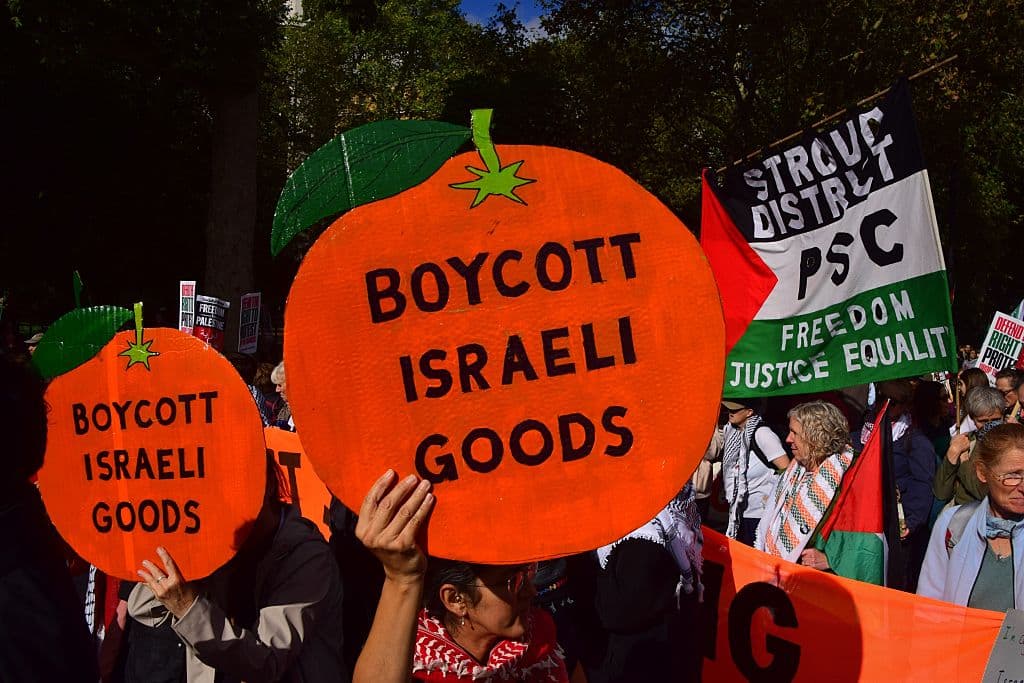

When it comes to Gaza, Israelis live in an echo chamber, relying largely on local media, which often enacts self-censorship regarding Israeli wrongdoing and Palestinian suffering in Gaza. But it is also important to understand the powerful underlying emotions that have led many Israelis to close their eyes and ears to the suffering of Gazans and accept a different version of reality.

Many feel fury at the humanitarians and international organizations that, while criticizing Israel’s every move, seemed to minimize Hamas’s horrendous crimes on October 7, 2023, when about 1,200 people in Israel were murdered and some 250 taken hostage. Fifty are still captive, 20 of whom are believed to be alive. There is a profound sense of unfairness over demands that Israel allow large transfers of aid to Gaza when many returning hostages describe being starved and abused even when there seemed to be enough food for their captors.

Recent history also lingers bitterly in Israeli memory. It includes the 2005 disengagement of Israel from Gaza, followed by Hamas’s 2007 takeover, and nearly two decades of cyclical attempts to deter and contain the organization with limited military operations and economic carrots, like permits for Gazans to work in Israel. All seem to have amounted to nothing in the face of Hamas’s futile and bloody drive to destroy Israel.

The barbarity displayed on October 7, combined with the cheering chorus from enemies and the silence from many friends, hardened the conflict for many Israelis to the fundamental, zero-sum and inherently violent struggle for land and sovereignty that so many of the kibbutzniks murdered in their homes that day had sought to overcome with their peaceful intentions.

Videos from Gaza circulate on Israeli social media, showing markets with food on display, open restaurants, gunmen looting aid. They might be real, but they are often old or fail to present a full picture across the strip. Nonetheless, these videos help Israelis to construct an alternative narrative: There is enough food going into Gaza, but the United Nations is failing to distribute it properly; Hamas and gangs are stealing it, while Israel is doing what it can.

The warnings of famine have drawn more rational scepticism. Despite repeated alarms raised by the Integrated Food Security Phase Classification — the definitive international source for declaring a famine — there is still no clear indication that their predictions have come to pass at scale, leading the Israeli public to believe that the warnings are just another part of the global anti-Israel propaganda machine.

Israelis also lay blame with the UN, which despite objective difficulties has seemingly opted for a principled approach over pragmatism. Nearly 90 percent of UN food aid has been seized by armed actors or hungry crowds since May 19. Still, although the UN adopted Security Council Resolution 2720 in December 2023 to accelerate and monitor the delivery of aid to the people of Gaza, it was not until May that the UN added an online dashboard to monitor that aid. In addition, the UN prioritises the privacy of its local workers in Gaza, failing in Israeli eyes to register legitimate concerns regarding terrorists penetrating aid agencies.

For Israelis, the reality is this: Israel, a flawed but real and vital country, is fighting an evil terrorist group that has the power to stop the horror at any time but hates Israel enough to persist and does not care enough for its own people to stop.

Yet what is happening in Gaza speaks for itself. People are starving, and as in any other crisis, the most vulnerable in society — the elderly, newborns, people with pre-existing conditions — are harmed first.

No humanitarian strategy

Even after almost two years of war, Israel lacks a coherent humanitarian strategy for Gaza, switching aid on and off based on the calculations of Netanyahu, who is trying to balance keeping the political support of his right-wing coalition partners, who want the war to continue, and international pressure to stop it.

After several hundred thousand tons of food aid entered Gaza during the second cease-fire, according to Israel — enough for several months, by World Food Program projections — Israel’s decision to cut off all aid in March pushed the strip into the dire crisis it faces today. Israel said that it hoped the blockade would disrupt Hamas’s ability to profit from the goods coming in, weaken the group’s governance and pressure it to capitulate in cease-fire negotiations.

This was not just a morally wrong choice — humanitarian aid should not be a political issue — but a strategically foolish one that misread both Hamas and the international community. A humanitarian catastrophe in Gaza was never going to force Hamas’s hand. The group needs very few resources to operate: just enough to continue to hold the hostages, carry out guerrilla attacks and continue making statements to influence public opinion.

In May Israel sought to sidestep the UN assistance system, which it relentlessly criticised as ineffectual and compromised by Hamas with the poorly planned and even more poorly implemented system run by the Gaza Humanitarian Foundation. But after months of no aid, stocks in Gaza had run down and prices had soared; the foundation’s four distribution sites were almost immediately overwhelmed and exploited by profiteers, not to mention dangerous to access, with numerous casualties reported in lines for aid. The lack of aid has led to the death of more than 210 people by malnutrition since the start of the war, according to the Hamas-run Gaza Ministry of Health.

The Israeli-American plan to quadruple the foundation’s distribution centres will hardly address the grave situation. Even today the foundation faces logistical challenges, and the boxes they issue, both in terms of food quantity and diversity, don’t translate easily to nutritious meals.

The humanitarian disaster in Gaza is far broader than starvation. The vast majority of the population has been displaced at least once and lacks shelter. There is limited water and sanitation. Health care is devastated. Yet even though Israel now theoretically places no limits on aid to Gaza, it continues to refuse work visas to staff members of the UN and international aid groups.

It restricts humanitarian operations to a small number of organizations that manage to successfully manoeuvre through an opaque registration. These conditions all seem likely to continue: Despite Mr. Netanyahu’s statement on Thursday that Israel would expand the war, beginning with the takeover of Gaza City, the Israel Defence Forces is loath to assume a civilian governance role.

Glimmers of recognition of all this suffering have emerged in recent weeks.

Despite denials of the extent of the grim reality in Gaza, Israel established fixed humanitarian corridors, conducted and facilitated airdrops and allowed in small amounts of commercial traffic and daytime pauses in operations in some areas to allow for aid delivery.

The IDF chief of staff, Lt. Gen. Eyal Zamir, reportedly protested the plan to take over Gaza City mainly for Israeli security reasons, but he also mentioned the lack of plans for a proper humanitarian response for the million people who will be displaced. In addition, he cited the absence of civilian infrastructure in Gaza and called for building hospitals there.

Belated media acknowledgement

Mainstream media, including Channels 12 and 13 and the popular newspaper Yedioth Ahronoth, have begun stating the obvious: that there is hunger in Gaza, and that the current aid system is not working.

The intellectual and cultural elite has also become more vocal, with a petition signed by some 1,000 prominent Israeli artists titled “Stop the Horror in Gaza” and a demand by heads of universities to address the humanitarian situation. People at vigils in Tel Aviv hold posters showing pictures of dead children in Gaza.

Israel has played a leading role in creating this crisis, and continuing wilful blindness to that fact will only worsen the damage in Gaza, radicalise Palestinians for generations to come and further isolate Israel regionally and internationally.

Israel’s legal and moral obligations do not change because of the evil of the enemy it is fighting. Israel cannot ignore, deflect or wish away the crisis in Gaza. It is now making the right strategic and moral choice to increase aid into the territory, but absent a holistic strategy, it will be too little, too late.

Israelis must look beyond their own prism of pain and trauma, ignore the double standards at play and recognise the harsh reality in Gaza and Israel’s responsibility for it. Israel needs the courage to see what it sees. Then it must act.

This article was first published by The New York Times

You might also like
  • ‘Your help is extremely needed’: Jewish aid group on the ground after Nepal flood
    Peter Kohn
  • New evidence Netanyahu was warned about October 7
    Shahar Burla
  • Jerusalemites through the lens
    Sharon Gabay
logomark.67a07ee3
We believe in the free flow of information

Republish our articles for free, online or in print, by using our Creative Commons licence

You might also like

    Ofer_Winter_2026
    Israel Votes 2026AnalysisIsrael

    Who is Ofer Winter and could he upset Netanyahu’s election?

    Shahar Burla
    Erdogan Turkey
    AnalysisIsrael

    Turkey emerges as military threat to Israel

    Dror Doron
    altalena
    Israel Votes 2026OpinionIsrael

    The Altalena should be a warning, not a political weapon

    Shahar Burla 1

Comments4

  • Avatar of Ramon Capel

    Ramon Capel21 September at 05:00 pm

    Clearly, those who believe that this will change are mistaken. Dignity and morality are easily lost and cannot be recovered. We have lost credibility in the eyes of the rest of humanity, which rightly accuses us of not having raised our voices.
    This is not a war, unless it is in medieval terms. Locking up a population and shooting them is a massacre, and a crime unworthy of the values we demand of others.

  • Avatar of Ian Light

    Ian Light20 September at 11:11 pm

    The Hatikva is Israel’s Anthem and is the Anthem of Hope .
    The Jewish people wanted a Secure Homeland in those parts of the Ancient Land that were undeveloped and with few people .
    They wanted millions of Jewish People in the Homeland to escape Genocide .
    No Arab People needed to be displaced from the land promised to Abraham’s peoples .
    League of Nations British Mandated Palestine could have had millions of Jewish People millions of Arabic People and millions of International Humanists by early 1939 all united and armed to defend Humanitarian Values .

  • Avatar of Nunya

    Nunya18 September at 10:06 pm

    Too late. The mask has slipped and the whole entire world has seen what Israel truly is and no amount of hasbara can un-do the damage. Tell yourselves whatever you need to feel better, the clear truth is Israel has been the land-thieving bad guy who’s intention from day one was to steal the land by physical force and kill and oppress anyone who rightfully resisted that injustice. It really is that simple. Everyone sees it now.

  • Avatar of David Jackson

    David Jackson18 September at 07:33 am

    This is war, I’m not immune from the images from Gaza. I have to pick a side. Bring the hostages home.

About the author

Shira Efron

Shira Efron

Dr Shira Efron is a senior fellow and research director at Israel Policy Forum. She previously led the Israel program at the RAND Corporation and was a consultant with the UN in Jerusalem on Gaza access.