Government to back away from withholding uni funding over antisemitism
Draft legislation is likely to opt for fines, as uni heads face tough questions at Royal Commission about the safety of Jews on campus
Michael Visontay
Mark Scott, Vice Chancellor at University of Sydney, arrives at the Royal Commission on Wednesday, July 15 (AAP/Christopher Hopkins)
Published: 16 July 2026
Last updated: 16 July 2026
The Federal Government is planning to back away from a proposal to withhold funding from universities that fail to act effectively against antisemitism. Instead, it is expected to include a provision to fine universities under new legislation expected to come into effect next year.
Now the Government has withdrawn its support for leveraging funding.Education Minister Jason Clare has not yet specified what provisions will be in the draft legislation due to be introduced into Parliament later this year, but The Jewish Independent understands that it is likely to opt for fines over the more punitive measure of withholding funding or terminating grants that Envoy Jillian Segal advocated in her report.
The new measures will be administered through the university sector regulator TEQSA and will come into force on January 1 next year. Clare said this week that the new legislation would address the imbalance in the regulator’s current powers and the difficulty in implementing them.
“When it comes to enforcing the standards, the university regulator at the moment has a feather and a sledgehammer and not much in between,” Jason Clare told The Jewish Independent. “They can shut a university down, or they can give them a warning.
“While the regulator already has the power to fine universities, it would have to take them to court to do so. I don’t think that’s the right approach,” Clare added.
The revelations about stronger punishment for universities come as Australia’s leading vice-chancellors endured intense questioning at the Royal Commission this week.
Sydney Uni VC apologises over ‘light touch’ response
“I can see that our Jewish students and staff paid the price for that as the encampment dragged on, and I am sorry to them that it took that long for us to get it done, and I’m sorry we did not keep them more closely engaged and listen more intently to them as it was going,” Scott told the commission.
Scott said he was preoccupied at the time with shutting down the encampment as quickly and peacefully as possible, believing that acting too forcefully would have inflamed it.
As the number of protesters and tents grew, Scott said the leadership team watched with concern the “destruction and turmoil” that was happening on US university campuses.
He said his university’s focus became to de-escalate, saying that to have had the students taken away by force might mean “an encampment 10 times the size the day after”.
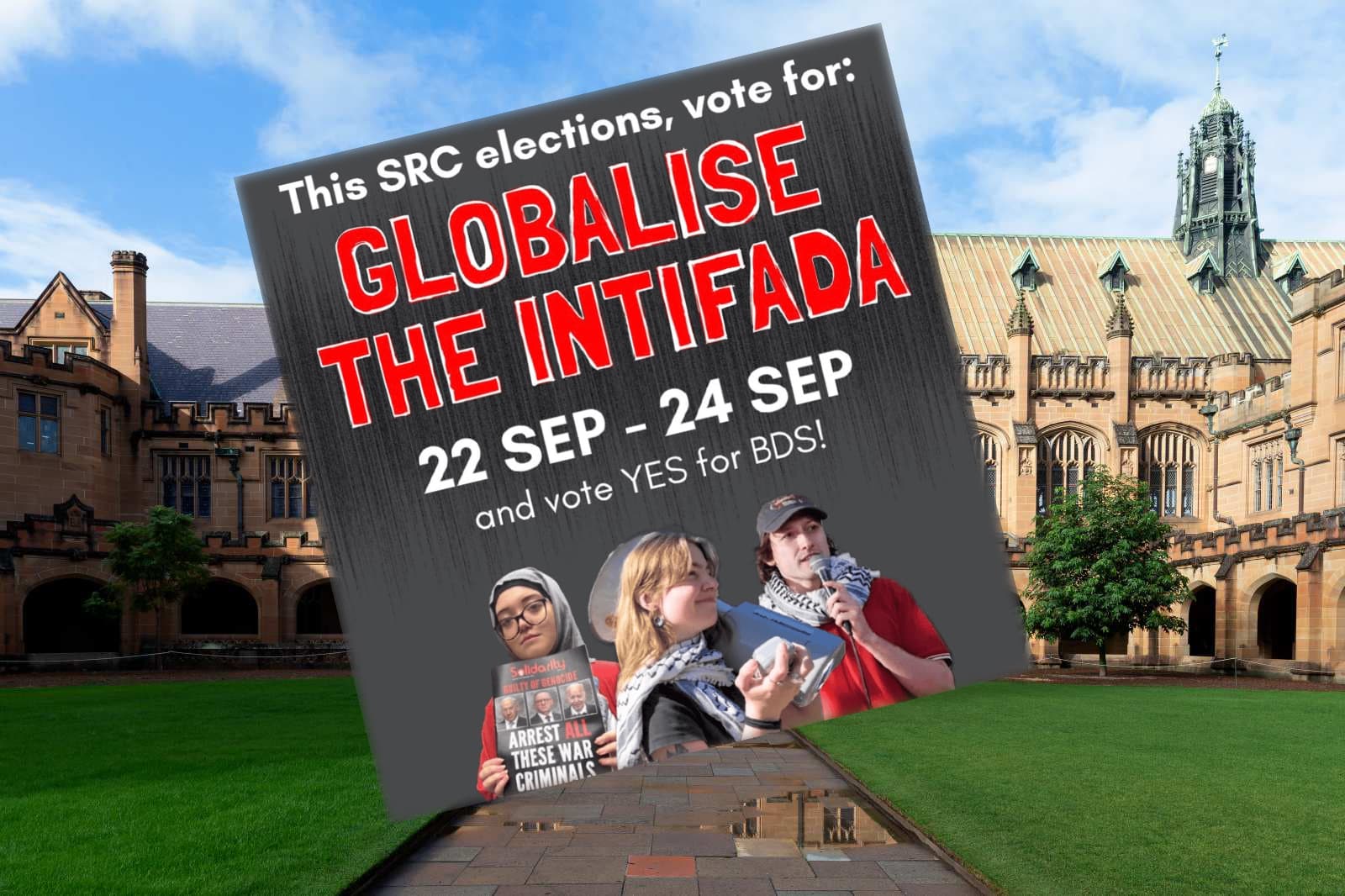
Asked about whether the university had tried to ban chants such as “from the river to the sea,” and “globalise the intifada”, he said they had not.
“They were not banned by the laws of NSW, they were not banned by the national laws. Those who said to us, ‘well, you should not be able to say that phrase within the university gate’, acknowledged that you could walk outside the university gate and say it without any sense of sanction. That seemed a disconnect that was hard for us to deal with.”
After the encampment finished, Scott said he had become more informed about antisemitism and developed a different perspective.
“I think I understand better just how menacing and threatening some in our community found the presence of the encampment every day,” he told Commissioner Bell.
Melb Uni allowed protests if they did not threaten safety
Melbourne University’s interim Vice Chancellor Glyn Davis, who was not in charge during the protest period, told Commissioner Virginia Bell that when encampments on the south lawn had been set up in early 2024, the university’s approach was to allow the protests as long as they did not present a threat to safety.
Davis said the large presence of protesters in a high-traffic area of the campus, the “chants and singing and waving of banners”, and regular marches towards the central administrative building “made people nervous about their safety … [and] whether they’re welcome on campus”.
In early May 2024, The University of Melbourne received a letter from the deputy commissioner of Victoria Police asking it to “carefully consider the risks of whether to allow” a pro-Palestinian encampment on campus.
The letter read: “We assess the presence of permanent encampments, and any increase in size in those encampments, will likely lead to significant public safety risks.”
The atmosphere had changed, Davis said, when protesters occupied the Arts West building, erecting 20 tents with 50 protesters in residence in early May 2024.
Then-vice-chancellor Duncan Maskell ordered them to leave the university grounds and warned that if they did not, they would be charged with trespassing. Still, the protesters stayed.
On May 22, 2024, the protesters and the university negotiated an end to that protest. The university agreed to publish a list of its defence collaborations, yielding details of agreements with Boeing Aerostructures and Lockheed Martin, among US Defence Department collaborations worth $15.4 million.
Challenged by counsel assisting the Royal Commission, Zelie Heger, about whether it was appropriate for the university to negotiate with the protesters, Davis said: “The university was very clear … that this was unacceptable behaviour.”
“On the other hand, the university does not have a police service, doesn’t have its own enforcement,” he added. “Security guards who work at the university are not empowered to move people on – certainly are not empowered to arrest people for breaking the law. And only Victoria Police can decide that something is trespass.”
Davis said it took four police officers to forcibly remove one protester. In response, the university changed its bylaws, which included an order that camping was not allowed on campus, and outsiders could not protest at the university.
Occupation of Professor Steven Prawer’s office
Steven Prawer is an award-winning physics expert at The University of Melbourne. Professor Prawer, who describes himself as an observant Jew and Zionist who wears a kippah, said he was targeted by pro-Palestinian protesters who accused him of supporting genocide in Gaza.
He said he was targeted because of his role in heading up a research collaboration between The University of Melbourne and the Hebrew University of Jerusalem, as well as comments he made at a pro-Israel rally.
He said protesters also drew links between his work and Israeli defence. Professor Prawer said his work was not related to the military.
Glyn Davis quizzed about Prawer intimidation
Glyn Davis was quizzed about the incursion into the office of Professor Steven Prawer, who appeared at the commission on Tuesday, where he recounted the moment he found about 20 masked pro-Palestinian protesters inside his office chanting, “Prawer, Prawer, you can’t hide. You’re guilty of genocide”.
Davis revealed on Wednesday that the protesters had gained access because a new swipe card access point was being installed in response to earlier targeting of the professor.
“The only reason they got into the building was because the doors were open, so security people could put the security changes in place,” Davis said, adding, “life is full of ironies”.
Davis agreed the incursion was unacceptable, but pushed back against the professor’s complaint that the university had not kept him abreast of their investigation into the incident.
Lawyer Gabi Crafti, who represents seven mainstream Jewish communal organisations, cross-examined Davis about a practice among some students during the height of the protests, where students would enter lectures before “inviting classes to vote on matters connected with the Middle East conflict, with the voting then being photographed or recorded” and put on social media.
Davis agreed this was clearly unacceptable.
Pro-Palestinian student says violence a legitimate tactic
Earlier in the week, the Commission was told by a prominent pro-Palestine university student leader that violence is a legitimate tactic in freedom movements, but would not say if she believed Hamas’ October 7, 2023, attack on Israel had been a legitimate use of that violence.
“What we’ve heard … so far is day after day after day of evidence which conflates legitimate anti-genocide, pro-Palestine activism with genuine antisemitism which exists in our society,” said Johnson, a student at the University of Technology, Sydney, who helped organise protests across Sydney, including the march across the Harbour Bridge.
“The primary concern in a democracy, when we’re talking about free speech, cannot be simply whether somebody’s feelings will be hurt by something or not.”
Johnson also told reporters the commission was a farce because it had “allowed government-appointed figures like the antisemitism envoy [Jillian Segal] to air ideas that our state media should be muzzled, and … that national service should be introduced”.
Johnson said she had agreed to give evidence at the Royal Commission because she wanted to “push back against the narrative”. She likened the push for independence in Gaza to the violent struggle against slavery in the United States, against apartheid in South Africa, and by the Viet Cong in the Vietnam War.
“I think the resistance of people against colonisation has always involved elements of both mass non-violence and also violent resistance,” she told the commission.
When asked by reporters several times whether the October 7, 2023, attack by Hamas in Israel had been a legitimate expression of violence, Johnson walked away from the microphone.
IN A STATEMENT released on July 16, Jeremy Suss, President of AUJS, said: “When he was pressed yesterday on whether Jewish students are safe on his campus, Professor Scott gave no clear answer. As his next five year term as Vice Chancellor begins, Professor Scott needs to do far more to reassure Jewish students at the University of Sydney that they will be kept safe under his continuing leadership.”
About the author
Michael Visontay is Commissioning Editor of TJI and was Editor-in-Chief from 2017-22. Michael is a former Assistant Editor of The Sydney Morning Herald and columnist with The Australian Jewish News. He has written six books, including Who Gave You Permission? with Manny Waks, and Welcome to Wanderland: Western Sydney Wanderers and the Pride of the West. His most recent book is Noble Fragments: the Maverick who broke up the world's greatest book (Scribe, 2024).