
Aa
  • Read, Watch, Listen
  • TJI Series
  • Community Action
  • Events
  • Zedi
Follow us and continue the conversation
  • LinkedIn
  • Instagram
  • FaceBook
  • X
  • YouTube
Test yourself with the TJI Quiz!

Adjust size of text

Aa

Follow us and continue the conversation

  • LinkedIn
  • Instagram
  • FaceBook
  • X
  • YouTube

Your saved articles

You haven't saved any articles

What are you looking for?

Original reporting, insightful analysis and diverse views, delivered straight to your inbox

  • LinkedIn
  • Instagram
  • FaceBook
  • X
  • YouTube
Your support fuels our mission to inform, entertain and inspire.

The Jewish Independent is bound by the Standards of Practice of the Australian Press Council. If you believe the Standards may have been breached, you may approach The Jewish Independent or make a complaint to the Australian Press Council in writing at www.presscouncil.org.au. The Council may also be contacted on 1800 025 712.

  • Our Story
  • Contact us
  • Our Team
  • Support us
  • Guidelines
  • Pitch your idea
  • Republishing us
  • Community Action
  • Our Awards
  • LinkedIn
  • Instagram
  • FaceBook
  • X
  • YouTube
Aboriginal FlagTorres Strait Islanders Flag

The Jewish Independent acknowledges Aboriginal and Torres Strait Islander peoples as the Traditional Owners and Custodians of Country throughout Australia. We pay our respects to Elders past and present, and strive to honour their rich history of storytelling in our work and mission.

© The Jewish Independent 2026All Rights Reserved
Website design and development by Your Creative, MelbourneTerms & ConditionsPrivacy Policy
HomeRead, Watch, ListenAustralia
AustraliaLifestyle

Housing insecurity hits home in Jewish community

Shame and stereotyping can hide homelessness but the Jewish community is far from immune to a growing problem
Jarod Rhine-Davis
Print this
Housing

Image (Getty/TJI)

Published: 13 July 2026

Last updated: 13 July 2026

When Melbourne Jews gathered to talk about crises facing the community at a Jewish Community Council of Victoria (JCCV) event in May, the organisers expected that terrorism would be the focus. But when asked to share the crisis that concerns them most, many members of the audience identified the housing crisis. 

It is new for the problem of Jewish housing insecurity and homelessness to make it into mainstream communal discussion, but it should not be surprising. The change is reflective of the growing problem across Australia: the last census found 122,000 people were homeless, 28 per cent higher than 20 years earlier.  Government and charity estimates suggest the problem has worsened in the past five years.

Becoming homeless

Personal crises such as domestic violence, health problems or unemployment can drive previously stable lives into a tailspin that ends with people losing their homes.

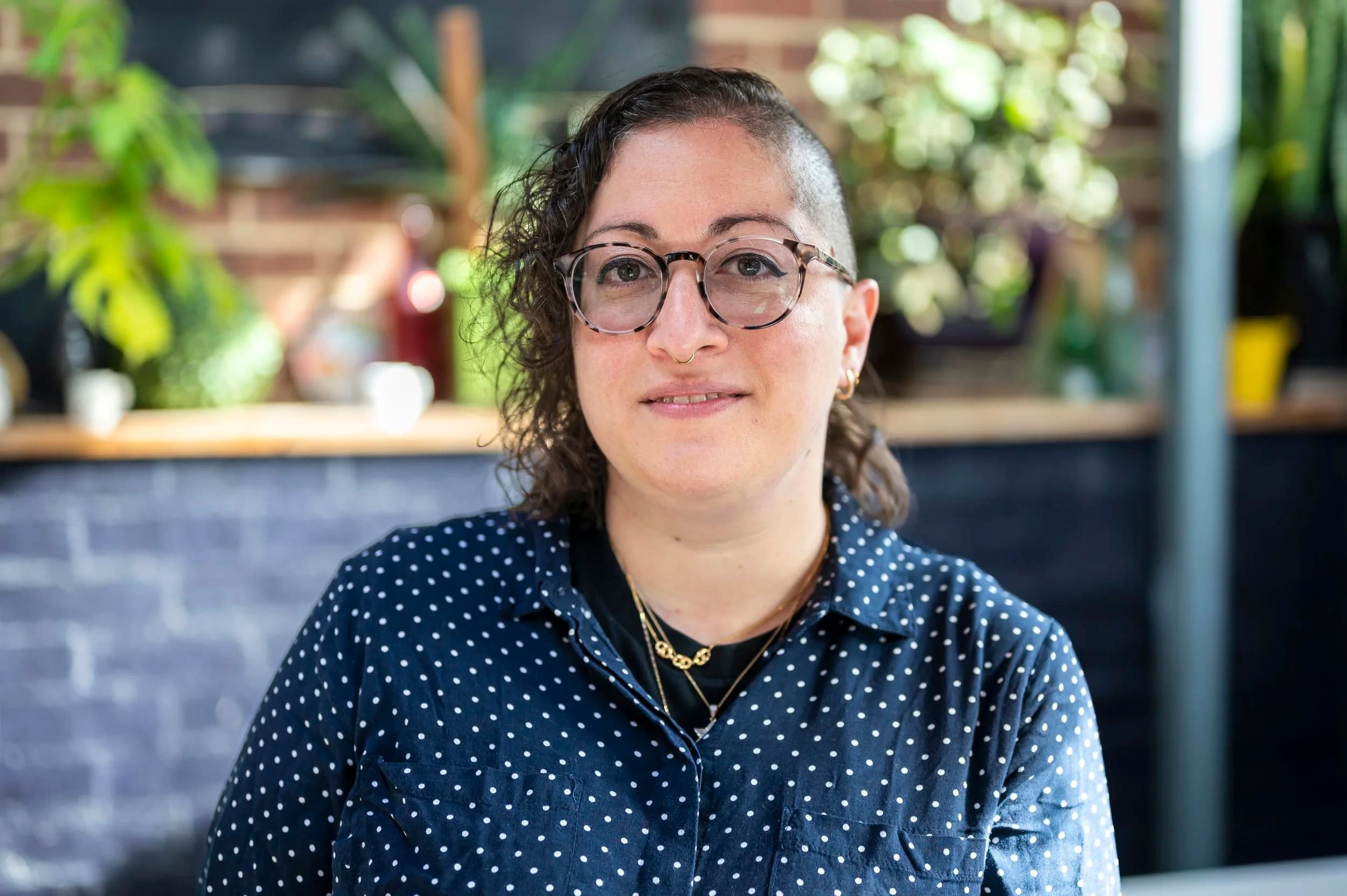
For Sally Goldner, an unfair dismissal from a toxic workplace triggered mental health struggles and complex PTSD that left her unable to work and facing homelessness late in life.

“I was given 60 days’ notice by the private rental property manager to vacate in mid-November. So, before the end of the calendar year shutdown of services, I was facing housing insecurity at 60.”

Sally Goldner
Sally Goldner

Malki Rose, from the food support organisation Pekelach, says many women come to the service after family breakdown. “The most common thing that we've seen at Pekelach is when somebody comes in with domestic violence experience, at the risk of losing their home,” she said.

For single parents, the maths of surviving on welfare is impossible. “The parenting payment itself is less than 35 per cent of the average rent, so it is not physically possible for them to get into a rental,” says Rose.

There are the young people cut off by their families over their identity or religious choices. Rose has dealt with trans youth who were written out of wills and family trust funds.

Dassi Erlich, Director of Programmes at Pathways, sees the same pattern for young people leaving ultra-Orthodoxy. Some young people are kicked out of home simply for questioning their parents’ style of religious observance, she said.

Migration is another factor that can cause housing instability.  Robert Thomson, a community support worker at the City of Port Phillip, knows many Jews from the former USSR stuck in public housing queues or facing rental stress.

The double cost of invisibility

Jews struggling with homelessness often face a second layer of trauma not experienced in the wider community. Both the community’s sense of itself and the traditional stereotypes of Jews create an expectation of Jewish wealth and success.

This assumption leads people to hide their homelessness, often at enormous personal cost. Rose has seen clients put on a brave face and attend charity gala lunches while secretly broke, and students sleeping rough, then showing up at their school early morning minyan to get a free breakfast.

Goldner hid her housing struggles for three years because she felt she couldn't show weakness, a problem aggravated by her profile as a trans activist. “I think a few people picked up things weren’t great, but most didn’t know the full extent … The stereotype that Jewish people are largely financially secure didn’t help. We can face challenges and disadvantages as much as anyone else.”

Erlich adds that young people hiding homelessness put themselves in danger. She cites the case of an 18-year-old girl couch-surfing and wandering during the day who moved into the home of a known abuser.

Homelessness in the Jewish community is an issue many people find too uncomfortable to face, says Erlich. “I think that comes down to a mixture of denial, not wanting to see that this can happen, and not wanting to acknowledge that our community faces all the same issues.”

The closeness of the community has pros and cons for those suffering from poverty. “Within the Jewish community, it is even harder as everyone knows everyone,” one support worker commented. But he added Jewish community poverty can be hidden from outsiders because the community works hard to handle things internally before they get desperate. “We have always been forced, in a way, to take care of our own,” he says. He pointed to organisations like C-Care, MJCF, and Anash that step in to support people before they lose their homes.

Breaking down community

Many of the structures of the Jewish community make poverty isolating. The geographical concentration of the community in high-cost suburbs makes Jewish life inaccessible for those living further out. The cost of kosher food and large families create particular issues in the Orthodox community.

Rose says the long-term result is often disconnection from the community: “The stigma becomes isolation. It means the kids are not getting a Jewish education or connecting with other Jewish kids. We have families that have left the community and moved to the country.”

There are some Jewish community services, including Orly House, a safe house for youth run by Pathways and the Lighthouse Foundation. However, Rose says gaining support for homelessness in the community is difficult. Donors prefer funding visible, international causes over local homelessness: “If you ask them about supporting homelessness here, it just doesn't interest them.”

She would like to see initiatives, such as a program where landlords could offer subsidised rent to struggling families as a tax-deductible donation.

The first step is admitting the problem is real. Says Rose, “Most people do not see it. But eventually, it happens to somebody they know.”

You might also like
  • Neurodivergence and inclusion in the Jcom
    The Jewish Independent
  • Who will get the money from the Cranbourne windfall?
    Gideon Cohen
  • Argentina’s president wraps himself in Jewish symbols while taking a chainsaw to the country
    Florencia Tuchin
logomark.67a07ee3
We believe in the free flow of information

Republish our articles for free, online or in print, by using our Creative Commons licence

You might also like

    ANNIKA WELLS PRESSER
    Israel Hamas WarNewsAustralia

    No action to stop Hezbollah ally beaming antisemitic and anti-Israel content into Australia

    Michael Visontay
    vandalism car woollahra fuk israel farhat
    Australia

    Court decision fails to understand when ‘Fuk Israel’ becomes antisemitic

    Jeremie Bracka 6
    Futurism
    OpinionLifestyle

    Jewish Futurism? We’ve been practising it for millennia 

    Renata Zimbarg 1

About the author

Jarod Rhine-Davis

Jarod Rhine-Davis

Jarod Rhine-Davis is a Melbourne-based Jewish LGBTQ+ community leader and founder of Jewmos, a grassroots initiative creating spaces for queer Jews to connect, celebrate, and explore identity. Through his work, he advocates for inclusion and belonging at the intersection of Jewish and LGBTQ+ life. He works at The Jewish Independent, helping produce community events.

More from the author

NewsIsrael

LGBT asylum seekers caught between Palestinian violence and Israeli bureaucracy

FeatureLifestyle

The right to an ordinary Jewish life

FeatureLifestyle

On my own (terms)

Comments1

  • Avatar of Ljm

    Ljm17 July at 12:48 am

    The housing crisis is heartbreaking how can I help