Aa
  • Read, Watch, Listen
  • TJI Series
  • Community Action
  • Events
  • Zedi
Follow us and continue the conversation
  • LinkedIn
  • Instagram
  • FaceBook
  • X
  • YouTube
Test yourself with the TJI Quiz!

Adjust size of text

Aa

Follow us and continue the conversation

  • LinkedIn
  • Instagram
  • FaceBook
  • X
  • YouTube

Your saved articles

You haven't saved any articles

What are you looking for?

Original reporting, insightful analysis and diverse views, delivered straight to your inbox

  • LinkedIn
  • Instagram
  • FaceBook
  • X
  • YouTube
Your support fuels our mission to inform, entertain and inspire.

The Jewish Independent is bound by the Standards of Practice of the Australian Press Council. If you believe the Standards may have been breached, you may approach The Jewish Independent or make a complaint to the Australian Press Council in writing at www.presscouncil.org.au. The Council may also be contacted on 1800 025 712.

  • Our Story
  • Contact us
  • Our Team
  • Support us
  • Guidelines
  • Pitch your idea
  • Republishing us
  • Community Action
  • Our Awards
  • LinkedIn
  • Instagram
  • FaceBook
  • X
  • YouTube
Aboriginal FlagTorres Strait Islanders Flag

The Jewish Independent acknowledges Aboriginal and Torres Strait Islander peoples as the Traditional Owners and Custodians of Country throughout Australia. We pay our respects to Elders past and present, and strive to honour their rich history of storytelling in our work and mission.

© The Jewish Independent 2026All Rights Reserved
Website design and development by Your Creative, MelbourneTerms & ConditionsPrivacy Policy
HomeRead, Watch, ListenArts & Culture
Arts & CultureAustralia

How to be perfect, a hunter-gatherer’s guide and Mel’s remarkable life

Aviva Lowy
Print this

Published: 1 April 2022

Last updated: 5 March 2024

AVIVA LOWY discovers wit, wisdom and ripping yarns in this bunch of books by Jewish authors

The Jewish Independent

How to Be Perfect: the correct answer to every moral question - Michael Schur (Quercus)

There’s a giveaway in the cover art of this book, which has the ‘t’ from ‘perfect’ unmoored and floating off, that this is very much a humorous take on the moral high ground.

That will come as no surprise to those familiar with Michael Schur as the creator of the successful Netflix sitcom, The Good Place. Set in a fantasy version of the afterlife, a technical error has landed newly deceased and not-so-nice Eleanor Shellstrop with the truly deserving folk.

To make sure she’s not booted out once the mistake comes to light, she sets out to become a better person, but first she has to learn the basics of ethical behaviour. So what makes a person good or bad? 

That philosophical question makes for comedy gold, and in the process of writing the show and consulting with academics, Schur has become something of an expert himself. 

Now he is sharing his wisdom with a whirlwind introduction to moral thinking that has informed Western civilisation. While he may be dealing with the intellectual heavyweights of the philosophy world, this is an easy and funny read.

You’ll learn about Utilitarianism - A Results-Oriented Business, and the “two deeply weird dudes” Jeremy Bentham and John Stuart Mill; that Kant thought happiness was irrelevant; and whether you have to return your shopping cart to the cart rack.

This is an excellent primer for anyone who wants to become conversant with big ideas (without the difficult dull bits), impress at dinner parties or live a good life.          
The Jewish Independent

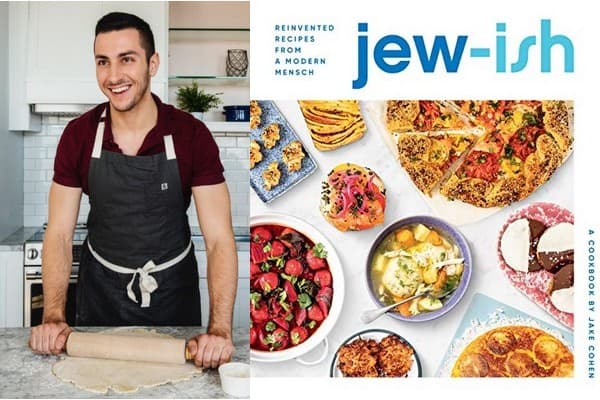
Jew-ish: reinvented recipes from a modern mensch - Jake Cohen (Harper Collins)

Dedicated to his husband Alex, Jake Cohen describes his cookbook as “our love story”. And in a way, it is, melding recipes from Jake’s Ashkenazi, food-obsessed family, with that of his Iraqi in-laws.

Early in their romance, Cohen wanted to cook for Alex, but faced the problem that, though Alex was the “quintessential nice Jewish boy”, he didn’t grow up with brisket or babka. He was brought up with, “fragrant stews, spiced rices and sweets brimming with rosewater and cardamom”.

Cohen learnt how to prepare these Middle Eastern treats from the older women in Alex’s family. “What began as a labour of love to bring these dishes into our home quickly became the common ground that allowed me to break down walls between myself and Alex’s family.”

Jew-ish is a joyous celebration of food and culture. It provides handy information about prayers and traditions, recipes for the holy days, and modern twists on old favourites, such as a Reuben babka, cacio e pepe rugelach, and tiramatzu - matzo tiramisu for Passover.

There is also a list of pantry staples which includes sour cream and cream cheese, the Ashkenazi equivalent of butter in French cuisine. As Cohen says, “always go for full-fat - you’re worth it”. 

Cohen is a boyishly enthusiastic new food star, who has been a food editor at Tasting Table and Time Out New York, test kitchen director at social media giant Feedfeed, works with the Shabbat-focussed non-profit OneTable, and presents videos to his Instagram account for over half a million followers. 

The Jewish Independent

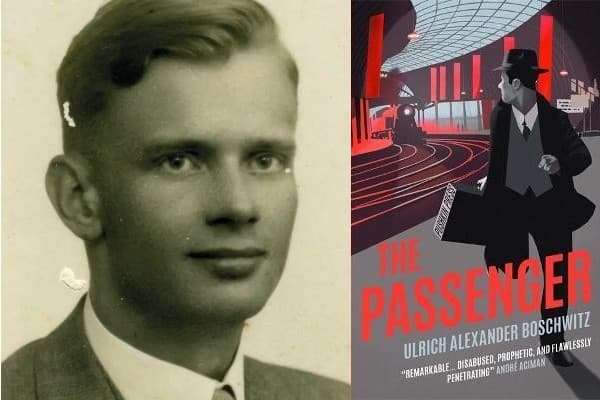
The Passenger - Ulrich Alexander Boschwitz, translated by Philip Boehm(Pushkin)

It is November 1938 and Silbermann, a successful Jewish Berlin businessman, is disturbed by wild pounding at his apartment door. The stormtroopers have arrived and Silbermann must flee out the back way.

Thus begins the novel which follows Silbermann as he takes a series of frantic train journeys, not knowing where to turn or where to go, and realising he can trust no one. Even his business partner, a Christian employee he promoted to satisfy Nazi requirements, grabs the opportunity to take over the company and abandon him. 

In his frenzied state, Silbermann’s thoughts spiral. On the one hand, he reassures himself that the situation will boil over, that he has money to get out of Germany, that he doesn’t look Jewish. On the other hand, he chastises himself for having remained complacent for so long and fears it is too late to reach safety.

Reading like a suspense thriller, The Passenger was written by Alexander Boschwitz as an immediate response to the horrors of Kristallnacht. He completed the first draft in just one month when he was only 23 years old.    

Following the Nuremberg Laws of 1935, at the age of 20, Boschwitz escaped Berlin for Sweden, then Paris, Luxembourg and Belgium. When he joined his mother in England shortly before the outbreak of war, he was interned as an “enemy alien” and shipped to Australia.

Allowed to return to England in 1942, his ship was torpedoed by a German submarine and all on board died. He was 27. Ironically, like his hero, he was constantly on the move and without safe haven. 

The Jewish Independent

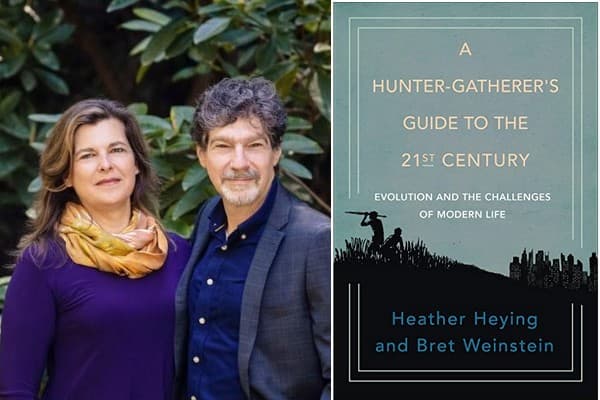
A Hunter Gatherer’s Guide to the 21st Century - Heather Heying and Bret Weinstein (Portfolio)

The academic Bret Weinstein is no stranger to controversy. He shot to fame in 2017 after refusing to participate in a 'white-free' day at his progressive Pacific North-West campus - eventually being pressured to resign. And he has not shied from the spotlight since, provoking harsh criticism for spreading COVID-19 misinformation, among other strong opinions.

Despite this notoriety (or perhaps with the aid of it), late 2021 saw his and wife Heather Heying's book soar into the New York Times best seller list.

A Hunter Gatherer's Guide to the 21st Century explores the problems of modern life through an evolutionary lens, shining a spotlight on the many ways in which the environments and lifestyles that predominate in wealthy, Western nations are in tension with those that our bodies evolved to suit. 

Weinstein and Heying provide endless interesting tidbits and useful suggestions - what they call 'corrective lenses' - on topics ranging from medicine and food to education and parenting. 

But it also seems as if many of the authors' personal bugbears have made their way into the book, often supported by scant evidence. These include some very dubious criticisms of fluoridated water, and - even more concerning for an Australian audience - sunscreen scepticism.

There is value to be had in reading this one but go in with a critical mindset!

The Jewish Independent

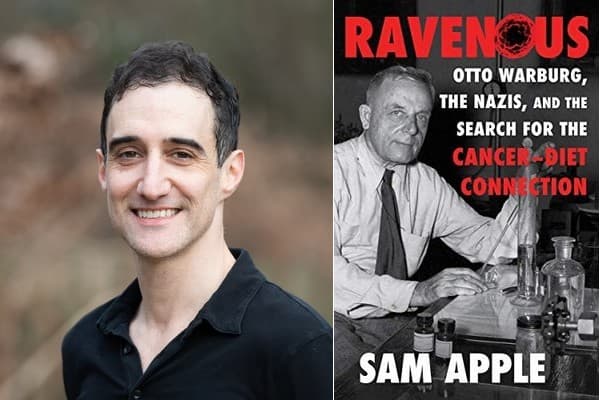
Ravenous: Otto Warburg, the Nazis, and the search for the cancer-diet connection - Sam Apple (Liveright)

Though Nobel laureate biochemist, Otto Warburg, was both Jewish and an openly gay man living in Nazi Germany, he managed to thrive under the protection of the Third Reich.

The reason for this privileged status, when either his Judaism or homosexuality would have seen him sent to the camps, was his ground-breaking work on cancer. Hitler believed cancer was one of the greatest threats to humanity and he hoped Warburg could cure it and secure Germany’s survival.

Author Sam Apple places Warburg’s work, which basically sees cancer as a problem associated with metabolism, against the history of the science of cancer. Greatly lauded at the time, Warburg’s theory was superseded after the war with the discovery of DNA and the search for a genetic basis to the disease.

The disappearance of Warburg’s name from public view may have been hastened by the compromised morality of his endeavour. Obsessed with his research, he didn’t see beyond his genteel Berlin lifestyle - even as Europe fell to the Nazis. The vast majority of his fellow Jewish scientists had long since fled the country.

But 80 years on, Warburg is again having a moment in the sun. Scientists are looking at his theory that cancer cells, unlike healthy cells, consume huge amounts of glucose, and are investigating the link between sugar, obesity and cancer. Can what we eat influence how cancer cells grow? 

Apple believes Warburg’s work may help explain why cancer has become so prevalent and how to reverse the trend.  

The Jewish Independent


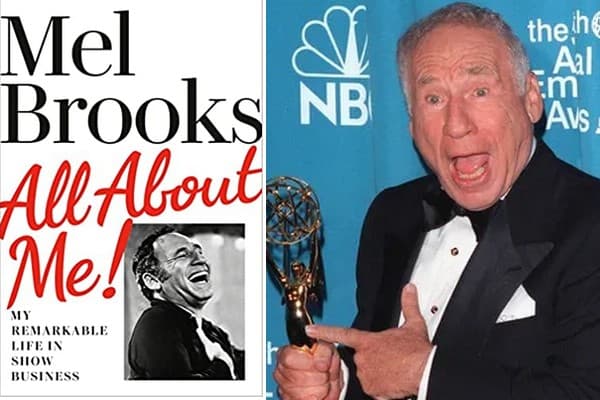
All About Me!: My remarkable life in showbusiness - Mel Brooks (Century)

This delightful book may well be all about Mel Brooks, but since his productive career spans 70 years of American comedy and film history, you’re in for a celebrity treat. It’s full of anecdotes and behind-the-scenes revelations, perhaps best enjoyed as an audiobook read by the man himself.

From humble beginnings in Brooklyn where he was only two years old when his father, a herring seller, died, Brooks has gone on to write, act, direct and produce some of the best-loved television and movies, and has won Emmy, Grammy, Oscar and Tony awards. 

His genre satires of horror (Young Frankenstein), Westerns (Blazing Saddles) and Hitchcock (High Anxiety) broke film conventions. In the 1970s, he insisted on filming in black and white and made a silent movie (the only word of dialogue spoken by the French mime, Marcel Marceau); he broke down the ‘fourth wall’ by having actors move off the film set and into the real world, and turned the film camera into a character with its own point of view.

Brooks also set up his own film company which produced both comic and serious movies, including Elephant Man (giving the directing gig to little-known David Lynch), Frances and 84 Charing Cross Road. 

Brooks had a rollicking ride along the way. He’s a bon vivant - gathering with friends at weekly Chinese dinners and hosting regular Friday lunches - and wine connoisseur, who used to think Manischewitz was the only tipple until Gene Wilder introduced him to finer stuff. Now he brings his own bottles to Passover dinners.  

You might also like
  • Books: Noble orphan, a hotel nightmare and Miriam’s wisdom
    Aviva Lowy
  • Books: Austrian ghosts, a New Yorker’s joyride, intrigue in Istanbul
    Aviva Lowy
  • Books: 100 Israeli lives, German traitors, passion for romance
    Aviva Lowy
logomark.67a07ee3
We believe in the free flow of information

Republish our articles for free, online or in print, by using our Creative Commons licence

You might also like

    Penny Wong
    DebateAustralia

    Sanctions must influence, not just perform disapproval

    Adam Slonim
    tame kostakidis west
    AnalysisAustralia

    How not to apologise

    Zac Klugman
    Article Image
    FeatureArts & Culture

    What to see at the 2026 Jewish International Film Festival

    Kathy Laster

About the author

Aviva Lowy

Aviva Lowy

Aviva Lowy started her career as a radio journalist with 2JJJ and the ABC. She has written on a broad range of subjects, from food and travel to science and health.

More from the author

FeatureArts & Culture

The boys who lived

ReviewArts & Culture

Books: Noble orphan, a hotel nightmare and Miriam’s wisdom

ReviewArts & Culture

Books: Austrian ghosts, a New Yorker’s joyride, intrigue in Istanbul

ReviewArts & Culture

Books: 100 Israeli lives, German traitors, passion for romance