Published: 26 June 2025
Last updated: 15 September 2025
I keep returning to the moment I saw the kalaniot – the blood red poppies – sprouting defiantly from the ruins of what was Kibbutz Be’eri.
The contrast was almost too much to process in real time. Vibrant petals swaying in the Negev breeze, pushing up through land scarred by massacre. Less than a year and a half earlier, this was the site of unfathomable horror. Among the twisted ruins and the fresh construction sites, the flowers declared something wordless and powerful: life will return here.
What struck me most in that moment was the quiet truth that Israel’s land holds history older than any war. These fields have seen empire and exile, joy and heartbreak. Yet every season, the poppies come back. This land does not forget. It endures, not because of politics or borders, but because of something deeper. Something rooted.
A question began to form inside me: Is this where I’m meant to be? Is this where we’re all meant to be?
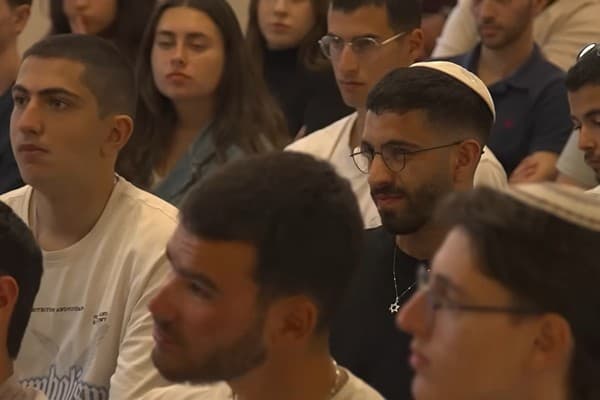
Being a Jewish university student in Australia post October 7 has been a confusing, isolating experience. The sense of safety and belonging that I once took for granted feels compromised. It’s in the way conversations shift. In the silence of friends. In the graffiti on walls. In the posts online that feel like erasure. You feel as if you have to justify your grief and prove your humanity.
The poppy, or kalanit, has long been a symbol of memory in Israel. But now, it carries something deeper: a symbol of refusal.
In Israel, I didn’t feel that burden. I didn’t have to explain myself, defend my existence, or hide my Jewish identity. I could breathe. There, I wasn’t a minority. I wasn’t on edge. I was just me. That doesn’t mean things were easy or uncomplicated – far from it – but there was a peace that I hadn’t experienced in a long time.