Published: 4 February 2024
Last updated: 21 March 2024
The perceived restraint is not a free pass. Despite its collective trauma, Israel must try to overcome feelings of revenge and hatred, and expunge them from its offensive.
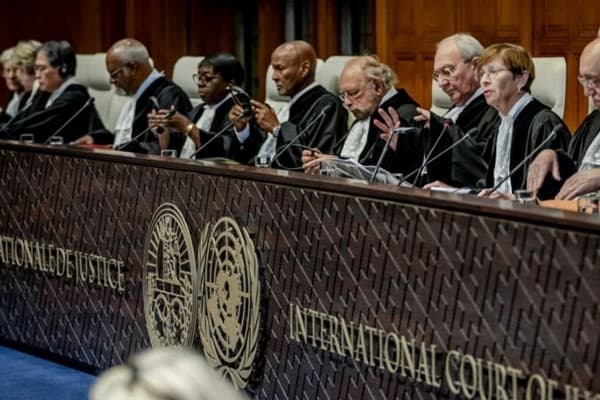
The case that South Africa brought to the International Court of Justice (ICJ), accusing Israel of committing genocide against the Palestinian people in Gaza touches on the instrumentalisation, weaponisation, obscurity and power of international law. Though it is seemingly a large topic the following discussion fits within a broader context that cannot be understood outside of the lived experience of Israelis and Palestinians.
The ICJ, the principal judicial organ of the UN, is a widely respected, and universally recognised institution that deals with the legal responsibility of states and addresses their concerns. South Africa’s accusation focused the world’s attention on the Court. Given the polarised debate that has accompanied this tragic and brutal war, no one was surprised that the charge ignited visceral reactions that ranged from indignation at South Africa and the Court to fierce vindication of them.
Israelis and Jews worldwide, who view the Holocaust as the paradigmatic example of genocide, are particularly sensitive to what they believe are illegitimate extensions of the concept. Many are incredulous that a concept invented by a Jew after the Holocaust – an evil, to their eyes unprecedented and unsurpassed, and to which Israel’s very creation is tied – should be applied to Israel’s actions in Gaza.
That is understandable. Israel responded to a massacre in its territory of the greatest number of Jews since the Holocaust, to unspeakable atrocities perpetrated with gleeful Jew-hatred by members of terrorist groups with undisguised genocidal ambitions.