Aa
  • Read, Watch, Listen
  • TJI Series
  • Community Action
  • Events
  • Zedi
Follow us and continue the conversation
  • LinkedIn
  • Instagram
  • FaceBook
  • X
  • YouTube
Test yourself with the TJI Quiz!

Adjust size of text

Aa

Follow us and continue the conversation

  • LinkedIn
  • Instagram
  • FaceBook
  • X
  • YouTube

Your saved articles

You haven't saved any articles

What are you looking for?

Original reporting, insightful analysis and diverse views, delivered straight to your inbox

  • LinkedIn
  • Instagram
  • FaceBook
  • X
  • YouTube
Your support fuels our mission to inform, entertain and inspire.

The Jewish Independent is bound by the Standards of Practice of the Australian Press Council. If you believe the Standards may have been breached, you may approach The Jewish Independent or make a complaint to the Australian Press Council in writing at www.presscouncil.org.au. The Council may also be contacted on 1800 025 712.

  • Our Story
  • Contact us
  • Our Team
  • Support us
  • Guidelines
  • Pitch your idea
  • Republishing us
  • Community Action
  • Our Awards
  • LinkedIn
  • Instagram
  • FaceBook
  • X
  • YouTube
Aboriginal FlagTorres Strait Islanders Flag

The Jewish Independent acknowledges Aboriginal and Torres Strait Islander peoples as the Traditional Owners and Custodians of Country throughout Australia. We pay our respects to Elders past and present, and strive to honour their rich history of storytelling in our work and mission.

© The Jewish Independent 2026All Rights Reserved
Website design and development by Your Creative, MelbourneTerms & ConditionsPrivacy Policy
HomeRead, Watch, ListenIsrael
Israel Votes 2026OpinionIsrael

The Altalena should be a warning, not a political weapon

Benjamin Netanyahu and Itamar Ben-Gvir claim the rediscovery of the Altalena offers a lesson in national unity. Their political exploitation of the affair suggests precisely the opposite
Shahar Burla
Print this
altalena

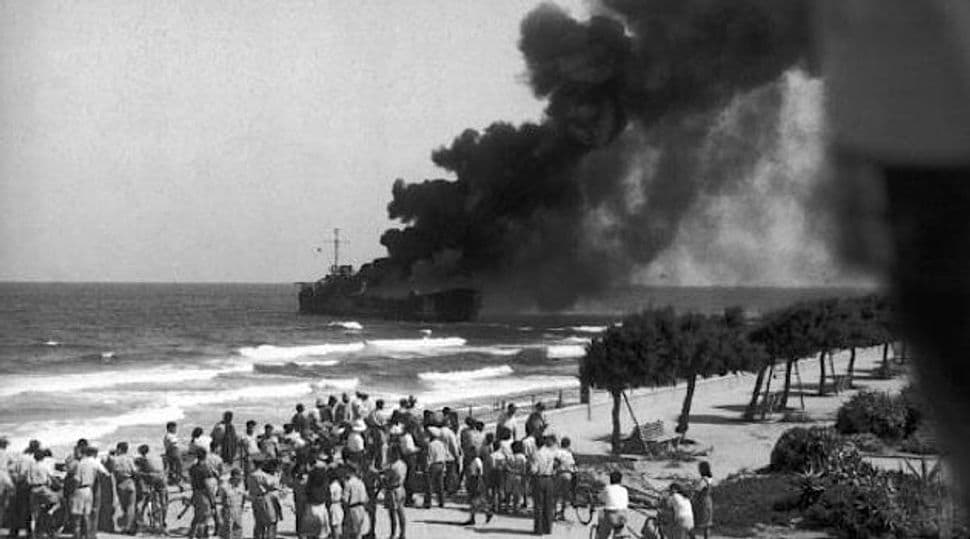
A month after Israel’s founding, IDF forces opened fire on the Altalena to stop the Irgun gaining control of weapons onboard (Israel Government Press Office)

Published: 3 September 2026

Last updated: 3 September 2026

The discovery of the Altalena, the arms ship sunk during a confrontation between Jewish forces only weeks after Israel’s establishment, should provide an opportunity for sober reflection. Instead, 78 years later, it has rapidly become another weapon in Israel’s election campaign.

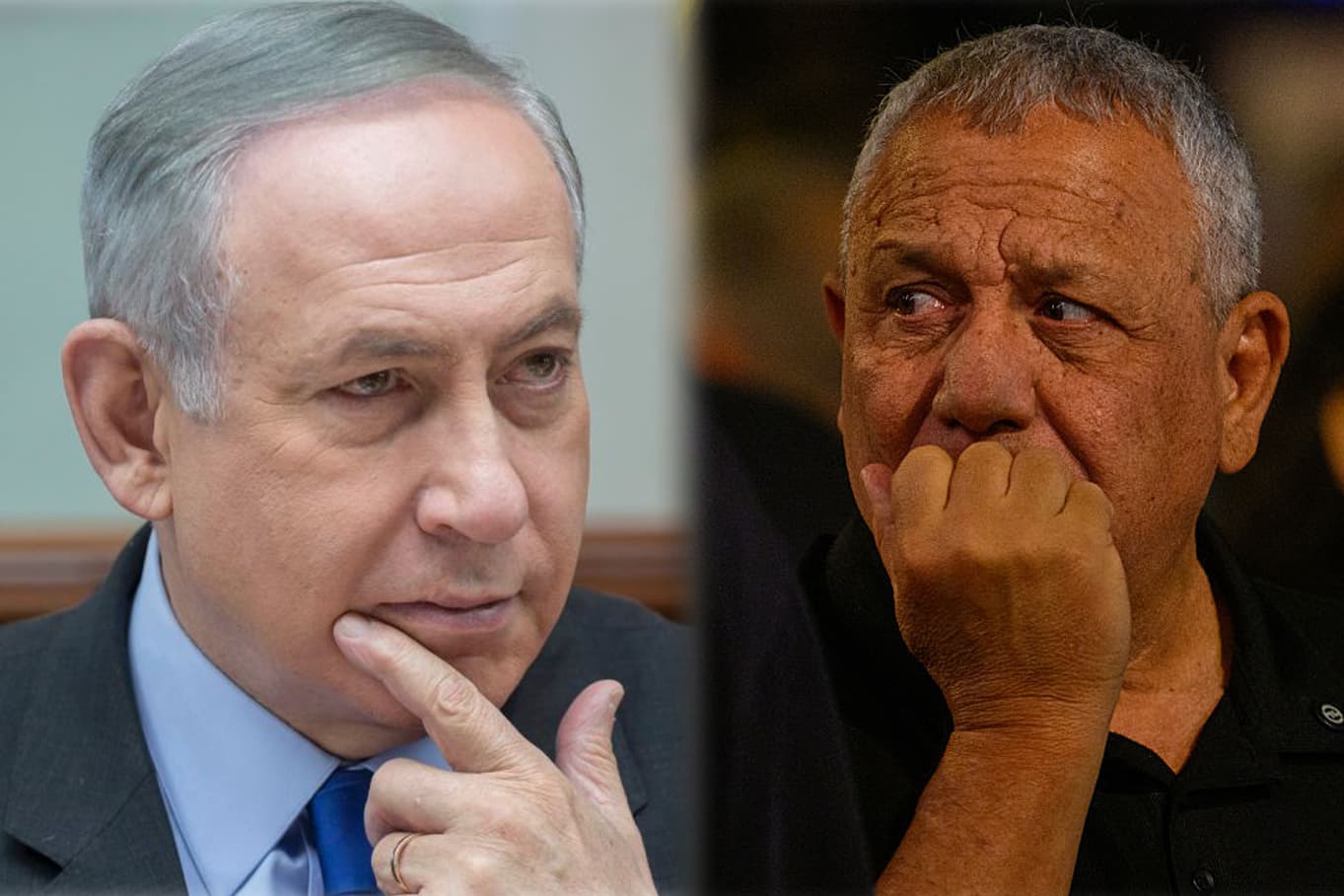
Prime Minister Benjamin Netanyahu and National Security Minister Itamar Ben-Gvir both declared last week that the ship should serve as a symbol of national unity. Yet the timing of the announcement, the distortion of the historical memory surrounding the affair, and the competition over who could claim Menachem Begin’s legacy raise a different suspicion: that resurrecting the Altalena was intended not to heal an old wound, but to reopen it.

The wreck was reportedly located at a depth of about 500 metres, roughly 19 kilometres off the Israeli coast, following a search commissioned by the Heritage Ministry and conducted by the Survey of Israel.

That may be an important historical discovery. But its immediate politicisation tells us more about Israel’s current leadership than it does about the events of 1948.

Above all, the renewed focus on the Altalena highlights the gulf between Ben-Gurion and Begin, who ultimately acted to protect the newborn state, and Netanyahu and Ben-Gvir, who appear prepared to exploit its most painful memories in pursuit of their narrower political interests.

A confrontation that almost became a civil war

The Altalena arrived from France on June 20, 1948, carrying about 900 Jewish immigrants and a large shipment of weapons acquired by the Irgun, the pre-state underground commanded by Begin.


These were extraordinarily fragile days. Israel had been established only a month earlier and was already fighting for its survival. The Israel Defence Forces had just been formed, and the underground militias were being absorbed into a single national army.

The dispute was therefore about far more than the allocation of weapons. It concerned the defining principle of the new state: who possessed the authority to command armed forces and use military power?

The Jewish Independent

Begin wanted 20 per cent of the weapons reserved for Irgun units fighting in Jerusalem. Prime Minister David Ben-Gurion insisted that the arms be placed under the authority of the state and its newly established army.

The disagreement escalated into gunfire near Kfar Vitkin and later off the Tel Aviv coast. Under Ben-Gurion’s orders, the ship was shelled and caught fire. Sixteen Irgun members and three IDF soldiers were killed during the clashes. Israel came perilously close to civil war.

The affair has remained controversial ever since. For the right, the Altalena became a symbol of the political persecution of the Irgun and the ruthlessness of the Labor establishment. For Ben-Gurion’s defenders, it represented an unavoidable assertion of state authority at the moment Israeli sovereignty was being created.

Both interpretations contain elements of truth. But when the affair is reduced to a morality play in which one side was entirely heroic and the other entirely villainous, its central lesson is lost.

Sovereignty and unity were complementary

Ben-Gurion and Begin made profoundly different choices during the Altalena crisis. Yet each understood something essential about the survival of the new state.

For Ben-Gurion, sovereignty required the government to hold a monopoly over organised military force. Israel could not function as a state if political movements maintained their own armies, weapons and chains of command. However severe his decision to fire upon the ship was, it reflected his determination that there would be only one national army.

Begin faced a different test. He could have ordered retaliation and unleashed a fratricidal war. Instead, he restrained his followers and insisted: “Civil war, never.”

His decision was not an admission that the attack was justified. It was a recognition that the future of Israel mattered more than vengeance, even in the face of bloodshed and humiliation.

This is what makes the Altalena more than an old dispute between Israel’s left and right. It embodied the difficult transformation of the Jewish people from competing underground movements into citizens of a sovereign state.

Ben-Gurion defended sovereignty because he believed it was the foundation of national unity. Begin defended unity because he understood that sovereignty could not survive without it.

Neither man emerged from the affair without controversy. But both recognised that the new state's interests had to take precedence over their own political camp.

An old wound enters a new election

That restraint is largely absent from the way the Altalena is being invoked today. Ben-Gvir announced the discovery without first informing Netanyahu or Defence Minister Israel Katz. Netanyahu then hurried to Tel Aviv’s Etzel Museum and issued his own statement, avoiding a joint appearance with Ben-Gvir.

The result was an undignified contest over ownership of Begin’s memory. Netanyahu described Ben-Gurion’s order to fire as a “tragic decision” and declared that the Altalena’s lesson was that Israelis remained brothers despite their political disagreements. But even while preaching unity, he used the occasion to attack his opponents and present himself as the victim of their incitement.

The Jewish Independent

This came as Netanyahu was simultaneously warning that the “left” would establish a “fascist regime” if elected and blaming it for thousands of Israeli deaths. Such rhetoric does not heal national divisions. It deepens them.

Ben-Gvir went further, portraying the Altalena as evidence of the historic persecution of Israel’s right and drawing a parallel between Begin’s experience and his own. He spoke of knowing what it meant when others refused to share a stage with you.

The comparison is historically grotesque. Begin eventually built a democratic political movement and accepted the rules and institutions of the state. Ben-Gvir’s political origins lie in the movement of Meir Kahane, whom Begin himself rejected and whom the mainstream Israeli right once treated as beyond the democratic pale.

The confrontation is part of a contest between Netanyahu and Ben-Gvir for the same pool of right-wing voters. Netanyahu wants to appear statesmanlike and relatively moderate; Ben-Gvir wants to depict himself as the authentic and persecuted heir to Begin. Whether their disagreement is genuine or choreographed, both benefit from shifting the campaign away from policy and accountability and towards identity, victimhood and historical grievance.

That is the opposite of the Altalena’s real lesson. Begin and Ben-Gurion understood that leadership sometimes requires disappointing your own camp, restraining your supporters and placing the state above political advantage. Netanyahu and Ben-Gvir are doing the reverse: placing an old national trauma at the service of their electoral rivalry.

The rediscovered Altalena could become a symbol of unity, but only if Israelis remember why catastrophe was ultimately avoided. It was not because the protagonists agreed, forgot their grievances or ceased being political rivals. It was because, at the decisive moment, sovereignty and national unity mattered more to them than revenge.

You might also like
  • Turkey emerges as military threat to Israel
    Dror Doron
  • Because of my Zionist values, I’m joining an Arab party
    Yoav Segalovitz
  • Western ‘Palestinianism’ colonises everything – and hurts Palestinians
    Andres Spokoiny
logomark.67a07ee3
We believe in the free flow of information

Republish our articles for free, online or in print, by using our Creative Commons licence

You might also like

    Segalovitz Abbas
    Israel Votes 2026AnalysisIsrael

    Segalovitz decision to join Arab party is a paradigm change for Israel

    Eetta Prince-Gibson
    Ibrahim Khatatbe
    NewsIsrael

    Abuse by IDF soldiers humiliates Muslim Palestinians

    Ben Lynfield 3
    Activists attempt to deliver supplies to Palestinian families near Nablus
    OpinionIsrael

    Qusra siege exposes shared agenda of IDF and settler extremists

    Ben Lynfield

About the author

Shahar Burla

Shahar Burla

Dr Shahar Burla is a Sydney-based researcher, lecturer and Contributing Editor of TJI. Shahar holds a Master’s degree in political science from Hebrew University and a PhD in political science from Bar-Ilan University. He is the author of Political Imagination in the Diaspora: The Construction of a Pro-Israeli Narrative (2013) and co-editor of Australia and Israel: A Diasporic, Cultural and Political Relationship (2015).

More from the author

AnalysisIsrael

Who is Ofer Winter and could he upset Netanyahu’s election?

AnalysisIsrael

Bennett’s balancing act: can he win over the right without losing the centre?

OpinionIsrael

Flying to vote is an act of love, not impudence

Comments

No comments on this article yet. Be the first to add your thoughts.