Published: 12 February 2024
Last updated: 21 March 2024
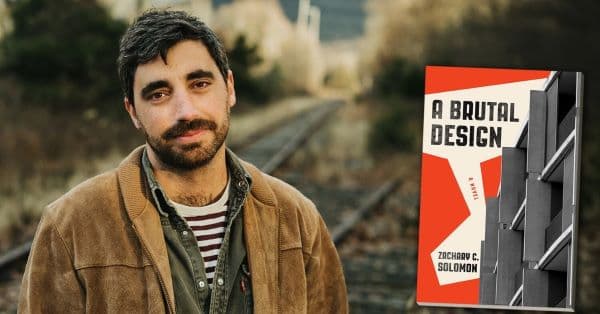
Art, architecture and the Jewish condition inspired the speculative fiction of 'A Brutal Design'. Author ZACHARY SOLOMON talks to ANDREW SILOW-CARROLL.
(JTA) — At some point during my reading of Zachary Solomon’s debut novel, “A Brutal Design,” I needed to look up Duma, the utopian city-state where the novel is set, and see if it is a real place.
It isn’t, but it is richly imagined: Duma is an “experiment in the desert” where “alternate ideologies could be put into practice without threat.” Its idealism is expressed in its architecture — modernist apartment blocks, plazas and factories that appear to draw on 20th-century movements like Bauhaus and “Brutalism,” the minimalist, utilitarian design trend that emerged in the 1950s.
But Duma is not what it seems, as Solomon’s Jewish protagonist, Zelnick, learns soon after he arrives hoping to take a job as an architect. Like Margaret Atwood’s “Oryx and Crake” or Aldous Huxley’s “Brave New World,” Solomon’s novel is about the sinister side of social engineering. Duma turns out to be a place that recreates the evils of a world it is meant to replace — including antisemitism, racism and a strict caste system.
Set in what could be an alternative timeline, “A Brutal Design” joins a growing genre of Jewish “speculative fiction” — think science fiction without aliens, time travel or anything you couldn’t find in the real world. It’s a genre that ranges from Franz Kafka’s absurdist fables to Marge Piercy’s 1991 novel, “He, She and It” to Michael Chabon’s 2007 novel “The Yiddish Policemen’s Union.” More recently, the Israeli-born writer Lavie Tidhar has written novels about a future, post-Israel Tel Aviv (“Central Station”) and an alternative Jewish homeland in Africa (“Unholy Land”). “Other Covenants,” an anthology of Jewish alternate history stories, was published in 2022.