Published: 18 September 2025
Last updated: 18 September 2025
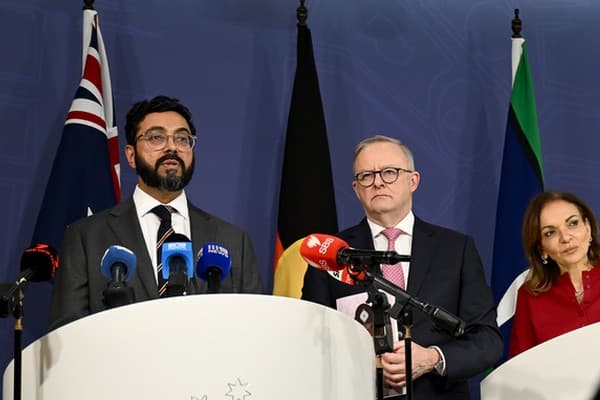
The report into Islamophobia, released last week by the government-appointed envoy Aftab Malik, spells out in harsh detail the scale of prejudice and hostility towards Muslims in Australia.
The report is welcome. Animosity towards Muslims errupted internationally after September 11 and the extent to which it has entrenched itself is a cause for concern. There is no place for racial and ethnic prejudice of any sort in Australia, and Jews recognise this as much as any Australians.
The envoy made a comprehensive raft of recommendations to address Islamophobia, and the government will take its time in assessing how many of Malik’s 54 recommendations it will implement – as it has with the antisemitism plan released by Jillian Segal in July.
But the Islamophobia report generated little of the controversy that followed the antisemitism report. Segal's report was criticised for the punishments it recommended for institutional failure to address antisemitism, and for the IHRA definition of antisemitism that it said should be adopted across all of government.
Critical silences
Nevertheless, Malik’s response contains key omissions that have been glossed by earlier media reportage. They revolve around what constitutes Islamophobia and how to define it. Malik addressed the nub of the issue with the very first line of his introduction: “Many may find it surprising to learn that there is no universally accepted definition of Islamophobia”.



Comments3
jed9 January at 02:13 am
Hamas exist in response to decades of Israel’s brutal murderous occupation and multi-national threats in the form financial & military support to Israel from countries Like USA, UK, France, Germany and more.
Furthermore it’s well documented that the Netenyahu government funded Hamas.
So perhaps that’s the real sidestepped / core issue.
Not to mention theft of Palestinian gas and it’s subesequent sale to Egypt or the greater Israel project that sees Lebanon and Syria losing it’s borders at the time of writing this comment
Ian Grinblat2 October at 09:43 pm
“We, of course, do recognise the link between Israeli action in Gaza and the Occupied Territories, and antisemitism. But how does that help to fight antisemitism. Perhaps our community leaders should be more vocal in criticising Israel for the devastation and carnage in Gaza and the appalling civilian death toll.”
What is wrong with this argument?
To begin, there can be no acceptable link between Israeli action in Gaza and the Occupied territories, and antisemitism. Hatred of Jews can never be justified by the actions of some Jews or even the majority of Jews. The censure should be directed at the actions – isn’t the ethical teaching to hate the sin but love the sinner?
Secondly, “our community leaders” are never representative of Israel. They are people who feel that our community needs spokepeople and they have elected themselves as ideal for that purpose.
While Diaspora Jews enjoy the luxury of distancing themselves from all this unpleasantness, we must remember that only the dead cannot sin, and that most of the well-intentioned people who marched Sydney Harbour Bridge are seriously morally confused.
Harold Zwier28 September at 04:27 am
Michael Visontay regards the lack of a clear definition of Islamophobia as a significant omission. He writes, “Whatever the alleged flaws of the IHRA definition, the past two years have shown us that some sort of definition is needed as a guideline for boundaries of public debate”.
Yet the push for the adoption of the IHRA working definition of antisemitism in some ways masks the fact that prior to IHRA there was a fairly clear understanding of what constituted antisemitism. And those issues in the grey zone; ie. when is criticism of Israel antisemitic and when is it valid political comment – are not satisfactorily addressed by IHRA, because people in our community have very different levels of tolerance towards criticism of Israel.
Michael writes, “By choosing not to mention Hamas in the report, Malik does not acknowledge the link between Hamas and Islamophobia and anti-Palestinian ‘racism'”. We, of course, do recognise the link between Israeli action in Gaza and the Occupied Territories, and antisemitism. But how does that help to fight antisemitism. Perhaps our community leaders should be more vocal in criticising Israel for the devastation and carnage in Gaza and the appalling civilian death toll.