Aa
  • Read, Watch, Listen
  • TJI Series
  • Community Action
  • Events
  • Zedi
Follow us and continue the conversation
  • LinkedIn
  • Instagram
  • FaceBook
  • X
  • YouTube
Test yourself with the TJI Quiz!

Adjust size of text

Aa

Follow us and continue the conversation

  • LinkedIn
  • Instagram
  • FaceBook
  • X
  • YouTube

Your saved articles

You haven't saved any articles

What are you looking for?

Original reporting, insightful analysis and diverse views, delivered straight to your inbox

  • LinkedIn
  • Instagram
  • FaceBook
  • X
  • YouTube
Your support fuels our mission to inform, entertain and inspire.

The Jewish Independent is bound by the Standards of Practice of the Australian Press Council. If you believe the Standards may have been breached, you may approach The Jewish Independent or make a complaint to the Australian Press Council in writing at www.presscouncil.org.au. The Council may also be contacted on 1800 025 712.

  • Our Story
  • Contact us
  • Our Team
  • Support us
  • Guidelines
  • Pitch your idea
  • Republishing us
  • Community Action
  • Our Awards
  • LinkedIn
  • Instagram
  • FaceBook
  • X
  • YouTube
Aboriginal FlagTorres Strait Islanders Flag

The Jewish Independent acknowledges Aboriginal and Torres Strait Islander peoples as the Traditional Owners and Custodians of Country throughout Australia. We pay our respects to Elders past and present, and strive to honour their rich history of storytelling in our work and mission.

© The Jewish Independent 2026All Rights Reserved
Website design and development by Your Creative, MelbourneTerms & ConditionsPrivacy Policy
HomeRead, Watch, ListenWorld
DebateWorld

Does Israel bear some responsibility for increasing global antisemitism? 

A debate at the World Zionist Congress this week highlighted the clash between those who blame Israel for growing antisemitism and those who see holding Israel responsible as victim-blaming.
Ittay Flescher
Print this
Leibler Bar Asher Siegal 2

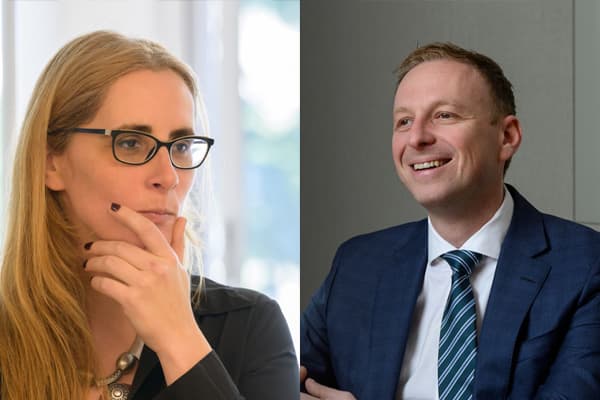
Michal Bar-Asher Siegal and Jeremy Leibler take different positions on Israel’s responsibility for Diaspora antisemitism (Benm Gurion University/Arnold Bloch Leibler)

Published: 30 October 2025

Last updated: 30 October 2025

The relationship between Israel's conduct in Gaza and the rise of antisemitism in the Diaspora was the central, contentious issue at a panel discussion at the 39th World Zionist Congress in Jerusalem this week. 
 
President of the Zionist Federation of Australia Jeremy Leibler and Professor Michal Bar-Asher Siegal, a Jewish Thought scholar from Ben Gurion University, took opposing views on the question of whether Israeli policies and Israeli politicians are partially responsible for the increase in antisemitic incidents affecting the global Jewish community.  

The exchange revealed a fundamental debate over whether the Diaspora's security is primarily tied to Israel's military strength or its moral conduct. For Bar-Asher Siegal, the lack of coherence between action and values actively undermines Diaspora Jews. For Leibler, antisemitism is an independent virus and conflating it with Israeli policy risks granting moral justification to hatred. 

Yes: Israel bears some responsibility for global antisemitism  

Professor Bar-Asher Siegal argued that Israeli action and rhetoric have direct, negative consequences for the Diaspora community's security and moral standing, particularly among liberal allies. 

A scholar of rabbinic Judaism who was visiting Harvard Law School at the time of the October 7 attack, she said October 7 forged a moment of unprecedented connection between Israel and Diaspora Jews, but the war which followed had significant costs for the diaspora.

When a minister in the government talks about the destruction of Gaza, or the relocation of its residents, what does this do to the Jew sitting in Toronto?

Professor Bar-Asher Siegal

 "While Israelis may not have realised it at the time, our [Israel’s] response to October 7 profoundly shaped the lives of almost every Jew in the diaspora, whether they were liberal or conservative, Zionist or not. Friends of Israel, both Jews and non-Jews, felt compelled to stand up and defend the very actions Israel was undertaking. At that moment, a bond was forged between us and Jews around the world in a way that had never been created before in human history." 

She said both the conduct of the war and the inflammatory rhetoric from Israeli leaders had impacts for diaspora Jews. 

 "We fought a war in a certain way, and we had statements from government ministers who are not liberal and whose pronouncements are deeply problematic from a humanitarian perspective."  

Bar-Asher Siegal referenced comments by Finance Minister Bezalel Smotrich, who called for Gaza to be “entirely destroyed” and to National Security Minister Itamar Ben-Gvir's characterisation of the war as an “opportunity to concentrate on encouraging the migration of the residents of Gaza” calling such a policy "ethical, rational, humane and the way of the Torah",  

"When a minister in the government talks about the destruction of Gaza, or the relocation of its residents, what does this do to the Jew sitting in Toronto? What does this do to the Jew in New York? 

"There must be coherence between what we do, what we say, and what we think. Therefore, when it comes to progressivism and liberalism, yes, let’s fight together to convey that Zionism can and must go hand-in-hand with liberalism, progressivism, love of humanity, empathy, and support for the other.”  

In an interview with TJI following the panel, Bar-Asher Siegal also defended criticism of the war from those who argue criticism by Jews and Israel gives ammunition to Israel’s enemies. 

 “The fact that there is criticism of Israel over its conduct in this war, shouldn’t stop us for self-criticising the manner in which we fought this war. These are questions we Israelis should be accountable for, regardless of the criticism we get around the world.” 

Jeremy Leibler (centre) and Professor Michal Bar-Asher Siegal (second from right) debate onstage (Ittay Flescher)

No: Israel is in no way responsible for global antisemitsm  

Jeremy Leibler strongly contested the premise that Israeli actions were a cause of Diaspora antisemitism, warning that such a line of reasoning risks shifting blame from the antisemites to the victims.  

“I think it’s a very dangerous pathway, that is at risk of crossing into victim-blaming to hold the State of Israel responsible, or various ministers responsible, for antisemites taking it out on Jews in the Diaspora.  

When Israel is strong, Diaspora Jewry feels secure and safe

Jeremy Leibler

“I share your horror at the statements and the rhetoric of certain government ministers, and I agree that it is enormously damaging [but] it's not damaging because it causes antisemitism, it's damaging because it is destroying the Jewish soul. And they are two different things, and that moral distinction, I believe, is very important.”  

His comments received a strong round of applause from the audience.  

Leibler framed the Australian Jewish experience as being fundamentally different from the American one, because of the vulnerability felt in a community where a large proportion of Jews are descended from Holocaust survivors. 

“On 7 October, in those 72 hours, where there were Israelis were defenceless, where the IDF, the government, did not protect them, Jews in Australia felt this is what the world would look like for us if we didn't have a State of Israel that could defend itself. And when Israel is strong, Diaspora Jewry feels secure and safe. 

“When Israel started turning the table on the war... we, notwithstanding that the anti-Israel animosity and hatred was stronger than ever, we felt far more secure. Because when Israel is strong, we are secure.” 

Leibler concluded that while internal criticism of the Israeli government's statements is crucial, this criticism should be motivated by the preservation of Jewish ethics and the "Jewish soul," not as a strategy to mitigate external antisemitism. 

You might also like
  • Traditional antisemitic myths dominate online antisemitism: new study
    Deborah Stone
  • Israel now faces 138 sanctions across 63 countries
    Shahar Burla
  • Brazilian Jews treated as pawns in presidential election
    Karina Stange Calandrin
logomark.67a07ee3
We believe in the free flow of information

Republish our articles for free, online or in print, by using our Creative Commons licence

You might also like

    Picture 1
    ReflectionWorld

    A Gazan doctor’s journey of hope

    Deea Okasha 1
    Non-Zionist rabbi Greg Hersh
    FeatureWorld

    Planned non-Zionist Jewish school part of a growing US trend

    Shira Li Bartov 1
    Jerusalemites_Muslim_Quarter_email (1)
    NewsArts & Culture

    Jerusalemites photos cancelled by Indian Festival

    Deborah Stone

About the author

Ittay Flescher

Ittay Flescher

Ittay Flescher is the Jerusalem Correspondent for The Jewish Independent. For over twenty years, he has worked as an educator, journalist, and peacebuilder in Melbourne and Jerusalem. His book, The Holy and the Broken: A Cry for Israeli-Palestinian Peace from a Land that Must Be Shared, was longlisted for the 2025 Walkley Book Awards.

More from the author

OpinionIsrael

Even on October 7, we are not united

AnalysisArts & Culture

Fauda and the illusion of vengeance

AnalysisIsrael

What ‘Zionism’ means in Israel:  it’s not what you think

AnalysisIsrael

From haven to hotbed: how Israel’s perception of Australia has changed