Published: 16 January 2024
Last updated: 19 March 2024
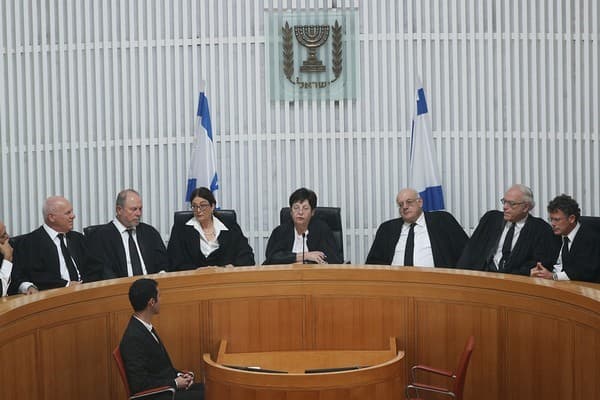
The landmark decision sent two powerful legal and political messages to the Netanyahu government about the court's authority.
This month’s landmark decision by the Israeli High Court sent two powerful messages to the Israeli government and the Israeli people. The first was legal: in the absence of a formal constitution, the court will continue to regard itself as the protector of the character of the state. That character (though not explicitly stated in the Declaration of Independence) is both Jewish and democratic.
The second message was political: by cementing its position as the final arbiter of the Knesset’s power, the court effectively brought the government’s ‘judicial overhaul’ to an end. The decision was the culmination of a political crisis that divided Israeli society for all of 2023, until the Hamas attacks of October 7.
What the court decided
The court ruled that Israel’s Basic Laws must conform to the nation’s character, in a direct rebuttal to an amendment passed by the Netanyahu government limiting the court’s authority to quash unreasonable decisions made by elected officials. In other words, the court will continue to have the power to over-rule unreasonable government decisions.
A significant majority of the court (12 of the 15 judges) took the view that the court has jurisdiction to adjudicate upon Basic Laws and to intervene in exceptional circumstances (i.e. where the Knesset has deviated from its constitutional mandate).
This jurisdiction ensures that the Knesset does not abuse its parliamentary and legislative powers. In so ruling, the court emphasised that the Knesset is not all-powerful. It also recognised that the process for passing Basic Laws (which does not differ from that used to pass ordinary legislation) has cheapened them, turning them into political pawns.