Published: 17 September 2025
Last updated: 17 September 2025
Ever since my childhood, South Africa has captivated my imagination. I'll never forget that Saturday night when I was in Year 11 at Mt Scopus and a group of friends all gathered to watch the 1995 Rugby World Cup final at a South African friend's house in Doncaster. While I cheered for the Wallabies and he for the Springboks, neither of us realised we were witnessing more than just a game.
We were watching history unfold, the birth of a new South Africa, or as Nelson Mandela so famously called it, a "Rainbow Nation". This night was later immortalised in the film Invictus, which still today is one of my favourite movies about how to resist injustice with forgiveness and love.
So when I was invited to visit the country for 10 days in August as a guest of Limmud South Africa, a warm and welcoming community, it was more than a trip; it was a pilgrimage of sorts to a land that was home to many of my closest friends growing up in Melbourne. With street signs in the same colour and language as I saw in Caulfield and Bondi, the country felt both foreign and familiar.
While I was there to speak, I was also there to listen, to learn, and to see for myself a country that has wrestled with its history and, in many ways, come out the other side. The community was as vibrant and diverse as the country itself, filled with people from many walks of life, all eager to engage with one another and with the world.
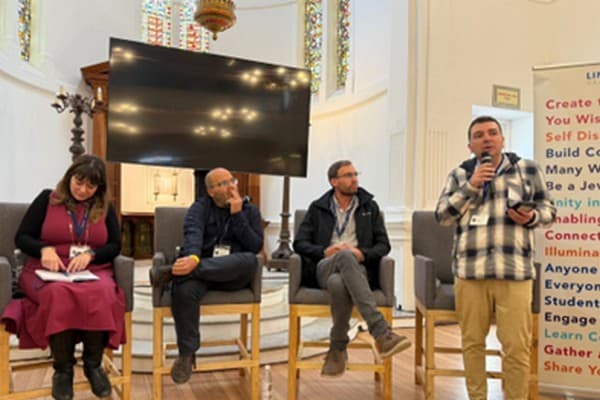
The atmosphere was one of intellectual and spiritual inquiry and nowhere was this more evident than in the most attended session: a panel I was invited to speak on entitled “What the hell is happening in Israeli politics?”. I was joined by other Israeli journalists from left to right, and the conversation was, as you might expect, intense.
We delved into the personality of our polarising prime minister Benjamin Netanyahu; discussed who was most responsible for the devastating humanitarian situation in Gaza; antisemitism in the diaspora; and whether the State of Israel today should be a source of optimism or pessimism for diaspora Jews.