Aa
  • Read, Watch, Listen
  • TJI Series
  • Community Action
  • Events
  • Zedi
Follow us and continue the conversation
  • LinkedIn
  • Instagram
  • FaceBook
  • X
  • YouTube
Test yourself with the TJI Quiz!

Adjust size of text

Aa

Follow us and continue the conversation

  • LinkedIn
  • Instagram
  • FaceBook
  • X
  • YouTube

Your saved articles

You haven't saved any articles

What are you looking for?

Original reporting, insightful analysis and diverse views, delivered straight to your inbox

  • LinkedIn
  • Instagram
  • FaceBook
  • X
  • YouTube
Your support fuels our mission to inform, entertain and inspire.

The Jewish Independent is bound by the Standards of Practice of the Australian Press Council. If you believe the Standards may have been breached, you may approach The Jewish Independent or make a complaint to the Australian Press Council in writing at www.presscouncil.org.au. The Council may also be contacted on 1800 025 712.

  • Our Story
  • Contact us
  • Our Team
  • Support us
  • Guidelines
  • Pitch your idea
  • Republishing us
  • Community Action
  • Our Awards
  • LinkedIn
  • Instagram
  • FaceBook
  • X
  • YouTube
Aboriginal FlagTorres Strait Islanders Flag

The Jewish Independent acknowledges Aboriginal and Torres Strait Islander peoples as the Traditional Owners and Custodians of Country throughout Australia. We pay our respects to Elders past and present, and strive to honour their rich history of storytelling in our work and mission.

© The Jewish Independent 2026All Rights Reserved
Website design and development by Your Creative, MelbourneTerms & ConditionsPrivacy Policy
HomeRead, Watch, ListenLifestyle
ReflectionLifestyle

Three reasons to savour the bitterness this Pesach

For the foreseeable future, we are facing more bitterness than sweetness and so, unlike previous Seders, I have no desire to smother the maror with charoset.
Ittay Flescher
Print this
Israel Faces Further Missile And Drone Attacks After Weeks Of War With Iran

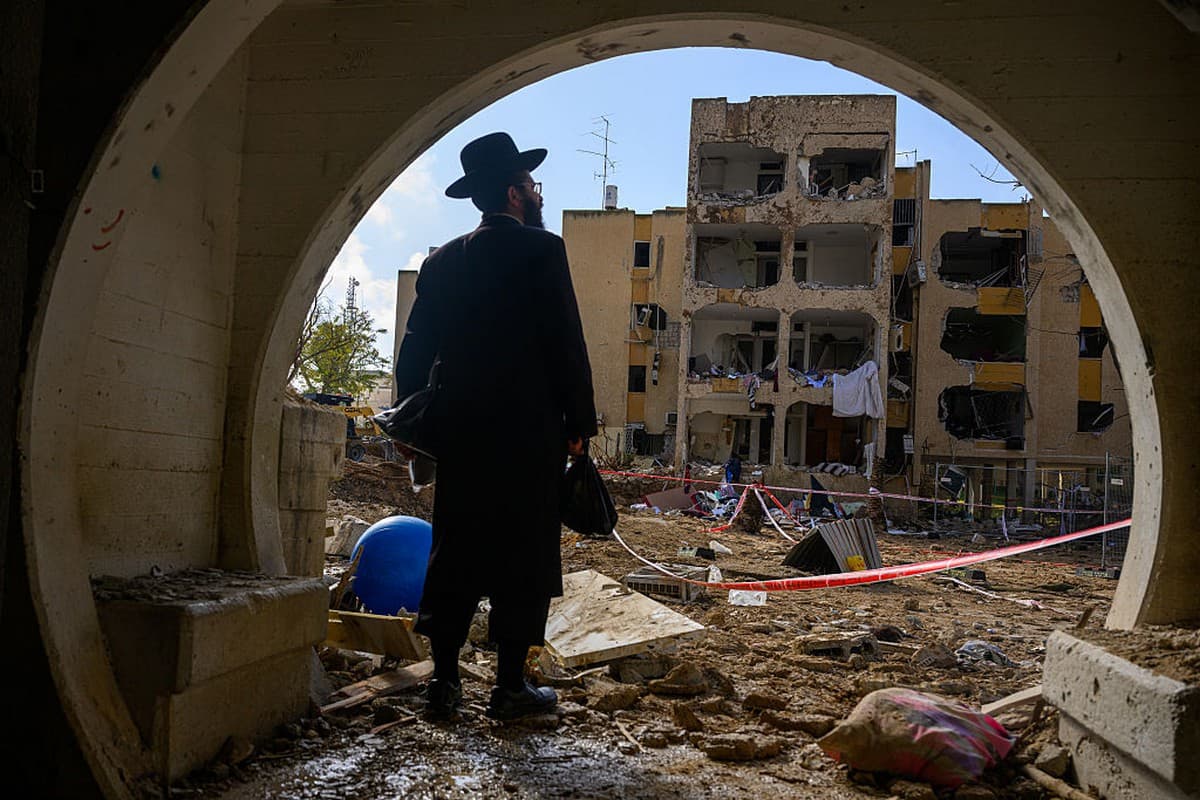
A man looks out at an Iranian missile strike in Arad ,March 22, (Alexi Rosenfeld/Getty)

Published: 30 March 2026

Last updated: 30 March 2026

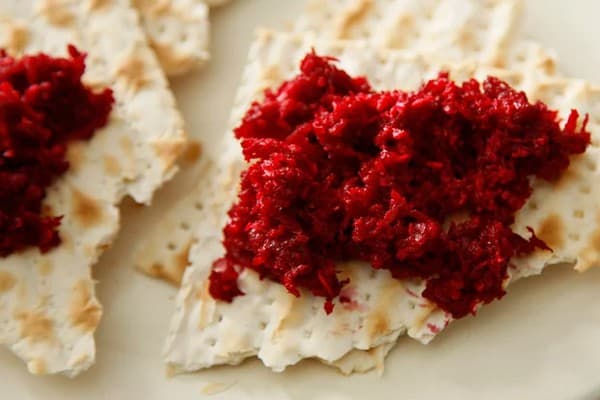
Eating maror has always been the worst part of my Seder, and the food that made least sense to me.  Why eat bitter herbs when we are free? In previous years when it was time to eat maror, a reminder that ancient Egyptians embittered the lives of the Israelites with crushing labour, I would always smother it in as much sweet charoset as possible to avoid the horrible taste in my mouth - and prevent my eyes from tearing up on what should be a joyful night.

This year, I have no desire to make the bitter food sweet. There are three reasons for this.

First, for the past month, my family and friends have been living under constant missile attack from Iran. From 3am in the morning to 11pm at night, in the middle of a meal, bus ride, or deep sleep, sirens, booms, bomb shelters. Several times a day. Dozens of Israelis have lost their lives, hundreds have been seriously injured, and thousands are displaced from their homes.

While Iranians very much deserve to be free of their horrific leadership, this war isn’t even close to achieving that goal. It has caused so much suffering and displacement across the Middle East and sadly has no end in sight. This is a cause of great bitterness to me.

Settler violence in West Bank

Second, last week a dear Palestinian friend and colleague of mine in Jerusalem informed me that a loved one in her family was killed in a brutal act of settler violence in the West Bank. While comforting her as best as I could, I had no answer when she asked if the settler would ever be held accountable for his crimes against her family. This, too, is a cause of great bitterness to me.

Third, from Bondi to Toronto, Detroit to Golders Green, the level of hatred my people are experiencing across the world, based on conspiracy theories that only grow stronger by the day, is staggering. No matter how much money is invested in security, public advocacy and tougher penalties for those who peddle hate, I can’t see the scourge of antisemitism disappearing any time soon. This is a cause of immense bitterness to me.

As someone that has written many articles and even a book on how to best deal with all these problems facing Israelis, Palestinians and the Jewish people - and I still hold hope for a different reality - it is clear to me that for the foreseeable future, what lies ahead is more bitterness than sweetness.

Bomb shelters won't be closing

No matter how the Iran war ends, it’s unlikely Israel will be closing bomb shelters any time soon. Regardless of  how many Israeli and Diaspora leaders sign important statements against settler violence that harms my Palestinian friends and their loved ones, it’s unlikely this horrific phenomenon will end any time soon.

And no matter how thoughtful and considered the findings of the Royal Commission may be, it’s unlikely that my dear Australian friends and family will live in a country free of antisemitism any time soon.

How does one hold all these understandings at the same time? By eating maror. By chewing on the bitter herbs until tears well up in the eyes, and the mouth burns.

The Jewish Independent

Maror is one of the three core biblically mandated foods of the Seder night (alongside the Paschal lamb and matzah). It’s meant to connect us to one of Pesach's central themes: that each person is obligated to see themselves as if they personally suffered in and left Egypt. You don't just hear the story — you taste it.

We are even commanded to say a blessing over this miserable experience. Saying a bracha over a hurtful and distasteful moment can sometimes be a difficult thing to do. It’s based on the biblical command that “a person is obligated to bless God for the evil as much as the good”.

No joy without overcoming struggle

The Kotzker Rebbe develops this idea of blessing God for tragedy as well as success by explaining, “there is nothing as whole as a broken heart”. If you feel whole, you have no room for growth. A broken heart, however, is open. It acknowledges its own deficiencies and yearns for something greater. In this state of honesty and vulnerability, the person is actually “wholest” because they are most authentic.  

This idea was beautifully illustrated in a film clip produced by Projecting Freedom, cinematic Interpretations of the Haggadah, depicting a real recorded conversation between a father and his secular son. The conversation, presented as an animation by the son, Hanan Harchol, reframes a ritual I’ve performed my whole life into a profound lesson on human agency.

The dialogue makes a powerful distinction between experiencing bitterness and becoming a bitter person. We often think of the maror merely as a historical re-enactment of Egyptian slavery, but as the father in the video suggests, it’s actually a tool for psychological and spiritual resilience.

Just like we can’t have a Garden of Eden without a snake, and childbirth without pain, and joy without depression, so too, we can’t have freedom without tasting slavery. If we only ever tasted the apple dipped in honey, our choices wouldn't carry any weight. By commanding us to eat bitter herbs, the tradition isn't punishing us. It reminds us that no celebration of joy has ever come without struggle and sadness.

That’s the place many of us find ourselves in at this moment of history. Before us is a radical choice to believe between despair and hope, between fatalism and action. At the Seder, we take that bite of maror intentionally to remind ourselves that while we cannot always control what life serves us, we can control whether we swallow it or let it swallow us.

Ultimately, we consume maror so the maror doesn’t consume us.

You might also like
  • For me, Judaism offers freedom with purpose
    Shmuli Cohen
  • The really big questions at Pesach are all about food
    Lisa Goldberg
  • Celebrating our capacity to question
    Ralph Genende
logomark.67a07ee3
We believe in the free flow of information

Republish our articles for free, online or in print, by using our Creative Commons licence

You might also like

    Rosh Hashanah Customs
    FeatureLifestyle

    10 little-known Rosh Hashanah customs from around the world

    Menachem Posner
    Futurism
    OpinionLifestyle

    Jewish Futurism? We’ve been practising it for millennia 

    Renata Zimbarg 1
    Finding ouor why
    PodcastLifestyle

    Finding Our Why

    The Jewish Independent

About the author

Ittay Flescher

Ittay Flescher

Ittay Flescher is the Jerusalem Correspondent for The Jewish Independent. For over twenty years, he has worked as an educator, journalist, and peacebuilder in Melbourne and Jerusalem. His book, The Holy and the Broken: A Cry for Israeli-Palestinian Peace from a Land that Must Be Shared, was longlisted for the 2025 Walkley Book Awards.

More from the author

AnalysisIsrael

What ‘Zionism’ means in Israel:  it’s not what you think

AnalysisIsrael

From haven to hotbed: how Israel’s perception of Australia has changed

FeatureIsrael

New wave of Russian-speaking migrants may be key to Israel’s future

AnalysisIsrael

How a new International Peace Fund could make a tangible difference

Comments

No comments on this article yet. Be the first to add your thoughts.