Aa
  • Read, Watch, Listen
  • TJI Series
  • Community Action
  • Events
  • Zedi
Follow us and continue the conversation
  • LinkedIn
  • Instagram
  • FaceBook
  • X
  • YouTube
Test yourself with the TJI Quiz!

Adjust size of text

Aa

Follow us and continue the conversation

  • LinkedIn
  • Instagram
  • FaceBook
  • X
  • YouTube

Your saved articles

You haven't saved any articles

What are you looking for?

Original reporting, insightful analysis and diverse views, delivered straight to your inbox

  • LinkedIn
  • Instagram
  • FaceBook
  • X
  • YouTube
Your support fuels our mission to inform, entertain and inspire.

The Jewish Independent is bound by the Standards of Practice of the Australian Press Council. If you believe the Standards may have been breached, you may approach The Jewish Independent or make a complaint to the Australian Press Council in writing at www.presscouncil.org.au. The Council may also be contacted on 1800 025 712.

  • Our Story
  • Contact us
  • Our Team
  • Support us
  • Guidelines
  • Pitch your idea
  • Republishing us
  • Community Action
  • Our Awards
  • LinkedIn
  • Instagram
  • FaceBook
  • X
  • YouTube
Aboriginal FlagTorres Strait Islanders Flag

The Jewish Independent acknowledges Aboriginal and Torres Strait Islander peoples as the Traditional Owners and Custodians of Country throughout Australia. We pay our respects to Elders past and present, and strive to honour their rich history of storytelling in our work and mission.

© The Jewish Independent 2026All Rights Reserved
Website design and development by Your Creative, MelbourneTerms & ConditionsPrivacy Policy
HomeRead, Watch, ListenAustralia
AnalysisAustralia

A 20-point plan for strengthening Australia’s social cohesion

A country doesn’t need to be physically at war to need programs to foster greater understanding and bridge polarising divides.
Ittay Flescher
Print this
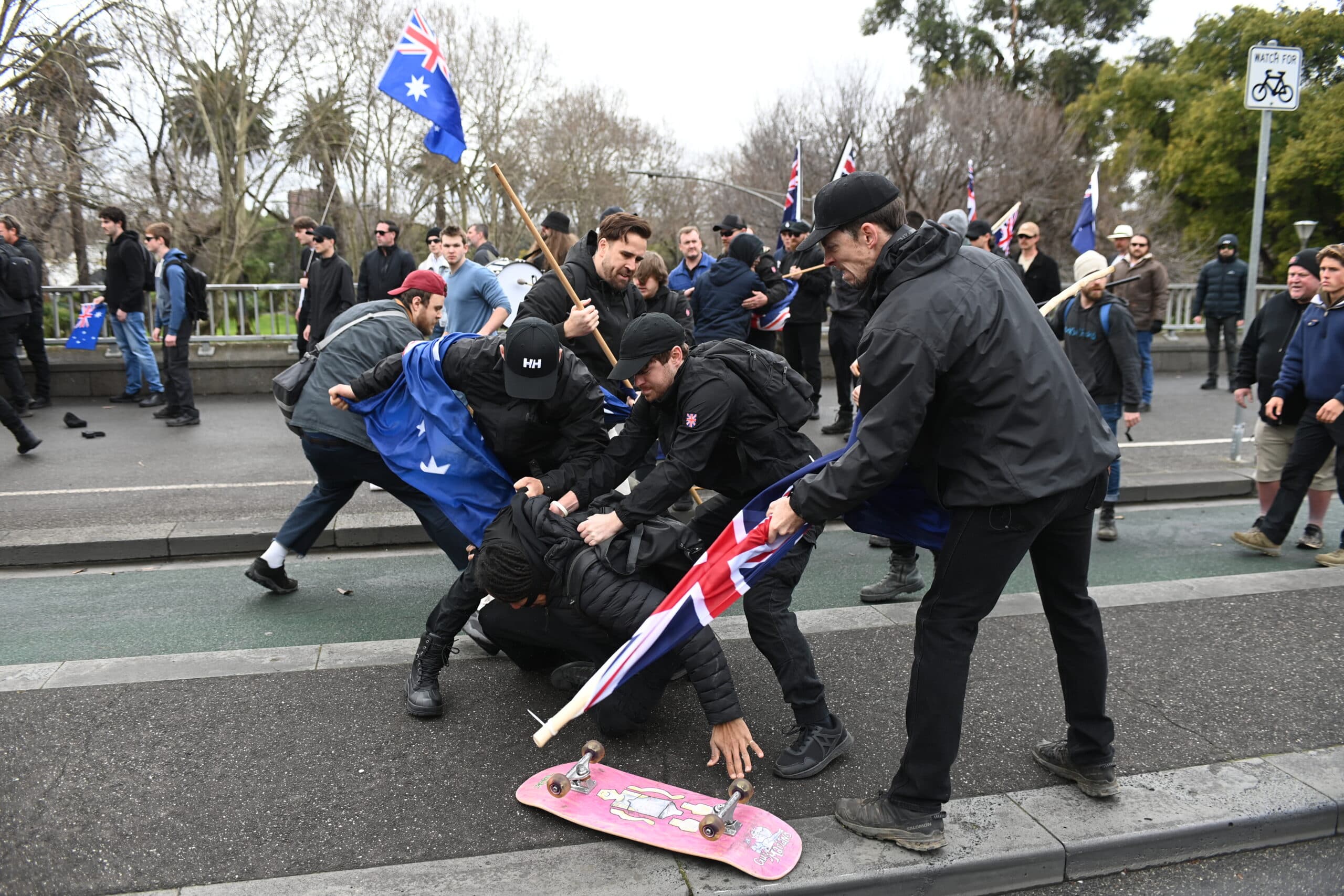
A fight at the anti-immigration protest in Melbourne on Sunday where pro-Palestinian and anti-immigration protesters clashed

A fight at the anti-immigration protest in Melbourne in September 2025 (AAP/Michael Currie).

Published: 13 November 2025

Last updated: 13 November 2025

The 20-point plan recently endorsed by Israel and Hamas is a document of powerful vision and ambition. Despite no one thinking it would be possible, the plan brought about a long-overdue ceasefire, following two years of horror and destruction that will scar us for generations. 

The war that the 20-point plan seeks to end has already stretched far beyond the narrow geography between the Jordan River and the Mediterranean Sea. Its shockwaves have reached communities across the world, from Manchester to Melbourne. 

Having lived and worked in both Melbourne and Jerusalem, I have seen first-hand how this conflict fractures societies and distorts our ability to recognise one another’s humanity.  

To mend what is broken, we must begin by restoring human dignity to the centre of our public life. And so, in this spirit, I offer this 20-point framework, not as a perfect solution, but as an invitation. I hope it inspires Australia’s governments, institutions, and communities with examples that can begin a necessary and courageous conversation about how we live together.  

Part One: Fostering understanding and respect 

  1. Invest in mutual empathy and cross-cultural engagement  
  • A non-partisan grant will fund a pilot "Shared Futures Youth Camp" where 50 high school students from predominantly Muslim suburbs in Sydney's west and predominantly Jewish suburbs in Sydney's east spend a weekend together in a neutral setting, engaging in facilitated dialogue on shared challenges such as climate change, body image and social media. 
  1. Promote the value of compromise as a strength 
  • A major public advertising campaign features respected Australians, including former political leaders and Olympic athletes, declaring that "compromise isn't retreat, it's the courage to build a better future". The campaign highlights successful examples of compromises that benefit all parties involved. 
  1. Encourage acknowledgment of alternative narratives 
  • The City of Melbourne's library system hosts a "Shared Stories" speaker series. One session brings together a First Nations Elder, a Jewish immigrant, and a Palestinian Australian writer to share their family histories of loss and resilience, focusing on emotional listening and respectful dialogue. 
  1. Uphold the principle of equal human worth 
  • The Victorian state government launches a "Shared Responsibility Framework" campaign, where government departments and major institutions (such as Monash University or the Royal Melbourne Hospital) prominently displays a charter stating that combating racism against any group is the duty of all staff and citizens, not just the targeted community. 
  1. Strengthen grassroots peacebuilding initiatives 
  • Local councils in prominent multicultural areas fund and train teams of "Neighbourhood Mediators" recruited from different ethnic groups. They run a free, confidential service to resolve minor disputes, such as graffiti targeting a cultural site or a disagreement between neighbours from different backgrounds over noise during religious holidays. 

Part Two: Media, education and public discourse 

  1. Support media literacy to combat polarisation 
  • A national curriculum module, taught in all high schools and available free online, called "Know Your Algorithm," trains users to spot deepfakes, identify the polarising effect of social media echo chambers, and fact-check information related to contentious global and local events. 
  1. Champion pluralism in public narratives 
  • Screen Australia offers a new "Cultural Complexity Grant" specifically for films, TV series and digital content that showcase multifaceted, non-stereotypical characters, such as a drama about a second-generation Vietnamese Australian police officer who is also a devout Buddhist and a talented hip-hop artist. 
  1. Foster a culture of compassionate journalism 
  • A major Australian news network adopts a "Peace Journalism" policy for covering local tensions. Instead of focusing only on the loudest protests, they actively seek and highlight interviews with people from both sides who are working together for common goals, for example a Jewish and a Muslim woman co-running a food bank in Melbourne's St Kilda. 
  1. Reform civic education for rights and responsibility 
  • University arts and law faculties revise their core civic courses to include mandatory units on "The Democratic Compact," focusing on the history of Australia's specific human rights foundations and the responsibility of citizens to protect the rights of minorities, not just their own. 
  1. Bridge cultural divides through language 
  • The Victorian Department of Education significantly expands funding to offer elective Arabic and Hebrew classes in government schools across Melbourne's inner-city suburbs, presenting language learning as a direct path to cultural insight and cross-community career opportunities. 

Part three: Empowering change and inclusion 

  1. Prioritise women's voices in cohesion efforts 
  • The Sydney Lord Mayor establishes a "Women's Intercultural Mediation Panel," mandating that half of the members are women from diverse backgrounds. They are professionally trained in conflict resolution and given a formal role in advising on community disputes. 
  1. Promote the 'Suspension of Disbelief' for change 
  • Community leaders and educators host workshops called "Imagine 2040", where participants are asked to temporarily set aside cynicism and fear to collaboratively brainstorm and sketch out a concrete vision of a perfectly cohesive, respectful Australia in the future. 
  1. Expand 'Living Culture' education in schools 
  • Primary school curriculum is updated to include mandatory modules on the contemporary contributions of diverse groups, moving beyond history lessons on trauma. For example, students learn about modern Torres Strait Islander artists, the impact of Asian Australian entrepreneurs, and the role of Muslim doctors in public health. 
  1. Enforce laws against hate and vilification 
  • The NSW Police Force establishes a dedicated, highly-resourced "Bias-Motivated Crime Unit" that works proactively with community groups to identify and rapidly prosecute cases of severe racial or religious vilification, such as an attack on a Sydney mosque or a Melbourne synagogue, ensuring visible and clear consequences. 
  1. Establish a cross-cultural national volunteering initiative 
  • A government-backed initiative, "AusServe," offers high school graduates a small stipend to participate in a three-month national volunteering program. A young woman from Geelong might be partnered with a refugee from Footscray to renovate a community centre in a different state, forcing cross-cultural teamwork. 

Part Four: Institutional integrity and systemic change 

  1. Demand integrity and civility in public discourse 
  • The Federal Parliament and all major media owners sign a "Civility Charter". This charter publicly commits them to condemning any politician or media personality who spreads known, inflammatory falsehoods about a religious or ethnic group, leading to public reprimands and clear standards for removal from platforms. 
  1. Challenge isolation through community investment 
  • The City of Sydney allocates a major budget to transform underutilised public spaces in ethnically homogenous areas into "Mixer Hubs" beautifully designed, neutral community centres offering free adult learning classes and shared facilities such as community kitchens, encouraging accidental and positive interaction across groups. 
  1. Support moderate religious leadership 
  • The federal government provides funding for a "Faith for Peace Leadership Forum" that brings together moderate imams, rabbis, and pastors from across Australia. These leaders are given a highly visible, national platform and resources to co-author public statements and articles advocating for the shared ethical values of peace and dignity. 
  1. Promote the 'Paradox of Tolerance' principle 
  • In the spirit of Section 18C of the Racial Discrimination Act, Public education campaigns, in partnership with legal experts, run on social media and at universities to explain that speech requires limits. The message: "Freedom of speech doesn't protect the right to incite violence. To remain a tolerant society, we must be intolerant of genuine threats to others' safety." 
  1. Measure progress by empathy, not just GDP 
  • The Australian Bureau of Statistics (ABS) introduces a new "Social Cohesion Index" that measures new metrics, including "percentage of citizens who report having close friends from a different cultural/religious background" and "levels of reported trust in inter-community relations," using these alongside GDP to gauge the nation's overall health and wellbeing. 
You might also like
  • Confronting Richard Flanagan and the myth of the Israel lobby
    Mary Garden
  • Facing a new year with the knowledge life can be better
    The Jewish Independent
  • No action to stop Hezbollah ally beaming antisemitic and anti-Israel content into Australia
    Michael Visontay
logomark.67a07ee3
We believe in the free flow of information

Republish our articles for free, online or in print, by using our Creative Commons licence

You might also like

    Commissioner Virginia Bell
    Royal CommissionAnalysisAustralia

    Now is the time for the Royal Commission to deliver, not be politicised

    Dean Sherr 2
    Royal Commission final
    Royal CommissionNewsAustralia

    Strategies for cohesion final focus of Royal Commission hearings

    Peter Kohn 1
    neo-nazis white supremacists corowaTEST
    Royal CommissionOpinionAustralia

    Antisemitism, homophobia and a radical response to both

    Dennis Altman

About the author

Ittay Flescher

Ittay Flescher

Ittay Flescher is the Jerusalem Correspondent for The Jewish Independent. For over twenty years, he has worked as an educator, journalist, and peacebuilder in Melbourne and Jerusalem. His book, The Holy and the Broken: A Cry for Israeli-Palestinian Peace from a Land that Must Be Shared, was longlisted for the 2025 Walkley Book Awards.

More from the author

AnalysisIsrael

What ‘Zionism’ means in Israel:  it’s not what you think

AnalysisIsrael

From haven to hotbed: how Israel’s perception of Australia has changed

FeatureIsrael

New wave of Russian-speaking migrants may be key to Israel’s future

AnalysisIsrael

How a new International Peace Fund could make a tangible difference

Comments1

  • Avatar of Janet Kossy

    Janet Kossy17 November at 10:15 am

    Thank you Ittay. Implementation of this plan would be vastly more likely to actually improve “social cohesion” than would Jillian Segal’s misdirected and draconian Special Envoy’s Plan to Combat Antisemitism.