Aa
  • Read, Watch, Listen
  • TJI Series
  • Community Action
  • Events
  • Zedi
Follow us and continue the conversation
  • LinkedIn
  • Instagram
  • FaceBook
  • X
  • YouTube
Test yourself with the TJI Quiz!

Adjust size of text

Aa

Follow us and continue the conversation

  • LinkedIn
  • Instagram
  • FaceBook
  • X
  • YouTube

Your saved articles

You haven't saved any articles

What are you looking for?

Original reporting, insightful analysis and diverse views, delivered straight to your inbox

  • LinkedIn
  • Instagram
  • FaceBook
  • X
  • YouTube
Your support fuels our mission to inform, entertain and inspire.

The Jewish Independent is bound by the Standards of Practice of the Australian Press Council. If you believe the Standards may have been breached, you may approach The Jewish Independent or make a complaint to the Australian Press Council in writing at www.presscouncil.org.au. The Council may also be contacted on 1800 025 712.

  • Our Story
  • Contact us
  • Our Team
  • Support us
  • Guidelines
  • Pitch your idea
  • Republishing us
  • Community Action
  • Our Awards
  • LinkedIn
  • Instagram
  • FaceBook
  • X
  • YouTube
Aboriginal FlagTorres Strait Islanders Flag

The Jewish Independent acknowledges Aboriginal and Torres Strait Islander peoples as the Traditional Owners and Custodians of Country throughout Australia. We pay our respects to Elders past and present, and strive to honour their rich history of storytelling in our work and mission.

© The Jewish Independent 2026All Rights Reserved
Website design and development by Your Creative, MelbourneTerms & ConditionsPrivacy Policy
HomeRead, Watch, ListenAustralia
ReflectionAustraliaLifestyle

No longer cursed but not quite the revolution we planned

Thirty-five years ago this month I hosted Australia's first Orthodox women's Torah reading. In the subsequent revolution, all-women spaces have largely disappeared.
Viva Hammer
Print this
women’s torah

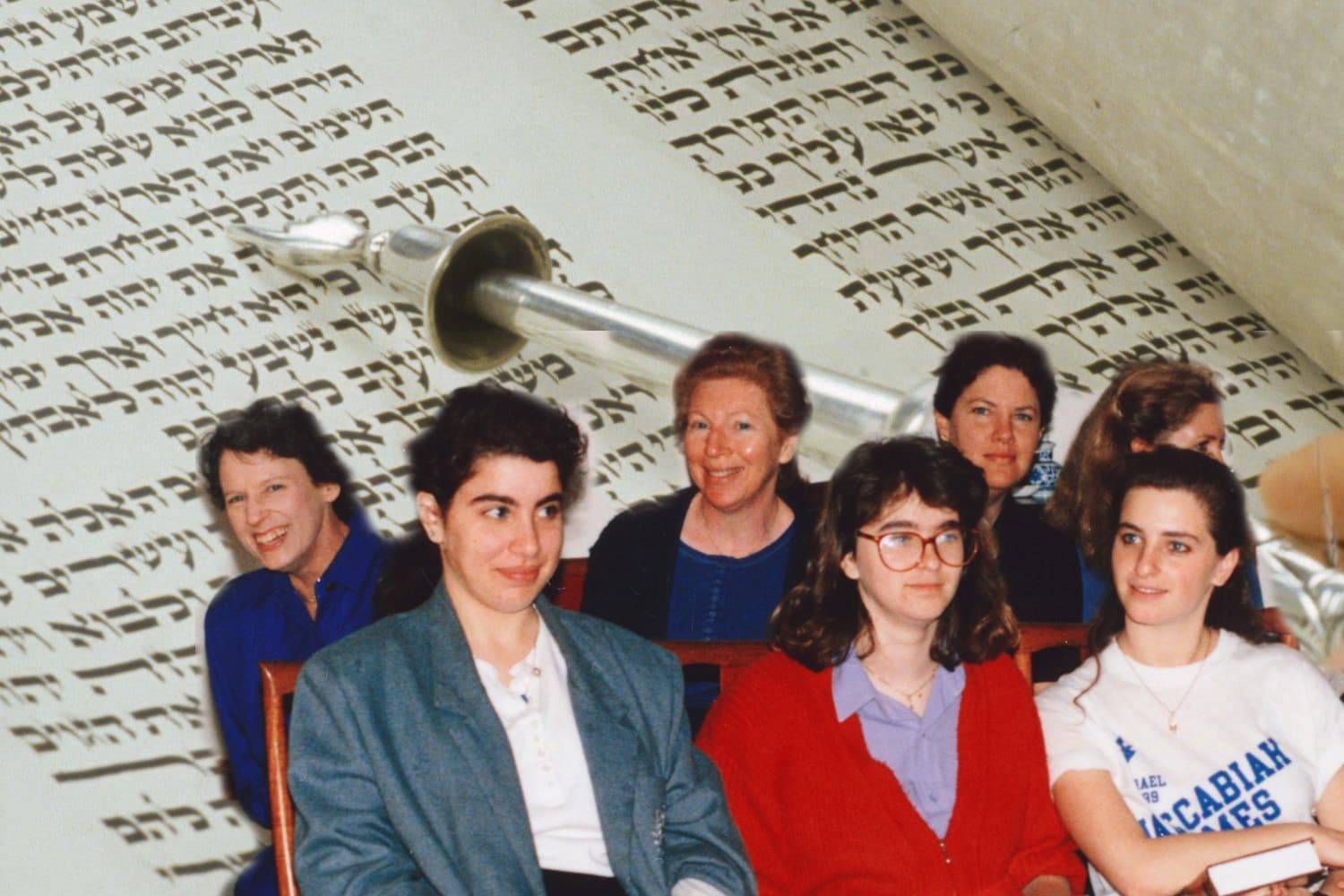
Participants in Australia’s first Orthodox women’s Torah reading 35 years ago (supplied)

Published: 17 December 2024

Last updated: 17 December 2024

Thirty-five years ago, the first Australian women’s prayer group met in my parents’ home. Two rabbis called to curse me, to frighten me out of doing it, and I had only myself to blame.

At every opportunity, I had been speaking about a new American phenomenon: Orthodox women gathering for prayer and Torah. My proselytizing provoked a flurry of young voices asking for women’s prayer in Sydney. I hesitated, I debated, I anticipated a tumult, but I wanted to pass on a little of what the women of America had given me.

Even before I could walk, my father had taken me to shul, where I watched men’s prayer coming together so effortlessly, so naturally. Every day, twice a day, a boy waits for his chance to lead, while his sister waits at home. Every day, a boy attends to the performance, ready for the moment when the baton passes to him.

Creating a service for ladies who are chatting in shul and not paying attention to what’s going on in the men’s section because they will never participate, is like conducting an orchestra of kindergarteners. You might lose a few notes.

It was horrible being cursed, even by rabbis speaking a jumble of nonsense

Only a minyan of ten men can utter the kaddish and other communal prayers. Only with a minyan can the Torah reading be blessed. But Orthodox women in New York wanted to do more than sit in the Ladies’ Gallery watching men. In the 1970s, they devised prayer and Torah services for women. In the 1980s, I joined them.

From the beginning, rabbis and laity went berserk. Women reading from the Torah was especially combustible. What might happen when women saw the black letters dancing across the parchment of Torah?

Knowing this, I pressed ahead cautiously with the women’s service in Sydney. We decided to meet on Rosh Hodesh Kislev, the new moon at the end of the solar year, when Hallel is sung and the Torah is read. In 1989 (and 2024) Rosh Hodesh Kislev fell on a Sunday, allowing women to travel to our service from many places. The moon has a special connection with women, in its lesser status to the sun, its waxing and waning. Rosh Hodesh has long been a holiday for Jewish women.

Everything about our Sydney women’s service was kept as quiet as possible. It was planned at my parents’ home, so we wouldn’t need to ask for synagogue space. People found out only through word of mouth. A rabbi lent us a Torah scroll.
My parents were strong supporters. They had watched me through the storms of adolescence, losing my childhood God and recovering something more adult, as an Orthodox feminist. It is hard to be both a feminist and an observant Jew. Sexism announces itself from the earliest morning blessing, “Blessed are You who didn’t make me a woman.” Even so, I could not give Judaism up, as it connected me to my mother and my father and to their mothers and fathers, to thousands of years of extraordinary Jewish resilience under pressure.

We were all novices and there was a gasp the first time each saw the inside of a Torah

Thirty-five years ago, I believed I might be a small instrument of change, beating out new Orthodox paths. My parents, who had taken me to shul and taught me to pray, gave strength to my hopes.

A father’s plea

Then, when my father and I were walking to shul together during the months of preparation, I struck a problem.

“My darling,” he pleaded, “I am asking you: please do not do this thing.”

I was in disbelief. “How can you ask me this?” I asked. “You are the one who took me to shul every morning! You taught me to pray!”

My father is a survivor, not just of the Nazis, but also of the Communists, who led a more sustained campaign to wipe out Judaism.

“When I was teaching at the university in Micolz, in Hungary, after the War, I almost stopped being religious. Away from home, it became almost impossible: cooking, shabbos, duvening…If it would have become known in those days I was keeping these things.” He grimaced and shook his head, remembering.

“I just can’t bear to be ostracized by the community,” my father continued. “I know this is important to you, but I don’t want people to turn away from me. I have been through so much. I can’t bear it.”

It was impossible to deny his plea, but in the end I didn’t need to. Our rabbi offered to lend prayer books for the women’s service, like manna from Heaven. My spiritual needs did not have to come at the cost of my father’s.

The rabbis’ curses

Other rabbis felt differently: a Hasid who ministered at the shul further down the road and a modern Orthodox graduate of Yeshiva University. Each of them called and spat abuse at me for several hours. Their irrationality, rudeness, heavy-handedness and inappropriateness made them sound like one bully voice.

I was a mischief-maker, they said, and my service would result in a whole new denomination of Judaism.

That accusation was a puzzle. Sydney is overwhelmingly Orthodox, although only nominally, since shuls are mostly empty except on High Holidays. How would a women’s prayer group cause a schism in empty pews? There was no branch of Judaism, new or old, that cared about women’s prayer. Until that moment.

“Who are these women who are attracted to this thing you are doing?” the rabbis on the phone demanded. “Marginal, dissatisfied types. They will spread the word to other women, who are happy in their roles, make them question, put evil thoughts in their heads.”

I doubted that contented women would be affected by my service. Are they contented or not? “And these women who will come, do they pray every day?” the rabbis on the phone continued. “Why are they suddenly excited about a women’s service? They can go to a real shul and hear a real Torah reading if they are so enthusiastic!”

The women coming to my Rosh Hodesh service probably didn’t pray much, but they were certainly not going to pray more if they were shoved in a corner or locked outside, as I was for years, when I tried to join a Rosh Hodesh service from the Ladies’ Gallery.

Then the rabbis on the phone attacked me with legal arguments, and I was better equipped to answer those. “How can you cart around a Torah like that? What are you going to do with it when it’s not used? Don’t you know it’s a desecration to open it for a non-holy purpose? Are you going to say blessings over the reading? Who is going to teach you?”

I was a cursed woman, the rabbis on the phone said, for my brazenness, my disrespect of tradition, of the Torah, of the community.

After I hung up from these diatribes, I cried. It was horrible being cursed, even by rabbis speaking a jumble of nonsense. But there was comfort, too. The hands of helping friends were as strong as the voices of our enemies. The most celebrated bar mitzvah teacher in Sydney volunteered to show us how to read Torah. Another taped the portion we read for the new moon. Prayer books arrived from our shul. People called to offer encouragement.


Come the revolution

At the birth of the new moon of Kislev, 23 women and a Torah packed into my parent’s home. They included Susan Bures who was editor of the Jewish press, but who didn’t report on the event, at my father’s request. The voices were slow and halting.

None of them was accustomed to leading prayers for others. But when we came to Hallel, the Rosh Hodesh song of praise, our sound swelled. The Torah reading was flawless, and special participants were called up for aliyot. We were all novices and there was a gasp the first time each saw the inside of a Torah scroll. Black fire upon white fire.

A week later, I emigrated to America to join communities of Jewish women to my heart’s content. Women’s prayer in Sydney paused, but memories of that first gathering remained. One of the rabbis who had cursed me began to permit women’s prayer groups in his synagogue. Even there, old habits persisted—locked doors, missing keys, and the exclusion of women and their prayer from shul.

In the 35 years since we met at my parents’ house for prayer, the rabbis’ curses have come to pass. Orthodox women have been ordained as rabbis, and Orthodox women lead services of mixed genders (with a mehitza) in Melbourne, Jerusalem, New York and London.

For most, this is seen as a leap forward, because how can you have a community without men?

But some of us remember with nostalgia the early days when women led women in prayer and Torah. There’s something comfortable about an all-women’s space. Men know about that. They have been enjoying all-men’s prayer spaces for a long while, and never noticed the absence of their sisters.

You might also like
  • I’m a Jewess and I’m owning the term 
    Leila Segal
  • US and Israel are more ‘The Handmaid’s Tale’ than ‘The Testaments’
    Leslie Cannold
  • Women disadvantaged by new powers for Israel’s religious courts
    Eetta Prince-Gibson
logomark.67a07ee3
We believe in the free flow of information

Republish our articles for free, online or in print, by using our Creative Commons licence

You might also like

    vandalism car woollahra fuk israel farhat
    Australia

    Court decision fails to understand when ‘Fuk Israel’ becomes antisemitic

    Jeremie Bracka 6
    Tame
    Australia

    Tame apologises – but with little grace

    Deborah Stone 1
    Futurism
    OpinionLifestyle

    Jewish Futurism? We’ve been practising it for millennia 

    Renata Zimbarg 1

About the author

Viva Hammer

Viva Hammer

Viva Hammer is at the Hadassah-Brandeis Institute of Brandeis University and the Crawford School of Public Policy at the Australian National University. She is completing a book Child Desire: Large Families in a Small Family World. vivahammer@gmail.com

More from the author

ReviewIsrael

A personal story that contextualises October 7

ReflectionAustralia

Should I invite my brother to my wedding?

ReviewArts & Culture

Mazel tov! An uplifting celebration of Jewish brides

Comments4

  • Avatar of Nachum

    Nachum18 December at 01:09 pm

    Miriam Frommer: Or maybe they have a realistic view of sex differences.

  • Avatar of Hilary

    Hilary17 December at 06:52 am

    Evokes all that bravery – a small seed against the gusts of patriarchy

  • Avatar of Miriam Frommer

    Miriam Frommer17 December at 06:32 am

    The irony of the Orthodox rabbis’ exclusionary behaviour is that they rationalise the separation of women by admitting that they can’t control their sexual impulses. Who is the adult here?

  • Avatar of Michelle A Daniels

    Michelle A Daniels17 December at 02:58 am

    Great article and very inspiring. A true pioneer for women leading prayer. It takes courage to break old molds. Brava!