Aa
  • Read, Watch, Listen
  • TJI Series
  • Community Action
  • Events
  • Zedi
Follow us and continue the conversation
  • LinkedIn
  • Instagram
  • FaceBook
  • X
  • YouTube
Test yourself with the TJI Quiz!

Adjust size of text

Aa

Follow us and continue the conversation

  • LinkedIn
  • Instagram
  • FaceBook
  • X
  • YouTube

Your saved articles

You haven't saved any articles

What are you looking for?

Original reporting, insightful analysis and diverse views, delivered straight to your inbox

  • LinkedIn
  • Instagram
  • FaceBook
  • X
  • YouTube
Your support fuels our mission to inform, entertain and inspire.

The Jewish Independent is bound by the Standards of Practice of the Australian Press Council. If you believe the Standards may have been breached, you may approach The Jewish Independent or make a complaint to the Australian Press Council in writing at www.presscouncil.org.au. The Council may also be contacted on 1800 025 712.

  • Our Story
  • Contact us
  • Our Team
  • Support us
  • Guidelines
  • Pitch your idea
  • Republishing us
  • Community Action
  • Our Awards
  • LinkedIn
  • Instagram
  • FaceBook
  • X
  • YouTube
Aboriginal FlagTorres Strait Islanders Flag

The Jewish Independent acknowledges Aboriginal and Torres Strait Islander peoples as the Traditional Owners and Custodians of Country throughout Australia. We pay our respects to Elders past and present, and strive to honour their rich history of storytelling in our work and mission.

© The Jewish Independent 2026All Rights Reserved
Website design and development by Your Creative, MelbourneTerms & ConditionsPrivacy Policy
HomeRead, Watch, Listen
Feature

‘People asked me not to take photos; it’s understandable; they’re at their lowest point’

Elhanan Miller
Print this

Published: 11 March 2022

Last updated: 4 March 2024

Elhanan Miller meets Israeli photographer Maya Meshel, who travelled to Moldova to help refugees, armed with baby formula, warm clothes and her camera

AS IMAGES OF fleeing refugees began emerging after Russia’s invasion of Ukraine, Jerusalem photographer Maya Meshel knew she couldn’t stay put.

“Something inside me told me I have to go,” the 48-year-old mother of five told The Jewish Independent. “I told my husband I wanted to leave for Ukraine or nearby. As a documentary photographer I felt I have to stop talking and start doing.”

With a plan to both volunteer with Ukrainian refugees and document their plight, Meshel frantically searched for an Israeli delegation to join. Within days she boarded a flight to Bucharest with a group of volunteers from Hakhel, an Israeli-non profit that works with the Ministry of Diaspora Affairs. She was the only non-Russian speaker in her delegation of four.

“We brought eight suitcases between us, stuffed with baby formula, warm clothes, children’s books and games, dry food and snacks. At the El Al counter I explained that we were a humanitarian delegation and they let us send our overweight luggage at no cost,” she said.   

Photo: Maya Meshel
Photo: Maya Meshel

The group headed directly to the Moldovan capital Chisinau, a seven-hour drive from Bucharest, and set up shop in the Agudat Israel synagogue headed by rabbi Pinchas Salzman. Scores of Jewish and non-Jewish Ukrainian refugees had flocked to the synagogue, requiring emotional and logistical support.

“The volunteers tried to find documents for the refugees, to listen to them, to console them. Many of them had left family members back in Ukraine or stuck at the border. The sense was that Moldova, too, will be occupied by Putin, and everyone was scrambling to leave for Romania.”
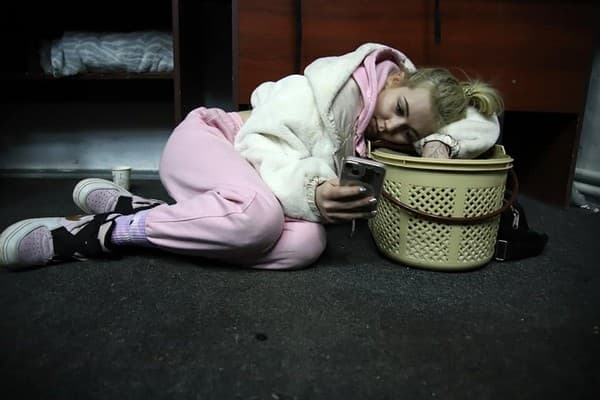
Meshel becomes teary as she recalls the suffering of the refugees she encountered.

You see people sitting in the hallways with their suitcases and just waiting. Homeless people with a look in their eyes that I can only describe as hollow.

“After a 14-hour journey by foot they arrive in Chisinau, eat some fruit or biscuits, rest on mattresses scattered across the synagogue floor or in nearby hotel rooms. You see people sitting in the hallways with their suitcases and just waiting. Homeless people with a look in their eyes that I can only describe as hollow.”

“I felt like I was sucked into a different realty. I didn’t listen to music for a week, something I usually can’t live without. I didn’t shower for days. Before Shabbat I polished my shoes and that was it.”

During her week in Moldova, Meshel received dozens of messages on Facebook from Ukrainian immigrants to Israel asking for assistance in finding and rescuing their relatives. “The distress during war is terrible.

Photo: Maya Meshel
Photo: Maya Meshel

“One friend in Israel tried to find a mentally ill contact from Kiev who lost touch with her relatives. She was eventually tracked down in a mental hospital. These messages never ended. It was chaos.”

In her photos from Chisinau, Meshel tried to convey the refugees’ suffering without exploiting their extreme vulnerability.

“People asked me not to photograph them. It’s completely understandable; they’re at their lowest point. They want to vanish into thin air, not to remember this moment. On the other hand, it’s important to document what’s going on; be it for donations or to engender empathy and generosity so that if refugees arrive [in Israel] people will understand what they went through.”

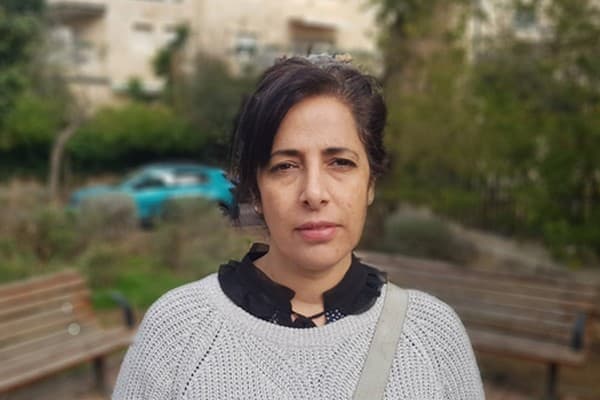
Maya Meshel (Elhanan Mller)

“It’s an extremely frustrating situation. I would wake up in the middle of the night imagining telling my children they must each quickly pack one suitcase. I imagined leaving my home and all my belongings behind to be looted, travelling to a new country where I don’t speak the language or know where I’ll live. These thoughts still won’t leave me.”      

Returning to her routine in Israel has been difficult. Every now and again Meshel stops to reflect on the intense emotional experiences she went through.

“I’m part of a group of friends here who are like my sisters. When I hear them complain about daily things, I think to myself: ‘what difference does it make? Have some sense of proportion people!’ Being far from these events, they simply don’t get it. Maybe they’re not supposed to; that’s just the nature of our world.”         

Photo: Maya Meshel

You might also like
  • ‘L’chaim for the next 1,500’: Israeli drummer celebrates Cirque Du Soleil milestone
    Gideon Cohen
  • New wave of Russian-speaking migrants may be key to Israel’s future
    Ittay Flescher
  • Israel leads use of military AI: a threat to global peace
    Deborah Stone
logomark.67a07ee3
We believe in the free flow of information

Republish our articles for free, online or in print, by using our Creative Commons licence

You might also like

    tame kostakidis west
    AnalysisAustralia

    How not to apologise

    Zac Klugman
    Jewish-diversity copy
    Feature

    The three questions that will define the Jewish future

    Shahar Burla 1
    Web Banner – Andrew Casey Internship

    Andrew Casey Memorial Internship Program

    Paul Amato

About the author

Elhanan Miller

Elhanan Miller

Elhanan Miller is a Jerusalem-based journalist and teacher.

More from the author

AnalysisIsrael

The future: three options remain after a year of fighting

AnalysisIsrael

Israel’s UNRWA dilemma: who else will provide aid to the Palestinians?

World

A new Yiddish musical speaks to the sorrow of our time

Israel

A draining duty: explaining the Israeli side to Arab media