Aa
  • Read, Watch, Listen
  • TJI Series
  • Community Action
  • Events
  • Zedi
Follow us and continue the conversation
  • LinkedIn
  • Instagram
  • FaceBook
  • X
  • YouTube
Test yourself with the TJI Quiz!

Adjust size of text

Aa

Follow us and continue the conversation

  • LinkedIn
  • Instagram
  • FaceBook
  • X
  • YouTube

Your saved articles

You haven't saved any articles

What are you looking for?

Original reporting, insightful analysis and diverse views, delivered straight to your inbox

  • LinkedIn
  • Instagram
  • FaceBook
  • X
  • YouTube
Your support fuels our mission to inform, entertain and inspire.

The Jewish Independent is bound by the Standards of Practice of the Australian Press Council. If you believe the Standards may have been breached, you may approach The Jewish Independent or make a complaint to the Australian Press Council in writing at www.presscouncil.org.au. The Council may also be contacted on 1800 025 712.

  • Our Story
  • Contact us
  • Our Team
  • Support us
  • Guidelines
  • Pitch your idea
  • Republishing us
  • Community Action
  • Our Awards
  • LinkedIn
  • Instagram
  • FaceBook
  • X
  • YouTube
Aboriginal FlagTorres Strait Islanders Flag

The Jewish Independent acknowledges Aboriginal and Torres Strait Islander peoples as the Traditional Owners and Custodians of Country throughout Australia. We pay our respects to Elders past and present, and strive to honour their rich history of storytelling in our work and mission.

© The Jewish Independent 2026All Rights Reserved
Website design and development by Your Creative, MelbourneTerms & ConditionsPrivacy Policy
HomeRead, Watch, ListenLifestyle
ReflectionLifestyle

Pressing the pause button on our lives

Long before digital detox and the right to disconnect, Jewish tradition understood the importance of taking a break.
Ralph Genende
Print this
a row of play buttons with one pause button

The pause can be a powerful element in our lives (Illustration: TJI)

Published: 28 May 2025

Last updated: 28 May 2025

Do you find yourself rushing from task to task, event to event, meeting to meeting? Who today is not super-charged, stressed-out, worn-out or burnt-out? Stress seems to be the mantra of our manic lives. Apparently 52% of people say stress keeps them up at night. And since October 7, I would guess 95 percent of Jews are on stress steroids.

Not only is ongoing stress bad for our health, but it also affects our relationships, our capacity to be effective and of course our wellbeing. Even when we are aware that we are running too fast or simply running on empty we find it hard to stop. We tell ourselves that we just don’t have time to get it all done or to take a break?

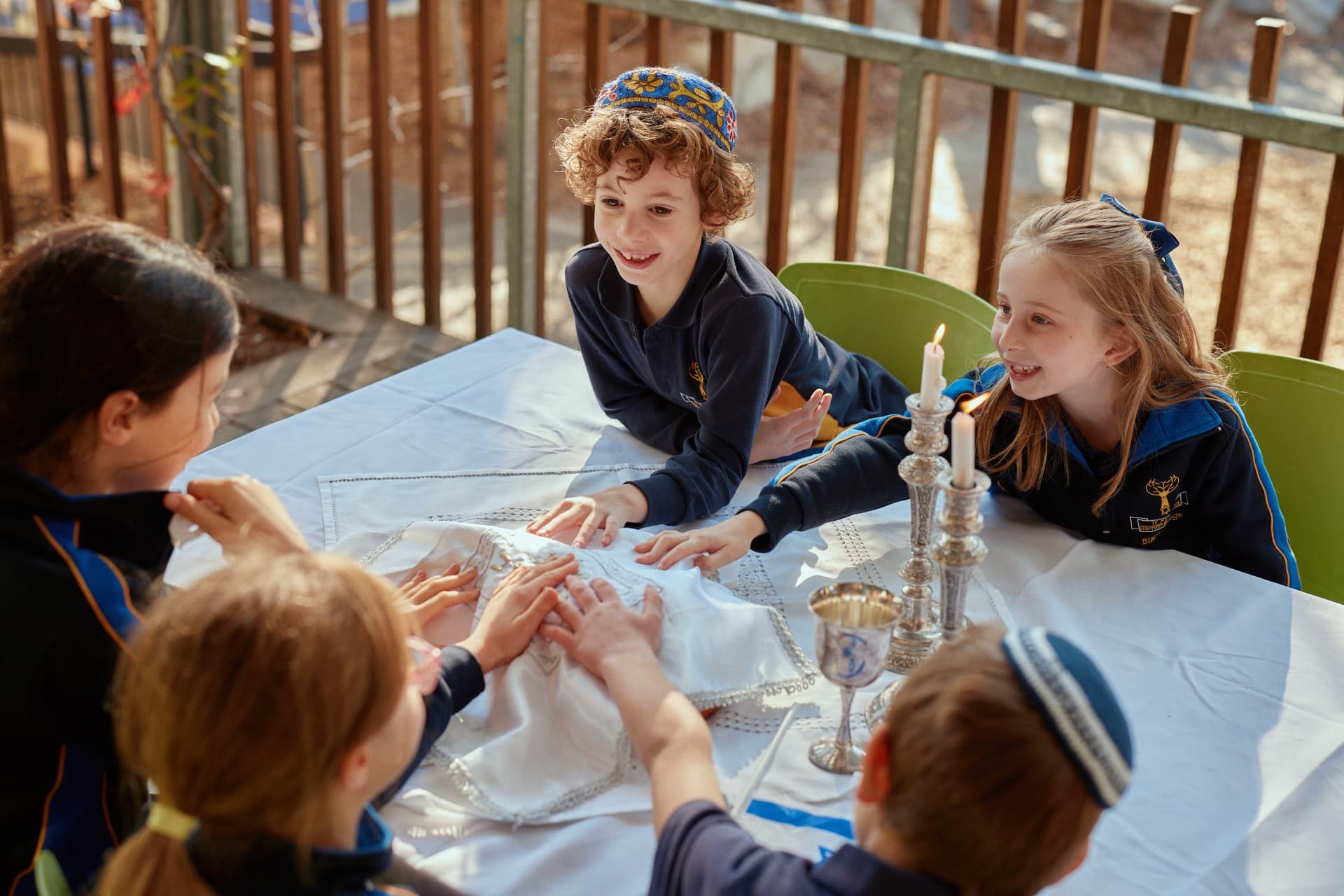
Well, God had time to take a break when He looked at the product of six days of exertion. Let’s rest, He said, and let’s call it Shabbat. He taught Moses and the Jewish people the same lesson at Mt. Sinai in the desert wilderness; a place of deep silence where time itself holds its breath.

On the festival of Shavuot we celebrate that life lesson. The Bible records that immediately before God uttered the Ten Commandments at Sinai there was thunder and lightning and a very loud shofar. However, the rabbis steeped in tradition of silent prayer and reflection couldn’t imagine that these weighty ten principles would be delivered in a storm of sound and fury.

So, they suggest that at the moment the Torah was given the world entered the heart of stillness itself: “The birds didn’t chirp, the angels stopped their song, the waves of the sea ceased their restless tides, and no one spoke.” If you want to encounter God or access the spiritual you need to discover the sounds of silence, uncover the textures of quietude.

What makes an animal kosher and a human cogent is their capacity to ruminate

Greek Jewish philosopher Philo
In an age of information overload and a never-ending stream of messages, the need to stop and ponder is even more critical. Learning and wisdom lie in our ability to listen and think, to understand the nature and consequences of what we are receiving.

The Greek Jewish philosopher Philo suggested that what makes an animal kosher and a human cogent is their capacity to ruminate, to chew the cud, to think things through.

When I was younger, I would pack a huge number of ideas into a sermon or shiur and often deliver them at break-neck speed. Over the years and on the advice of older heads, I learnt how to slow down, to speak more simply and precisely and stick to just a few thoughts. I have also learnt about the potency of the pregnant pause. A pause that allows others to both reflect on what’s just been said and also to anticipate what’s yet to come. I have found the pause is just as important for me as it is for the listeners. It gets me to slow down and deepen what I am trying to transmit, what I am trying to birth.

Pausing is not only essential for good learning or education: it’s a useful life tool. When we take a pause in the midst of our busy-ness, we clear our minds and act more carefully and mindfully. We surface and see the faces of others and smell the roses. If only all those angry keyboard warriors would halt before hating!

Too often I leave that break far too late and speak impulsively or send off that mail too rashly. I have found taking a short walk or a power-pause (or nap) refreshes and clarifies. It’s been said “When you are in doubt, pause…when angry, pause… when tired, pause…when stressed, pause and when you pause, pray.” I welcome the opportunity to pray which the halacha nudges me towards.

The Mincha prayer which comes in the middle of the day was perceptively introduced by the rabbis for just that purpose. It makes you interrupt whatever you are doing and re-focus. The very word Mincha has as its root the concept of menucha (rest). Rabbi Nachman of Bratslav used to urge his followers to make “Shabbat moments” every day: Take a half hour or better an hour, to be alone, dead to the world and alive only to yourself.

The fabled 20th century existential psychologist Rollo May extended the importance of a temporary interruption: ‘’Human freedom involves our capacity to pause between the stimulus and response and, in that pause, to choose the one response towards which we throw our weight. The capacity to create ourselves, based upon this freedom, is inseparable from self-awareness.”

In a time when presidents send out imprudent tweets, when leaders idly make nuclear threats when fine (and not so fine leaders) are incapable of a ceasefire, the potency of the pause is as poignant as it is urgent.

It's time to press the Pause Button. As writer Lori Deschene suggests: “Practise the pause. Pause before judging. Pause before assuming. Pause before accusing. Pause whenever you are about to react harshly.”

A pause in time can save a lot of pain and regret. So, let’s practise the great survival technique of the pause, maybe while humming the words of Simon and Garfunkel: “Slow down you move too fast. You’ve got to make the morning last.”

You might also like
  • Antisemitism, homophobia and a radical response to both
    Dennis Altman
  • Facing a new year with the knowledge life can be better
    The Jewish Independent
  • Was the barmi a shemozzle? How Australians use Jewish words 
    Caroline Hendy & Emma Breslow
logomark.67a07ee3
We believe in the free flow of information

Republish our articles for free, online or in print, by using our Creative Commons licence

You might also like

    Neurodivergence panel
    VideoLifestyle

    Neurodivergence and inclusion in the Jcom

    The Jewish Independent
    original-6ACA4B6A-4208-4277-A4EE-E687C3C87523
    FeatureLifestyle

    The right to an ordinary Jewish life

    Jarod Rhine-Davis
    Keshet
    FeatureLifestyle

    ‘We won’t ever leave’: Keshet Europe’s fight for Jewish LGBT+ inclusion

    Gideon Cohen

About the author

Ralph Genende

Ralph Genende

Rabbi Ralph Genende is the Interfaith and Community Liaison at the Australia Israel and Jewish Affairs Council. He is also Senior Rabbi to the Australian Defence Force and Rabbi of Kehilat Kesher Community.

More from the author

ReflectionWorld

A celebration of chutzpah, from Moses to modern times

AnalysisAustralia

Interfaith relations after Bondi 

DebateAustralia

Stopping the sacrifice of children on a new altar 

OpinionLifestyle

Forgiving our parents: a Yom Kippur challenge

Comments

No comments on this article yet. Be the first to add your thoughts.