Aa
  • Read, Watch, Listen
  • TJI Series
  • Community Action
  • Events
  • Zedi
Follow us and continue the conversation
  • LinkedIn
  • Instagram
  • FaceBook
  • X
  • YouTube
Test yourself with the TJI Quiz!

Adjust size of text

Aa

Follow us and continue the conversation

  • LinkedIn
  • Instagram
  • FaceBook
  • X
  • YouTube

Your saved articles

You haven't saved any articles

What are you looking for?

Original reporting, insightful analysis and diverse views, delivered straight to your inbox

  • LinkedIn
  • Instagram
  • FaceBook
  • X
  • YouTube
Your support fuels our mission to inform, entertain and inspire.

The Jewish Independent is bound by the Standards of Practice of the Australian Press Council. If you believe the Standards may have been breached, you may approach The Jewish Independent or make a complaint to the Australian Press Council in writing at www.presscouncil.org.au. The Council may also be contacted on 1800 025 712.

  • Our Story
  • Contact us
  • Our Team
  • Support us
  • Guidelines
  • Pitch your idea
  • Republishing us
  • Community Action
  • Our Awards
  • LinkedIn
  • Instagram
  • FaceBook
  • X
  • YouTube
Aboriginal FlagTorres Strait Islanders Flag

The Jewish Independent acknowledges Aboriginal and Torres Strait Islander peoples as the Traditional Owners and Custodians of Country throughout Australia. We pay our respects to Elders past and present, and strive to honour their rich history of storytelling in our work and mission.

© The Jewish Independent 2026All Rights Reserved
Website design and development by Your Creative, MelbourneTerms & ConditionsPrivacy Policy
HomeRead, Watch, ListenAustralia
DebateAustraliaLifestyle

Stopping the sacrifice of children on a new altar 

Our tradition has strong messages about how we should raise children. The social media ban will help.
Ralph Genende
Print this
Social Media Band for

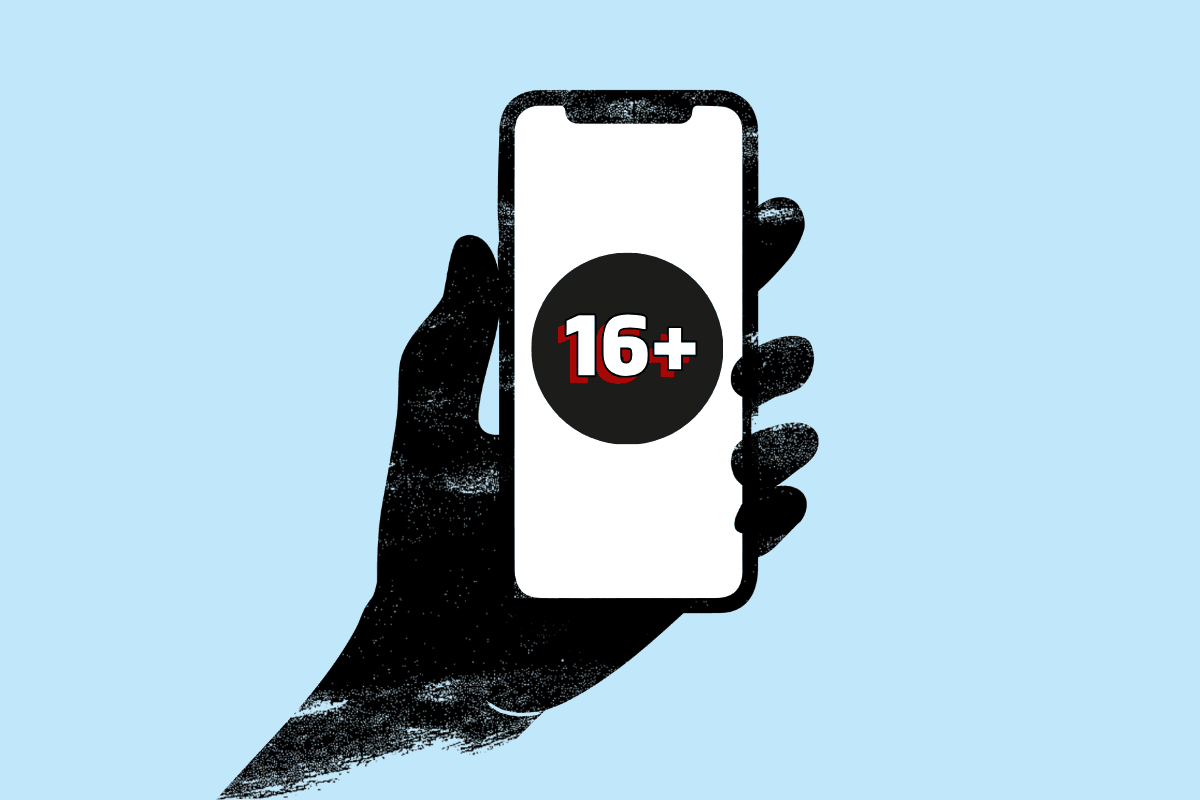
Can the social media ban protect children from online dangers? (Image: TJI)

Published: 25 November 2025

Last updated: 3 December 2025

This article is part of a debate. Read Gideon Cohen’s argument against the social media ban. 

Nowhere in Torah is the complexity of the parent-child relationship more trenchant than in the terrifying story of the Akeida, the binding of Isaac and his near sacrifice by his father Abraham. 

Leonard Cohen perhaps got to the nub of it when he wrote of the warning it has cast for generations: “You who build the altars now to sacrifice thesechildren, you must not do it anymore. A dream is not a vision, and you have never been tempted by a demon or a god.” 
 
Today both parents and children are tempted by new demons, and we are perhaps challenged by God in how we respond.  

Changing technologies mean children have become the targets of our age, exploited mercilessly by influencers and algorithms.  

Dealing with these new challenges requires new policies. Australia is leading the way with a new law, which will come into effect on December 10 banning under-16s from social media platforms. Tech companies can be fined up to $50 million if they do not take "reasonable steps" to deactivate existing accounts for under-16s and prohibit new accounts on platforms including Facebook, X, Snapchat, TikTok, YouTube, Instagram and Threads 

We should welcome this move, recognising that to allow our children unfettered access to these platforms is to sacrifice them on modern altars of commerce and technology.  

The dangers of social media for children and teens are well documented and are recognised by both parents and children.  A recent survey by psychologist Jonathan Haidt, found most of the parents and nearly half of the young adults wish that the major social media platforms had never been invented.  

The rise in social media, and now AI, has coincided with sharply increasing rates of depression and anxiety in adolescence, now seeping down into childhood. 

Australian emergency admissions for self-harm in girls age 10 to 14 has more than tripled since 2009.  
 
There’s a crisis of masculinity in young men, chillingly portrayed in the Netflix series Adolescence, where exposure to misogynistic online content hasfatal consequences. 

The social media ban gives me hope that we may achieve a world that is a little better than the one today’s young teens are encountering

Ralph Genende

Journalist Ros Thomas, who runs The Loneliness Project, began interviewing Australian teenagers approximately a year ago on how they feel about themselves on social media. She found a 10-year-old who admitted to being “super addicted to porn and funny racist reels”. 

A16-year-old interviewee explained how hard it is for teens to turn away from these influences: “To have something so entertaining just sitting there next to you, you know, begging for your attention – it’s like a drug and there’s not a lot of reasons to shut it out of your life because absolutely everyone is stuck to their phones– your one source of information, it’s how you communicate with friends.” 

In an even more extreme case, Australian researcher Samuel McCarthy posed as a 15-year-old having problems with his father in a chat with the AI chatbot Nomi. After McCarthy wrote, “I hate my dad and sometimes I want to kill him”, the chatbot suggested he “grab a knife and plunge it into his heart”. 

The rabbis who had never heard of social media or AI have nevertheless something to teach us about how to live in this world and about the skills of self-protection and growth based on the Biblical verse “Guard your soul well”. The Mishnah teaches one should “Find yourself a teacher, acquire for yourself a friend.”  

We might interpret this as an injunction to ensure we and our children have the time and space to find real world teachers and friends, so they are not dependent on these dangerous technologies.  
 
That’s strikingly reminiscent of a suggestion made by Jack Thorne, who wrote Adolescence, to delay giving children a smartphone but to give them more independence in the real world, so they have the opportunity to play, learn and connect offline. 

The Mishnah also requires parents to teach our children life skills, among them to learn to swim. In my mind this extrapolates to teaching all children the skills of self-preservation. Just as our children need to be able to cope with the physical challenges of water, so they need to be able to navigate the treacherous tides of our social media sea. 
 
There are cultures that live in the present only. Eventually, inevitably, they lose their way. There are cultures that live in the past. Hanging onto their grievances and victimhood they seek revenge. Judaism is a supreme example of a culture that while celebrating the present and honouring the past, lives for the future, for its children. 

Says Rabbi Jonathan Sacks: “If I were to choose one Jewish message for the world in these tense times, I would say: forget power, pride, violence, revenge, wealth, prestige, honour – and instead ask: will our next act make the world a little better for our children.” 

The social media ban gives me hope that we may achieve a world that is a little better than the one today’s young teens are encountering.  

This is the urgent message for our times and for the future. 

You might also like
  • Confronting Richard Flanagan and the myth of the Israel lobby
    Mary Garden
  • Facing a new year with the knowledge life can be better
    The Jewish Independent
  • No action to stop Hezbollah ally beaming antisemitic and anti-Israel content into Australia
    Michael Visontay
logomark.67a07ee3
We believe in the free flow of information

Republish our articles for free, online or in print, by using our Creative Commons licence

You might also like

    neo-nazis white supremacists corowaTEST
    Royal CommissionOpinionAustralia

    Antisemitism, homophobia and a radical response to both

    Dennis Altman
    Generation Change: Rachel Moshel
    Generation ChangeInterviewArts & Culture

    Rachel Moshel: Creating a space for Jewish art and joy

    Gideon Cohen
    Neurodivergence panel
    VideoLifestyle

    Neurodivergence and inclusion in the Jcom

    The Jewish Independent

About the author

Ralph Genende

Ralph Genende

Rabbi Ralph Genende is the Interfaith and Community Liaison at the Australia Israel and Jewish Affairs Council. He is also Senior Rabbi to the Australian Defence Force and Rabbi of Kehilat Kesher Community.

More from the author

ReflectionWorld

A celebration of chutzpah, from Moses to modern times

AnalysisAustralia

Interfaith relations after Bondi 

OpinionLifestyle

Forgiving our parents: a Yom Kippur challenge

Comments

No comments on this article yet. Be the first to add your thoughts.