Aa
  • Read, Watch, Listen
  • TJI Series
  • Community Action
  • Events
  • Zedi
Follow us and continue the conversation
  • LinkedIn
  • Instagram
  • FaceBook
  • X
  • YouTube
Test yourself with the TJI Quiz!

Adjust size of text

Aa

Follow us and continue the conversation

  • LinkedIn
  • Instagram
  • FaceBook
  • X
  • YouTube

Your saved articles

You haven't saved any articles

What are you looking for?

Original reporting, insightful analysis and diverse views, delivered straight to your inbox

  • LinkedIn
  • Instagram
  • FaceBook
  • X
  • YouTube
Your support fuels our mission to inform, entertain and inspire.

The Jewish Independent is bound by the Standards of Practice of the Australian Press Council. If you believe the Standards may have been breached, you may approach The Jewish Independent or make a complaint to the Australian Press Council in writing at www.presscouncil.org.au. The Council may also be contacted on 1800 025 712.

  • Our Story
  • Contact us
  • Our Team
  • Support us
  • Guidelines
  • Pitch your idea
  • Republishing us
  • Community Action
  • Our Awards
  • LinkedIn
  • Instagram
  • FaceBook
  • X
  • YouTube
Aboriginal FlagTorres Strait Islanders Flag

The Jewish Independent acknowledges Aboriginal and Torres Strait Islander peoples as the Traditional Owners and Custodians of Country throughout Australia. We pay our respects to Elders past and present, and strive to honour their rich history of storytelling in our work and mission.

© The Jewish Independent 2026All Rights Reserved
Website design and development by Your Creative, MelbourneTerms & ConditionsPrivacy Policy
HomeRead, Watch, ListenArts & Culture
FeatureArts & Culture

‘Save a seat at the table for death’

MIRIAM HECHTMAN meets the hosts of a new SBS podcast that explores grief, death care and how to deal with what happens ‘at the end of the road’.
Miriam Hechtman
Print this
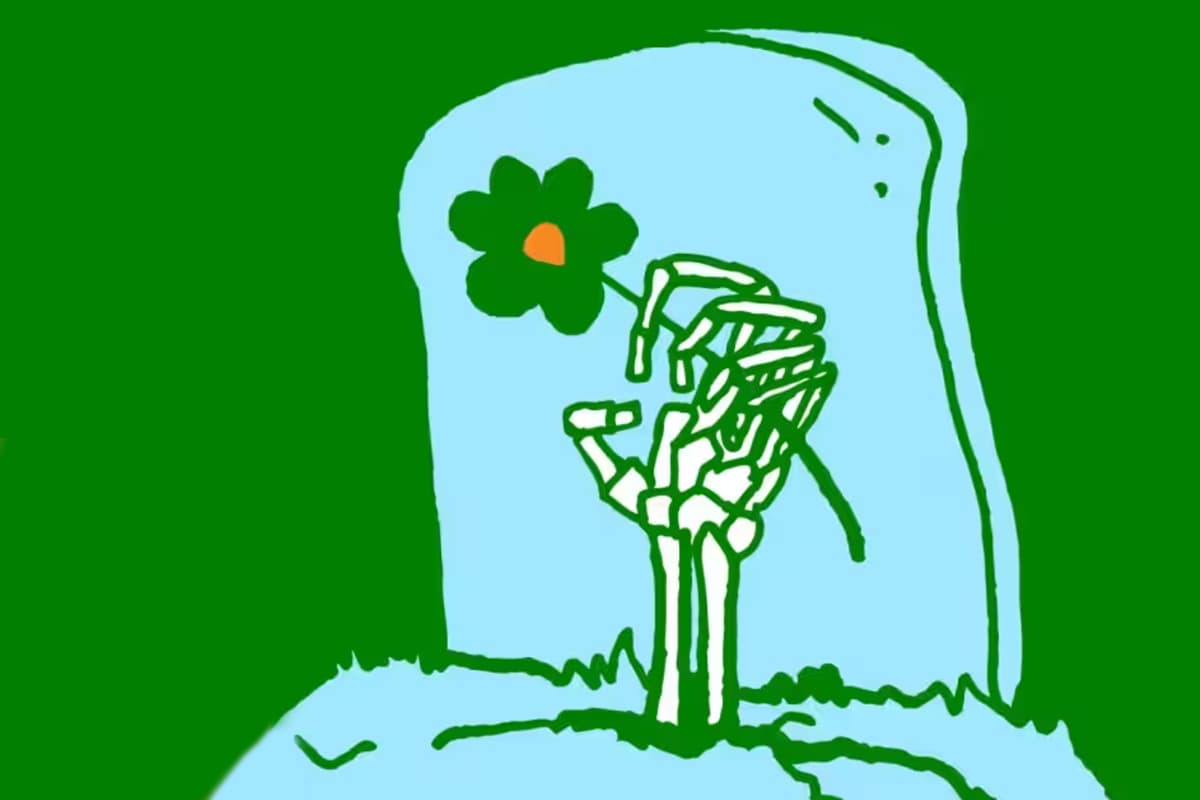
Cartoon of skeleton hand holding a flower

Grave Matters explores the questions we’re all too scared to ask about death

Published: 11 March 2024

Last updated: 21 March 2024

A new SBS podcast that explores grief, death care and how to deal with what happens ‘at the end of the road’.

When Anthony Levin’s mother became terminally ill in 2014, he reached out to his friend Nadine Cohen, whose parents had died years earlier. “Because Nadine had already been through it, she was immensely supportive when I was going through it,” says Levin. "No one else really could hold space for what I was going through among my friends.”

“I lost my parents when I was in my early twenties and I wasn't necessarily emotionally equipped to deal with that,” says Cohen. “I realised how Jewish I was in death. It was ingrained in me more than I thought it was, being secular and non-practicing since my teens.”

Fast forward to late 2022 and Cohen, a writer and refugee advocate, has been working on a podcast since 2020 about death and dying for SBS. Her initial focus was to interview people from different cultures, ethnicities, religions, or any kind of tradition, about their death rituals and their beliefs about death. But as the Covid years endured and the world changed, Cohen’s interest in death evolved and she reached out to Levin, a human rights lawyer and writer, to host, produce and write a different kind of show together.

The result is Grave Matters, “an SBS podcast about grief, death care and the people helping us better understand what happens at the end of the road”.

Cohen and Levin decided to take a broader view of death and dying, exploring death thematically with themes including climate change, Covid, how we dispose of bodies after we die, intergenerational trauma, and war.
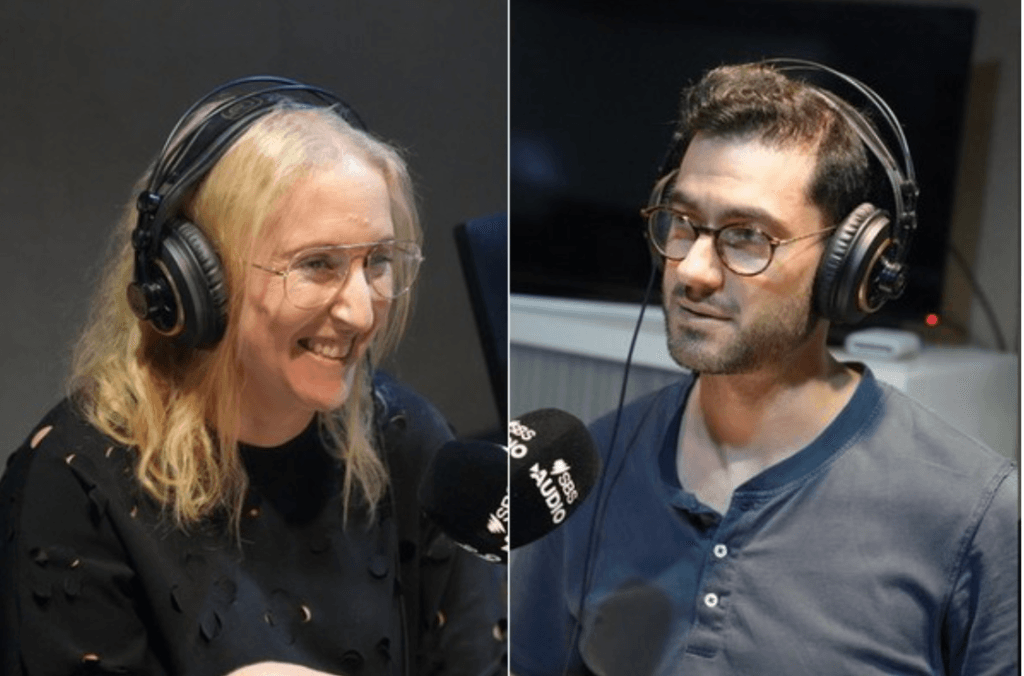
<em>Grave Matters hosts Nadine Cohen and Anthony Levin</em>
Grave Matters hosts Nadine Cohen and Anthony Levin

“We weren't prescriptive about what death had to mean," says Cohen. This wider lens can be applied, for example, to climate change, where the question of mortality was examined. “To confront your own mortality is hard enough. But to confront the mortality of your whole species or your society and perhaps your progeny given so many parents worry about this as well,” says Levin. “That’s a whole other thing.”

The ten-episode series includes interviews with a Jewish-American entrepreneur who founded and runs a natural organic reduction business (a new method of body disposal), a Jewish musician, a First Nations grief counsellor, a Muslim death doula, a trauma therapist, climate researcher and analyst, forensic scientist, and death-tech innovator.

While the podcast is not Judaism-based, Cohen and Levin weave Jewish customs and beliefs into discussions.

“That's what I love about this series; it's pretty polyphonic in that way,” says Levin. “We're exploring death from many different angles and it's not always about a particular experience of dying for a group or for an individual. Some episodes are more conceptual and some episodes are more visceral and everything in between.”

Cohen and Levin also explore their personal losses and how this has informed their relationship with death. “We talk about how we supported each other,” says Levin.

While the podcast is not specifically Judaism-based, Cohen and Levin informally weave Jewish customs, culture and beliefs into many discussions, from sitting shiva to sitting with dead bodies, growing up with Holocaust-surviving grandparents and even the midrash teachings about the angel of conception.

When asked what they hope listeners will ‘get’ from the show, both agree that they want people to have “death literacy” - a concept they didn’t have words for until they fashioned a term for it, says Cohen. “We don’t want to prescribe what people get out of this series. Hopefully people get to think about things like advanced care plans and talk to their family about their wishes for end of life before and after death.”

Another takeaway for Levin that he hopes listeners will also remember is something mentioned by their guest, Dr Hannah Gould, a member of the Death Tech Research Team at University of Melbourne: “Save a seat at the table for death,” she said, an aphorism Gould attributes to her mentor Zenith Virago.

“This idea stayed with me because I thought, what does that mean?,” says Levin. Well, it means being able to open up that space for those conversations, but also with yourself.” Levin says he wants listeners to take charge of their death in the same way that they take charge of their life.

There is some hope in death. Dying people are having living funerals and celebrating their lives.

“We do that quite effortlessly with all of our personal development narratives, but when it comes to death, it is an absolute block. And it's like this, pun intended, dead-end for us psychologically and clearly that's because on some levels, we fear it and we avoid it and we pretend it's not there.”

Ironically, he says, being an active participant for your own death “brings this richness to your life … and we want to share this”.

Apart from the episode on climate change and death, which was the most challenging and “devoid of hope” for Cohen, she says the series itself is hopeful. “There is some hope in death. People are taking charge of their own deaths a lot more. Dying people are having living funerals and celebrating their lives with their friends and family.” A living funeral is a funeral or wake-like event held for a terminal or dying person before they die, with the guest of honour present.  

Unsurprisingly to both Cohen and Levin, who have always found humour in this subject, the show has many funny moments and their guests have also brought a lightness to the show. “I think most people who work with this stuff have to be quite lighthearted. So I think it was us, but I think it was also most of the guests," says Cohen.

As for the unexpected, Levin says he was a little surprised by how much they were both able to draw on their own personal experiences of death and bring them into the conversation and “how many memories came up that you don't expect are going to pop up in this context. And they do. They were some of the most poignant and beautiful moments in making the show.”

CLICK HERE to listen to Grave Matters.

You might also like
  • Finding Our Why
    The Jewish Independent
  • Why we need to find our why now: new TJI podcast
    Ittay Flescher and Courtney Winter-Peters
  • ABC’s self-vetting like ‘marking own homework’
    Peter Kohn
logomark.67a07ee3
We believe in the free flow of information

Republish our articles for free, online or in print, by using our Creative Commons licence

You might also like

    Copy of Website books template (2)
    FeatureArts & Culture

    The winning Jewish books by Australians in the past year

    Gideon Cohen
    jiff26-cancelled.jpg
    ReflectionArts & Culture

    On despair: A reflection after watching ‘Cancelled’

    Deborah Stone
    Eden Bahar
    InterviewArts & Culture

    ‘L’chaim for the next 1,500’: Israeli drummer celebrates Cirque Du Soleil milestone

    Gideon Cohen

About the author

Miriam Hechtman

Miriam Hechtman

Sydney-based Miriam Hechtman is an Australian writer, creative producer and poet. She is the founder and creative director of Poetica, a live poetry and music initiative and co-presenter and producer of WORDSMITH – the poetry podcast.

More from the author

FeatureArts & Culture

New ‘spoken word’ festival in Sydney offers stories directly from creators

FeatureArts & Culture

A circle of communal healing on stage, with a dash of humour

FeatureArts & Culture

Not so secret mother’s business

ReflectionAustralia

‘We are now all walking around with an invisible tear in our clothes’

Comments

No comments on this article yet. Be the first to add your thoughts.