Aa
  • Read, Watch, Listen
  • TJI Series
  • Community Action
  • Events
  • Zedi
Follow us and continue the conversation
  • LinkedIn
  • Instagram
  • FaceBook
  • X
  • YouTube
Test yourself with the TJI Quiz!

Adjust size of text

Aa

Follow us and continue the conversation

  • LinkedIn
  • Instagram
  • FaceBook
  • X
  • YouTube

Your saved articles

You haven't saved any articles

What are you looking for?

Original reporting, insightful analysis and diverse views, delivered straight to your inbox

  • LinkedIn
  • Instagram
  • FaceBook
  • X
  • YouTube
Your support fuels our mission to inform, entertain and inspire.

The Jewish Independent is bound by the Standards of Practice of the Australian Press Council. If you believe the Standards may have been breached, you may approach The Jewish Independent or make a complaint to the Australian Press Council in writing at www.presscouncil.org.au. The Council may also be contacted on 1800 025 712.

  • Our Story
  • Contact us
  • Our Team
  • Support us
  • Guidelines
  • Pitch your idea
  • Republishing us
  • Community Action
  • Our Awards
  • LinkedIn
  • Instagram
  • FaceBook
  • X
  • YouTube
Aboriginal FlagTorres Strait Islanders Flag

The Jewish Independent acknowledges Aboriginal and Torres Strait Islander peoples as the Traditional Owners and Custodians of Country throughout Australia. We pay our respects to Elders past and present, and strive to honour their rich history of storytelling in our work and mission.

© The Jewish Independent 2026All Rights Reserved
Website design and development by Your Creative, MelbourneTerms & ConditionsPrivacy Policy
HomeRead, Watch, ListenAustralia
Royal CommissionAnalysisAustralia

ABC’s self-vetting like ‘marking own homework’

Peter Kohn
Print this
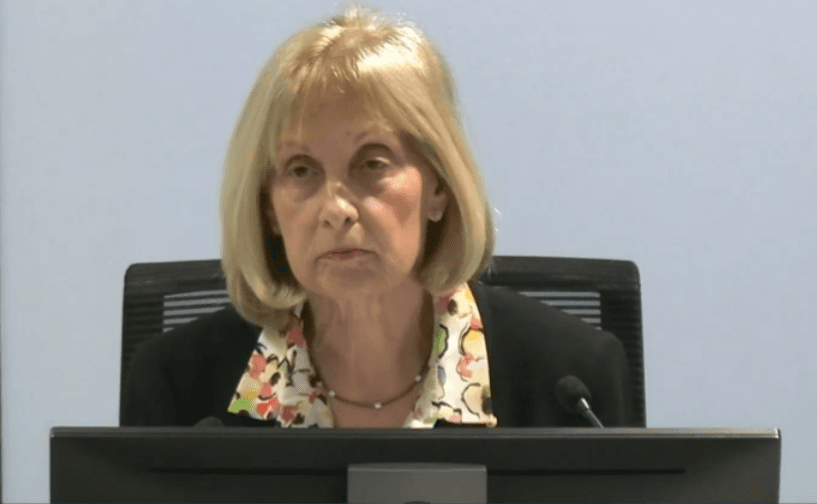
jillian segal

Antisemitism envoy Jillian Segal at the Royal Commission (screnshot)

Published: 9 July 2026

Last updated: 9 July 2026

Australia’s public broadcasters, the ABC and SBS, need to appreciate the ramifications of misreporting news on the Israel-Palestine conflict – and more comprehensive training would go a long way towards deepening that kind of understanding.

This was a key point made by Jillian Segal, the federal government’s Special Envoy on Antisemitism, in her testimony to the media phase of the Royal Commission on Antisemitism and Social Cohesion this week.

When the ABC reported in 2023, in the early weeks of the Gaza war, that Israel had bombed the Al-Ahli hospital with some 500 killed, and it later turned out to have been fired on from Islamic Jihad brigades in Gaza, the broadcaster’s correction was far less prominent than the story it had splashed, she charged.

Segal recounted the ABC taking days to remove an online story sourced from the BBC in 2025, which featured claims that 14,000 babies would starve in Gaza if food aid was not delivered within 48 hours.

The BBC had far more quickly pulled the story after it was disowned by the UN.

These were just two examples of a trend in the ABC’s news coverage, she said.

“[If] Israel misconducts itself and Jewish Australians are blamed, [that’s] terrible,” Segal told the RC, “but we can’t control what Israel does.

“But if Israel is even not misconducting itself, whether it’s the bombing of the hospital or the killing of 14,000 children, but that is reported … we have more blaming, which is really unfair.”

Israel-Gaza was a war instigated by the October 7 Hamas terrorist attack - and in a war there will be “bad things on both sides”, she argued. And yet, it is the perception of a large section of her stakeholders, the Australian Jewish community, that there is “disproportionate” emphasis on what Israel had done in Gaza.

Counsel assisting, Richard Lancaster SC, recalled to Segal the RC testimony of expert witness Professor Terry Flew last week. The digital communications specialist, based at University of Sydney, had described the Hostile Media Effect theory – the tendency for individuals who hold strong opinions on a controversial issue to view balanced, neutral news coverage as biased against their own side.

In her testimony, the eternal wrangle of ‘your bias is bias, but mine isn’t’ was a headwind that Segal had to navigate. To do that she had to cut her sails tightly – and focus on the ABC’s Charter as a publicly funded broadcaster and the procedures in which it could refine the expertise and accuracy of its Middle East reporting.

The Special Envoy conspicuously didn’t mention ‘advocacy journalism’. In fact, she stated that she did not believe misreporting stemmed from any biased groupthink among many ABC reporters – an accusation widely heard in the Jewish community and from broader critics of the national broadcaster.

And she was emphatic that the problems at the ABC were not around the “balance” but around the “accuracy” of its reporting.

As for SBS, Segal criticised the multicultural broadcaster for attributing Gazan death toll statistics to the Gaza Health Ministry without stating it was run by Hamas, an Australian-listed terrorist organisation, and rejected the SBS response that it was its policy in war coverage to identify authorities by “function” only.

She focused on some suggested remedies. She would like to see a fully external, third-party watchdog for the ABC and SBS, such as the the one that was introduced to monitor the BBC’s news coverage. An external, impartial monitoring process for the publicly chartered broadcasters is “the gold standard”, she said.

Segal claimed the ABC Ombudsman was too much a part of the organisational framework at the ABC, which amounted to the national broadcaster handling its complaints process as if it were “marking its own homework”.

She rebuffed the ABC’s use of numbers of complaints as an accurate barometer of bias – which drew to mind the old journo’s rule of thumb that if both sides of an argument attack you, you must be reporting it fairly. Given the relatively small Jewish population, comparisons based on complaints volumes don’t stack up, she suggested.

Segal said anti-racism provisions, such as in the SBS Code of Conduct, “don’t pick up on important aspects of antisemitism”.

The IHRA definition of antisemitism, which she noted had been adopted by the Australian government – but rejected by ABC and SBS management -- would “improve the ABC’s understanding” of how antisemitism works and what she called the “conflation” of Israel and Jewish Australians in the minds of reporters and the public.

Gavin Fang, the ABC’s editorial director, in his testimony, said the IHRA definition was rejected by the national broadcaster because it contained “contested” assumptions. Moreover, he said the ABC’s Middle East Guidance Document was sufficient. (SBS later told the RC it was not its policy to adopt third-party definitions on editorial matters).

Fang acknowledged the length of time it took to retract the 14,000 babies story was “a bad mistake” but rejected that there was a pattern of late corrections and corrections that were not placed in the same programs in which the story had originally appeared on.

Grilled on whether training of ABC editorial staff might improve their understanding of how to identify antisemitism and how their reporting of Israel can potentially impact the safety of Jewish Australians, Fang said training, as distinct from framing editorial policy guidelines, was not within his remit.

And ABC Ombudsman Fiona Cameron rejected the proposition put to her during her testimony that there was a “systemic” issue at the ABC when it comes to quickly correcting errors in Israel-related news reporting. “I would say that at times the ABC is slow to correct and clarify, and that’s something I’ve expressed to them.”

READ MORE

Content platforms grilled over online antisemitism (TJI)

You might also like
  • Strategies for cohesion final focus of Royal Commission hearings
    Peter Kohn
  • Now is the time for the Royal Commission to deliver, not be politicised
    Dean Sherr
  • Prime minister’s absence exposes weakness in Royal Commission hearings
    Michael Visontay
logomark.67a07ee3
We believe in the free flow of information

Republish our articles for free, online or in print, by using our Creative Commons licence

You might also like

    Generation Change: Rachel Moshel
    Generation ChangeInterviewArts & Culture

    Rachel Moshel: Creating a space for Jewish art and joy

    Gideon Cohen
    Lobby
    OpinionAustralia

    Confronting Richard Flanagan and the myth of the Israel lobby

    Mary Garden 8
    Apple & rotten core Rosh hashanah
    EditorialAustralia

    Facing a new year with the knowledge life can be better

    The Jewish Independent

About the author

Peter Kohn

Peter Kohn

Peter Kohn is an Australian journalist who began his career at the Herald & Weekly Times. For 43 years, he was associated with The Australian Jewish News. For the past decade, he held the title of Senior Journalist at the newspaper. He is the author of two novels. Rachel’s Chance is the story of his family’s experiences as Jewish refugees in Shanghai during World War II, and View From A Sandcastle is based on his own story, growing up in Melbourne suburbia during the 1960s and 1970s.

More from the author

FeatureWorld

‘Your help is extremely needed’: Jewish aid group on the ground after Nepal flood

NewsAustralia

Strategies for cohesion final focus of Royal Commission hearings

NewsAustralia

Evidence of declining social cohesion and the efforts to turn it around

NewsAustralia

Hate preachers, polarised debate, counter-terrorism

Comments

No comments on this article yet. Be the first to add your thoughts.