Published: 14 February 2023
Last updated: 5 March 2024
Palestinian and Jewish activists in Jaffa are working improve relationships by changing street signs to recognise Arab heritage. ELANA SZTOKMAN reports.
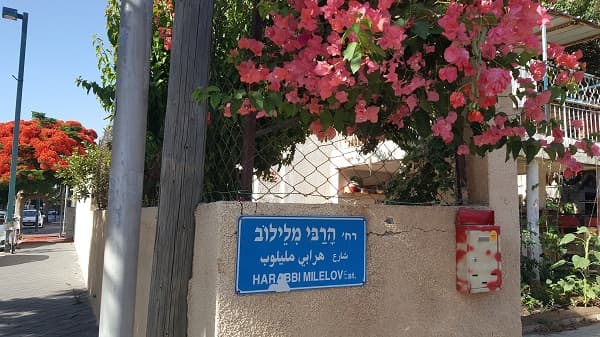
Walking the streets of Jaffa can feel like a journey through the Talmud. Streets with names such as Hanina Ben Dosa, Nikanor, and Ben Akhituv recall the lives of Tannaim and Amoraim – rabbis of the Mishnah and the Gemara who lived nearly two millennia ago.
The predominantly Arab neighbourhood of Ajami, where Arab families were forced to settle during the 1950s when the Israeli government tried to separate the Jews and Arabs of Jaffa, have street names from medieval Jewish history such as Rabbi Nachman of Brezlov and Harebbe Dov of Mezerich, Hassidic leaders from worlds away.
“The street names are part of the erasure of Palestinian history and identity in this area,” says Jaffa resident Rachel Hagigi.
Indeed, new street names were installed in the early years of the state to replace the Arabic names. Dajani Street became Erlich Street, a main street by the sea; Bustrus Street became David Raziel Street, a main artery near Jaffa’s famous Clock Tower.
“All these religious Zionist names send a message about who owns this place."
Over the years, protests led to small changes – 16 street names have reverted to Arabic over the past decade. But for many of the 20,000 Arab residents of Jaffa, that is a bare start.
Hagigi, 47, an artist and educator, has embarked on a project to further these aims. Hagigi and Ibrahim Agbaria, a Palestinian social worker, political activist and Jaffa resident, have spent the past six months building Ufuk Yaffa, a Jewish-Palestinian working group.
The group and subsequent project were initiated and funded by the School for Peace at Neve Shalom-Wahat Al Salam, where Ibrahim works as a facilitator and Hagigi and partner Nawal Arafat started the project.
![[[:fr:Fez (coiffure)|Fez]] rouge à gland noir, en feutre.](/_next/image/?url=https%3A%2F%2Fjewishindependent.yourcreativeagency.com.au%2Fwp-content%2Fuploads%2F2026%2F10%2Ffez-cap-eisenkot-netanyahu.jpg&w=3840&q=75)