Aa
  • Read, Watch, Listen
  • TJI Series
  • Community Action
  • Events
  • Zedi
Follow us and continue the conversation
  • LinkedIn
  • Instagram
  • FaceBook
  • X
  • YouTube
Test yourself with the TJI Quiz!

Adjust size of text

Aa

Follow us and continue the conversation

  • LinkedIn
  • Instagram
  • FaceBook
  • X
  • YouTube

Your saved articles

You haven't saved any articles

What are you looking for?

Original reporting, insightful analysis and diverse views, delivered straight to your inbox

  • LinkedIn
  • Instagram
  • FaceBook
  • X
  • YouTube
Your support fuels our mission to inform, entertain and inspire.

The Jewish Independent is bound by the Standards of Practice of the Australian Press Council. If you believe the Standards may have been breached, you may approach The Jewish Independent or make a complaint to the Australian Press Council in writing at www.presscouncil.org.au. The Council may also be contacted on 1800 025 712.

  • Our Story
  • Contact us
  • Our Team
  • Support us
  • Guidelines
  • Pitch your idea
  • Republishing us
  • Community Action
  • Our Awards
  • LinkedIn
  • Instagram
  • FaceBook
  • X
  • YouTube
Aboriginal FlagTorres Strait Islanders Flag

The Jewish Independent acknowledges Aboriginal and Torres Strait Islander peoples as the Traditional Owners and Custodians of Country throughout Australia. We pay our respects to Elders past and present, and strive to honour their rich history of storytelling in our work and mission.

© The Jewish Independent 2026All Rights Reserved
Website design and development by Your Creative, MelbourneTerms & ConditionsPrivacy Policy
HomeRead, Watch, ListenIsrael
ReflectionIsrael

How I changed my mind about the Zionist narrative

I was socialised to believe our story was true and theirs a lie. It took me a long time to realise Palestinian children learned the same in reverse. 
Elana Sztokman
Print this
Star of david next to a star of david crossed out

“All those accepted truths we have been telling ourselves about our righteousness and our victimhood and how “they” all want to kill us — that is not exactly what is happening.” (Image: TJI)

Published: 22 July 2025

Last updated: 22 July 2025

For much of my young adulthood, I was fully invested in the Zionist enterprise, dedicating my personal, professional, and communal life to supporting my people. I was also intensely invested in fixing the patriarchal aspects of my culture, believing fully that my culture is inherently worthy and fixable.  

During those years, there was no room in my head for questioning the entire foundation, for looking too closely at how the outside world perceives us. I wasn’t there yet. It took me a long time, maybe too long. For that I am remorseful, but I’m also working on what my friend Eva Dalak calls “compassionate self-forgiveness”.

As I’ve learned, it’s not easy to unpack your own personal history so critically. How do you face the discovery that things you were taught as righteous and “good education” were actually forms of indoctrination and manipulation for the sake of power, tools to justify systematic oppression, dehumanisation, and even killing an entire population? This has not been an easy journey. But here I am.  

One major turning point for me came in 2009, when I landed a position as a writer for an Israeli so-called “media monitoring” organisation. I say “so-called” because the term “media monitoring” makes it sound objective and unbiased, though it is anything but.  

My job was to write organisational copy that counters what was labelled anti-Israel bias in articles, op-eds, and television items. In practice, whenever I came across anything even slightly sympathetic to Palestinians, my task was to find a way to debunk it by claiming that the “Palestinian narrative” is false. If a Palestinian spoke, my job was to argue that they were lying. 
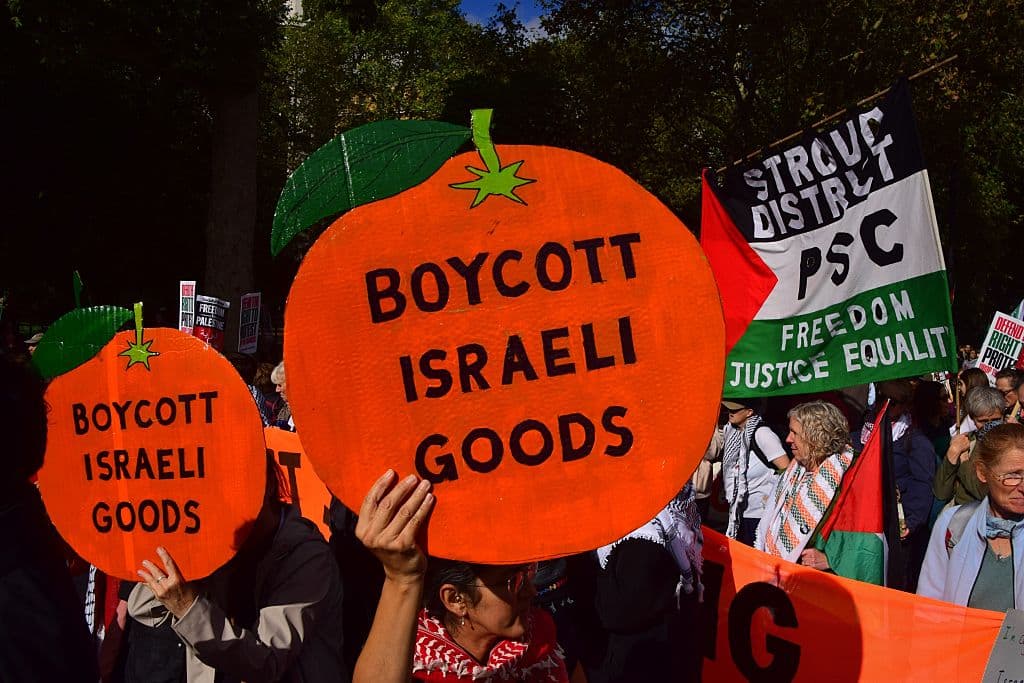
I took the job, but at a certain point it started to feel very wrong. I thought we were working too hard to delegitimise Palestinian lives and identities. Did our Zionist mission require such an active presence on the debating team to survive? Couldn’t we tell our story in a more upright way, with more integrity? Wasn’t our own story better than this? 

I was particularly bothered by the idea that by insisting on telling our own story, we were shutting off the possibility of listening to the other person’s story.  

“What’s wrong with the Palestinians having a narrative?”, I asked the director at a staff meeting. “They are entitled to have their own experiences.” Everyone around the conference table stared at me in astonishment. The next day I was fired.  

Stewing in the shock of my experience, I found myself torn between different pulls on my soul. Sure, I wanted to protect and defend Israel. That has been my whole life. But something about that process of “media monitoring” felt so wrong to me. 

I was particularly bothered by the idea that by insisting on telling our own story, we were shutting off the possibility of listening to the other person’s story.  

I began stepping out of the groupthink and looking elsewhere. I decided to sign my daughter up for Kids4Peace, a mixed Jewish-Palestinian youth group in Jerusalem. One aspect of the program that was particularly impactful for me was the parent gatherings that often took place while the kids were doing their thing.  

One Palestinian mother told a story I did not understand at first. She described a scene that had taken place recently in Hadassah Hospital where she was taking care of her ailing father. While she and her eight-year-old son were in her father’s room, there was a sudden commotion as a slew of ambulances began to rush in from a mass casualty event.

Turning to the news, she learned that there had just been a terror attack in the city. Her son, watching the gurneys pass by, asked his mother, “Who did they kill this time?” She turned to him and said, “No, not them. Us. We did this.” At first, her son was confused. Then he shrugged nonchalantly and walked away.  

She said that story made her feel like a failure as a mother. If she couldn’t educate her own child to feel empathy for the Other, she — who has dedicated her life to peace work — has failed at her most basic job. As she contemplated her son’s attitude, she realised he had never met a Jew who was not a soldier. She felt a strong need to fix that. 

All those accepted truths we have been telling ourselves about our righteousness and our victimhood and how “they” all want to kill us — that is not exactly what is happening. 

This story astounded me, and not because of the boy’s indifference. Rather, I was shocked that this boy had only encountered violence in the form of Jews attacking Palestinians and not the other way around. It made no sense to me, because it was the exact opposite of how Jews saw the conflict. Yet, his reality was such that he did not even know there was such a thing as a Jew who was not holding a gun. As the mother explained, her son only knew of Jews who were IDF soldiers who arrested his friends and cousins, who patrolled with weapons and who enforced curfews and roadblocks.  

At first, I couldn’t believe this was true. Was there really an entire population of Palestinian children whose only contact with Jews was with IDF soldiers imposing violence on their streets? This perspective was so completely new to me that it took me some time to digest. 

Then the penny dropped. I was completely socialised into one story. And it’s not just that it’s only half the story. It’s not even a true half of the story. All those accepted truths we have been telling ourselves about our righteousness and our victimhood and how “they” all want to kill us — that is not exactly what is happening. 

Somewhere in the back of my mind a new thought was forming. It is very possible that the exact same ideas I was taught to believe about Palestinians (“they all want to kill us”) were what Palestinian children were learning about us.

That thought threatened to explode in my brain and wash away my entire concept of who I am and what it means to be Israeli, or even Jewish. 

This article is an edited excerpt from In My Jewish State: How I was trained in pro-Israel advocacy, and how I learned to talk back to my culture, find my own humanity, and fight for peace by Elana Sztokman.  

You might also like
  • Antisemitism, homophobia and a radical response to both
    Dennis Altman
  • Tame apologises – but with little grace
    Deborah Stone
  • Confronting Richard Flanagan and the myth of the Israel lobby
    Mary Garden
logomark.67a07ee3
We believe in the free flow of information

Republish our articles for free, online or in print, by using our Creative Commons licence

You might also like

    Rozana Beit Oula
    PeacebuildingOpinionIsrael

    Peacebuilding through the eyes of a sceptic

    Ron Finkel
    Yoav Segalovitz Mansour Abbas
    Israel Votes 2026OpinionIsrael

    Because of my Zionist values, I’m joining an Arab party

    Yoav Segalovitz 1
    Woman with land and houses behind her
    NewsAustralia

    Australia to increase sanctions against West Bank settlements

    Deborah Stone 2

About the author

Elana Sztokman

Elana Sztokman

Dr Elana Sztokman is an award-winning Jewish feminist author, anthropologist, and activist. Her latest book is 'When Rabbis Abuse: Power, Gender, and Status in the Dynamics of Sexual Abuse in Jewish Culture'.

More from the author

ReflectionIsrael

The painful process of truly listening to Palestinian pain

Arts & Culture

Hear us sing: Women musicians raise their voices against discrimination

Israel

Signs of change on the streets of Jaffa

Comments5

  • Avatar of Rachel Sussman

    Rachel Sussman2 August at 07:01 am

    I found this article incredibly sad on so many levels…
    It is one thing to be open to listen to others and understand their narratives, it is another to deny one’s truth and worse still historical truth… ‘zionism’ is not brain washing, I grew up in Israel and I was not brainwashed, we learned history all around… while I encourage myself to be open to listen I will not apologize for the historical truth not the rights of my own people… I find it sad and indeed upsetting when so many within us start to manipulate our own truth, our history, our rights, just to ‘fit in’ to please and to be seen as ‘progressive’ or ‘open minded’. It is time for us Jewish people to learn that we must stop apologising for our existence and our rights!

  • Avatar of Simon Krite

    Simon Krite24 July at 09:05 am

    Miriam, Jewish trauma isn’t a weapon ! it’s history. What is weaponised is the Palestinian cause by Hamas, the PLO, and their backers who thrive on victimhood and rejectionism.

    Coexistence fails not because of Israeli fear, but because Palestinian leaders kill peace efforts and glorify martyrdom. Pretending this is a conflict of equal traumas is comforting, but false. One side wants peace. The other wants us gone. That’s the clarity you’re missing.

  • Avatar of Miriam Feldheim

    Miriam Feldheim23 July at 09:40 pm

    Simon, the response to decades of genocidal rhetoric and violence is part of the Jewish trauma handed down from centuries of persecution. Trauma which has now been weaponised to persecute another people. The indoctrination is one tool in that weaponisation.
    When you speak about one side building coexistence programs, such programs require co-operation of both sides for the programs to take place. You generalise coexistence programs and martyrdom to refer to all the people on one side or the other. In between the extremes of Hamas and this Israeli government are thousands, millions of people who just want to live in peace.
    It seems to me Simon, that your trauma prevents you from thinking clearly.

  • Avatar of David Schulberg

    David Schulberg22 July at 10:25 am

    The moral equivalence fallacy.

  • Avatar of Simon Krite

    Simon Krite22 July at 07:57 am

    Thank you for your vulnerability. Self-reflection is valuable. But without factoring in Hamas, the PLO, radical Islam, and their backers, this narrative falls flat. It presents a false moral equivalence. Jewish fear and defence aren’t born from indoctrination, they are responses to decades of genocidal rhetoric and violence.

    Yes, both sides have stories. But empathy without context can distort truth. One side builds coexistence programs, while the other teaches martyrdom. That’s not just “another narrative” as you claim. This is the core of the conflict. Ignoring it rewrites history.