Aa
  • Read, Watch, Listen
  • TJI Series
  • Community Action
  • Events
  • Zedi
Follow us and continue the conversation
  • LinkedIn
  • Instagram
  • FaceBook
  • X
  • YouTube
Test yourself with the TJI Quiz!

Adjust size of text

Aa

Follow us and continue the conversation

  • LinkedIn
  • Instagram
  • FaceBook
  • X
  • YouTube

Your saved articles

You haven't saved any articles

What are you looking for?

Original reporting, insightful analysis and diverse views, delivered straight to your inbox

  • LinkedIn
  • Instagram
  • FaceBook
  • X
  • YouTube
Your support fuels our mission to inform, entertain and inspire.

The Jewish Independent is bound by the Standards of Practice of the Australian Press Council. If you believe the Standards may have been breached, you may approach The Jewish Independent or make a complaint to the Australian Press Council in writing at www.presscouncil.org.au. The Council may also be contacted on 1800 025 712.

  • Our Story
  • Contact us
  • Our Team
  • Support us
  • Guidelines
  • Pitch your idea
  • Republishing us
  • Community Action
  • Our Awards
  • LinkedIn
  • Instagram
  • FaceBook
  • X
  • YouTube
Aboriginal FlagTorres Strait Islanders Flag

The Jewish Independent acknowledges Aboriginal and Torres Strait Islander peoples as the Traditional Owners and Custodians of Country throughout Australia. We pay our respects to Elders past and present, and strive to honour their rich history of storytelling in our work and mission.

© The Jewish Independent 2026All Rights Reserved
Website design and development by Your Creative, MelbourneTerms & ConditionsPrivacy Policy
HomeRead, Watch, ListenLifestyle
FeatureLifestyle

On my own (terms)

Marriage and family are often presented as core to Jewish life but the pressure to find a Jewish partner can be isolating and counterproductive
Jarod Rhine-Davis
Print this
single – lead image

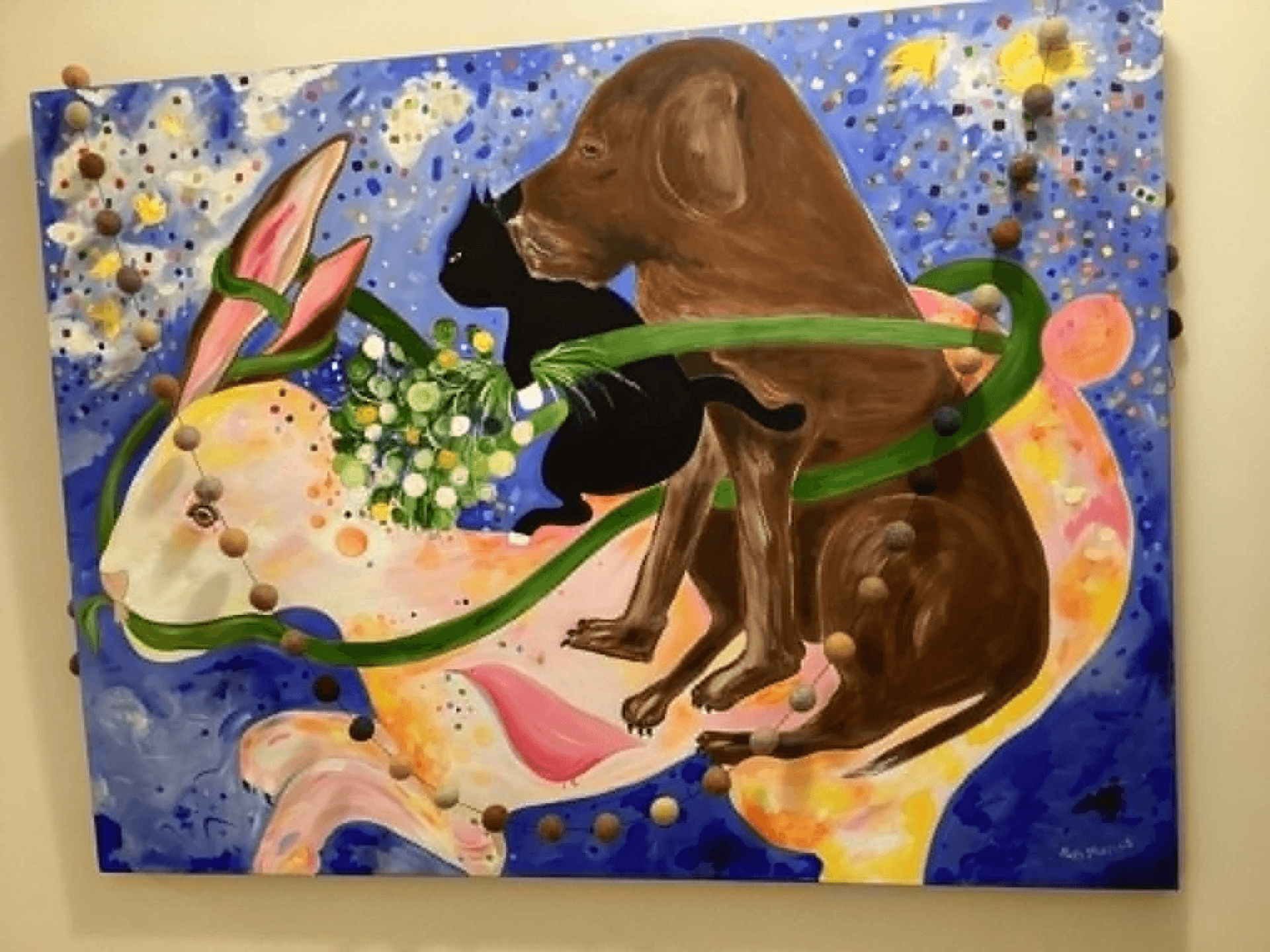
Joyous by Ruth Cohen celebrates the artist’s single life with her cat Mini and her late dog Marcu (Artwork and image: Ruth Cohen)

Published: 19 August 2026

Last updated: 19 August 2026

“You have to come.” 

Naomi Cherny had planned to skip Shabbat dinner. She was tired after a day down the coast, but her friend insisted. Someone had been invited especially for her. 

“He’s alternative,” she was told. “He’s in a band.” 

The man did play in a band: a wedding band. 

He later explained that he had not known it was a set-up either. They laughed about it and are now friendly. Cherny understood her friend’s intention: marriage and family had enlarged his life, and he wanted that happiness for her. But afterwards, she made one request. 

“Please don’t ever do that again,” she told him. “Maybe just ask me what it is that I’m looking for.” 

Cherny, an early childhood educator, would like a partner and children. The problem was not the possibility of an introduction, but the assumption that someone else knew what her life required. 

Marriage in Jewish life is rarely only private. The 2026 Census has brought questions of continuity back into focus. JCA’s analysis of 2021 Census data put Australia’s Jewish population at 116,967, less than half a per cent of the country. It found the population had plateaued around 2016 before beginning a slow decline. The figures help explain the community’s concern about its future. However, for individuals, that concern can turn marriage from a personal choice into a communal expectation. A private decision can start to feel as though it reflects on the person, their family and the community. 
Cherny says being seen as “unfinished” can become internalised: “You end up seeing yourself that way.” She wants a relationship, “but it’s not at the cost of being in the wrong one”. 

In a close community, dating rarely stays private. A few dates can affect your “brand” or standing, Cherny says, because people talk. If staying single is treated as a problem while Jewish dating comes loaded with marriage expectations, dating outside the community can feel easier. 

The same communal investment in marriage that produces introductions can make an ordinary first date feel like the opening move in a public negotiation about the Jewish future. 

The pressure also appears in communal rituals. At her brother’s wedding, Cherny was told at the last minute to drink wine under the chuppah so that she, too, would find a successful relationship. “It’s all with good intention,” she says, “but it’s actually doing the opposite.” 

For Ruth Cohen, now in her 60s, that expectation belonged to an entire model of adulthood. Growing up, a successful Jewish life meant marriage, a husband, children, a career and financial security. She calls it “attempting to live on the conveyor belt”. The expectation that she marry a Jewish man was “120 per cent” and influenced her choices “beyond a doubt”. 

Yet Cohen does not dismiss the values behind it. She understands why a small community concerned with continuity encourages marriage and children. She says the pressure did not necessarily come with ill intent. It was “a version of love” that did not align with the life she was living. 

In her late 30s, Cohen began to accept that she would not have children. She still tells new acquaintances early that she never married, “to get the elephant out of the room” before they can project anything onto her. She describes a life rich in Judaism, art, charity, kindness and animals. Over the past 20 years, she says, “I have learnt to live life on my own terms,” even as “I sometimes feel a sadness inside.” 

Neither Cherny nor Cohen describes singlehood as wholly chosen or wholly unwanted. Both have built meaningful lives while acknowledging what those lives have not included. 

Sheri Greenstein, 43, has never wanted children and prefers living alone with her two dogs. “I’ve built a life that feels authentic to me,” she says. 

Physician and mental-health advocate Dov Degen says marriage is treated as a “rite of passage” in communal life organised around couples and families, which can unintentionally “other” single adults. Couples and trauma therapist Brandon Srot says repeated questions can signal that one life path is preferred. Over time, people may begin to question their worth. 

The consequences extend beyond dating to communal belonging. Adam Taia, 40, remains open to love. The gay Jewish Melburnian has built meaning through work, friendships and community, but says Jewish events can feel designed around couples or matchmaking. 

“Sometimes I just want to come to the event,” he says. 

No one interviewed wanted the community to stop celebrating weddings, valuing families or offering introductions. Their request was simpler: ask before deciding what somebody else’s life lacked. 

Degen suggests asking, “Are you looking for a relationship?” rather than, “Why haven’t you found a boyfriend?” He says the difference is curiosity rather than judgement. 

“Belonging shouldn’t depend on whether you arrive with a partner,” Taia says. 

You might also like
  • Do Jews ever become empty nesters?
    Kerri Sackville
  • Jewish spaces that welcome neurodivergent children
    Nomi Kaltmann
  • Losing my innocence in the bomb shelter 
    Hadas Sabbah Goldshmid
logomark.67a07ee3
We believe in the free flow of information

Republish our articles for free, online or in print, by using our Creative Commons licence

You might also like

    socceroos jewish
    ReflectionAustralia

    World Cup brings out patriotism of Jewish Australia

    Alex Kats
    Futurism
    OpinionLifestyle

    Jewish Futurism? We’ve been practising it for millennia 

    Renata Zimbarg 1
    Rosh Hashanah Customs
    FeatureLifestyle

    10 little-known Rosh Hashanah customs from around the world

    Menachem Posner

About the author

Jarod Rhine-Davis

Jarod Rhine-Davis

Jarod Rhine-Davis is a Melbourne-based Jewish LGBTQ+ community leader and founder of Jewmos, a grassroots initiative creating spaces for queer Jews to connect, celebrate, and explore identity. Through his work, he advocates for inclusion and belonging at the intersection of Jewish and LGBTQ+ life. He works at The Jewish Independent, helping produce community events.

More from the author

NewsIsrael

LGBT asylum seekers caught between Palestinian violence and Israeli bureaucracy

FeatureLifestyle

The right to an ordinary Jewish life

Australia

Housing insecurity hits home in Jewish community

Comments

No comments on this article yet. Be the first to add your thoughts.