Aa
  • Read, Watch, Listen
  • TJI Series
  • Community Action
  • Events
  • Zedi
Follow us and continue the conversation
  • LinkedIn
  • Instagram
  • FaceBook
  • X
  • YouTube
Test yourself with the TJI Quiz!

Adjust size of text

Aa

Follow us and continue the conversation

  • LinkedIn
  • Instagram
  • FaceBook
  • X
  • YouTube

Your saved articles

You haven't saved any articles

What are you looking for?

Original reporting, insightful analysis and diverse views, delivered straight to your inbox

  • LinkedIn
  • Instagram
  • FaceBook
  • X
  • YouTube
Your support fuels our mission to inform, entertain and inspire.

The Jewish Independent is bound by the Standards of Practice of the Australian Press Council. If you believe the Standards may have been breached, you may approach The Jewish Independent or make a complaint to the Australian Press Council in writing at www.presscouncil.org.au. The Council may also be contacted on 1800 025 712.

  • Our Story
  • Contact us
  • Our Team
  • Support us
  • Guidelines
  • Pitch your idea
  • Republishing us
  • Community Action
  • Our Awards
  • LinkedIn
  • Instagram
  • FaceBook
  • X
  • YouTube
Aboriginal FlagTorres Strait Islanders Flag

The Jewish Independent acknowledges Aboriginal and Torres Strait Islander peoples as the Traditional Owners and Custodians of Country throughout Australia. We pay our respects to Elders past and present, and strive to honour their rich history of storytelling in our work and mission.

© The Jewish Independent 2026All Rights Reserved
Website design and development by Your Creative, MelbourneTerms & ConditionsPrivacy Policy
HomeRead, Watch, ListenAustralia
FeatureAustralia

Jewish spaces that welcome neurodivergent children

Welcoming children with special needs has become part of the mission for some youth groups and Hebrew schools.
Nomi Kaltmann
Print this
IMG_3986

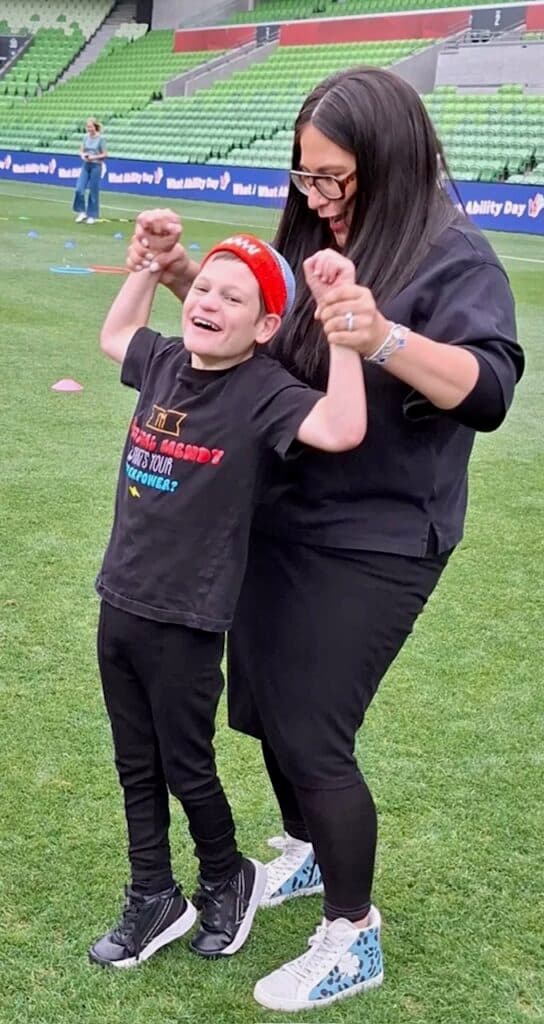
Rebbetzin Menucha Cooper, a mum of five, has a 12-year-old son, Mendy, who has Angelman syndrome (Image: provided)

Published: 13 April 2026

Last updated: 13 April 2026

If you are raising a neurodivergent child in Melbourne Jewish community, where are the spaces that will genuinely welcome them?  

It’s a discussion that has come into sharp focus following a recent article in The Jewish Independent, where an anonymous parent described the painful experience trying to secure inclusion for their neurodiverse children in Jewish schools.  

There are youth movements and Hebrew schools that consciously welcome children with special needs, including neurodiversity.  

Here are three options.  

‘We work really hard to make it happen’ 

Hineni Youth and Welfare, a Zionist youth movement affiliated with the Australian Zionist Youth Council, welcomes neurodiverse children and works closely with parents to ensure their children can participate fully in weekly programs and sleepaway camps. 

Liav Allen, the Federal Rosh (Head) of the movement, estimates more than half of participants and leaders are neurodiverse. 

“As more neurodivergent chanichim (students) have come, their parents felt safe, and more people came,” she said. 

Responding to this surge of children, Hineni has invested heavily in training its madrichim (youth leaders) who attend annual sessions with professionals to learn how to adapt communication, adjust sensory environments, and design activities that minimise overwhelming noise or physical contact when needed.  
Allen emphasises that trust between families and organisers is central. 

“I completely [understand] if parents are worried about sending their kids to a new space, but at Hineni, there is genuine intent to work with every child. I think it’s beautiful that neurodivergent chanichim can come and be safe and we work really hard to make that happen,” she said. 

‘Not scared of anything’ 

Rebbetzin Menucha Cooper of Chabad of Malvern is happy to welcome and accommodate any neurodiverse child into her afterschool Hebrew school program. 

Chabad Malvern’s Hebrew School, which runs once a week for 1.5 hours, allows neurodiverse children to participate alongside neurotypical peers while also receiving one-on-one support, if needed.  

“They come and they do activities with neurotypical kids, and for the children that need it, we have more specialised support. We are happy to cater for every child, I’m not scared of anything,” Cooper said. 

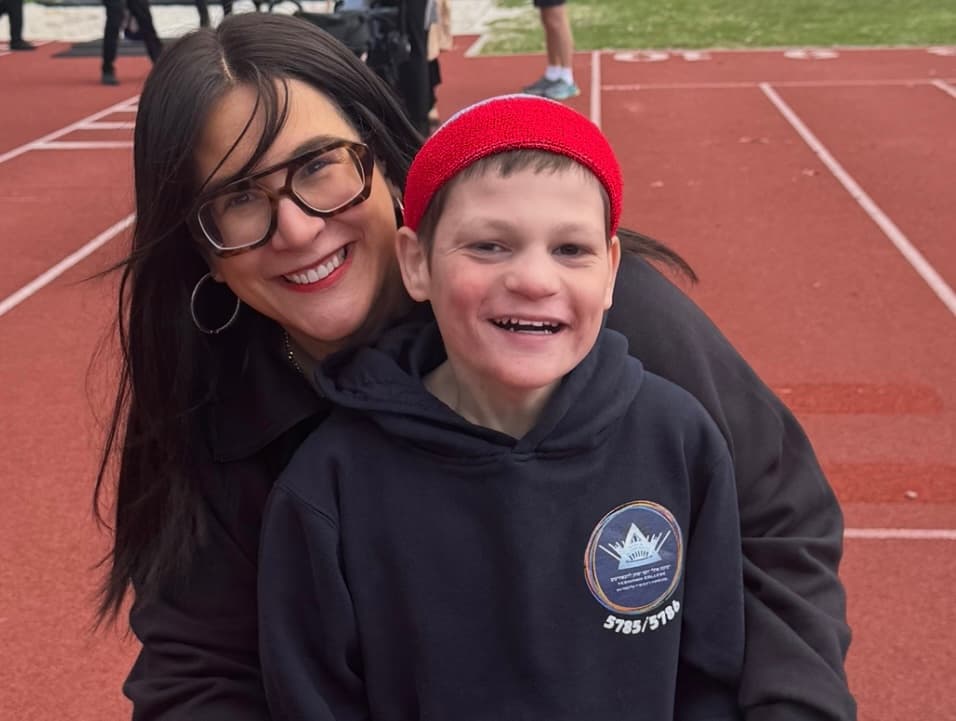
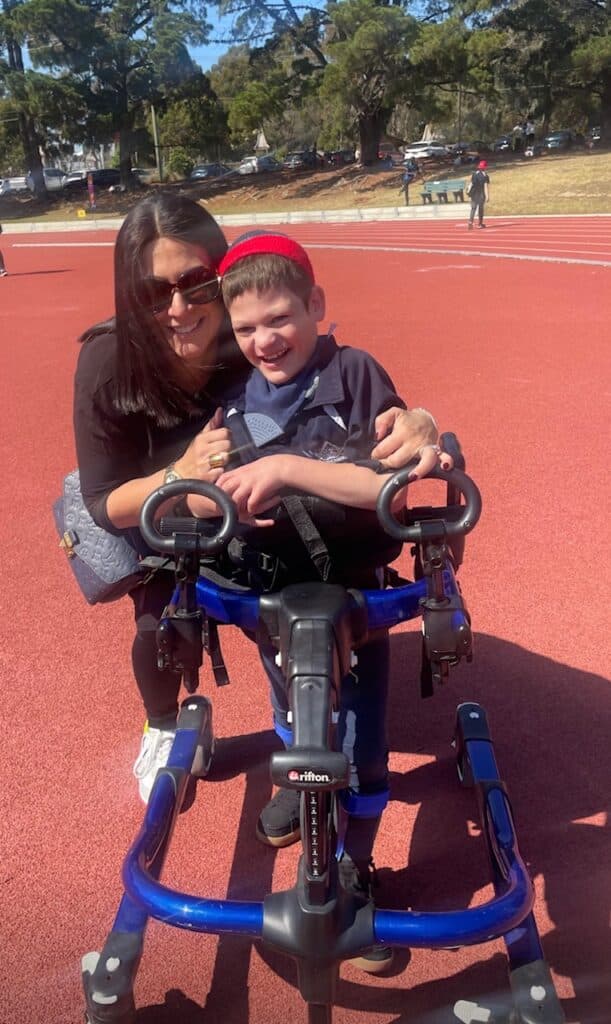
Cooper, a mum of five, has a 12-year-old son, Mendy, who has Angelman syndrome. With tens of thousands of followers on her Magical Mendy Facebook and Instagram accounts she shares daily glimpses of her family life with Mendy, aiming to normalise disability inclusion and to challenge commonly held stigmas. It’s why she feels so strongly that no Jewish child should miss out on learning about their heritage.  

“Having Mendy has completely given me a new set of glasses,” she said. “Mendy is a gift to us… when you start being inclusive of one person it has a ripple effect.” 

Rebbetzin Menucha Cooper and her son Mendy<br>(Images: provided)
Rebbetzin Menucha Cooper and her son Mendy
(Images: provided)
The Jewish Independent

‘Their souls have a purpose’ 

Rebbetzin Dina Liberow, the founder of the Lamdeni Hebrew School, is another educator with a strong commitment to inclusion born of personal experience. 

A mother of nine, including two children with special needs, she has prioritised inclusion since establishing her program in 1998. 

“It’s extraordinary how much my two children with special needs have been my teachers,” she said. 

Liberow’s inclusion philosophy is strongly shaped by the teachings of the Lubavitcher Rebbe, who spoke extensively about the spiritual dignity and potential of children with disabilities. 

“The Rebbe called these children special, not as a euphemism, but as a real and true description. He said that despite the fact they may be limited in some areas, they are extremely talented in others. Their souls have a purpose,” she said. 

“The Rebbe said these kids are deserving of a Jewish education just like their siblings, and that’s how they are going to feel a sense of belonging and a real sense of Jewish identity,” she said. 

Rachel, a mother of a child with autism and ADHD has experienced firsthand what it means to go to a Jewish program that can cater for her neurodiverse child.  

“My child goes to a public school after being forced to leave a Jewish school. At my child’s public school, they are the only Jew in their class. Judaism is very important to my husband and I, but we knew that other Jewish programs wouldn’t be willing to accommodate my child. 

“One day I bumped into Rebbetzin Dina. I didn’t even really know much about Lamdeni but I told her about our situation, and she told me, no child should be left behind, and to bring my child. She even provided my child a support worker, she cared a lot,” said Rachel. 

“My child fully participates in Jewish life. Since starting at Lamdeni, my child can understand what’s happening at the Shabbat table and even learned how to read Hebrew. Before Lamdeni, I couldn’t imagine how my child would learn those things. It felt impossible, but it was Dina’s attitude. She cared enough and she really wanted to make it work and she did.” 

You might also like
  • Confronting Richard Flanagan and the myth of the Israel lobby
    Mary Garden
  • Facing a new year with the knowledge life can be better
    The Jewish Independent
  • No action to stop Hezbollah ally beaming antisemitic and anti-Israel content into Australia
    Michael Visontay
logomark.67a07ee3
We believe in the free flow of information

Republish our articles for free, online or in print, by using our Creative Commons licence

You might also like

    Generation Change: Rachel Moshel
    Generation ChangeInterviewArts & Culture

    Rachel Moshel: Creating a space for Jewish art and joy

    Gideon Cohen
    Tame
    Australia

    Tame apologises – but with little grace

    Deborah Stone 1
    Albanese Bondi
    Royal CommissionAnalysisAustralia

    Prime minister’s absence exposes weakness in Royal Commission hearings

    Michael Visontay

About the author

Nomi Kaltmann

Nomi Kaltmann

Nomi Kaltmann is an Australian lawyer and journalist. Her writing has appeared in major Australian and international publications including Crikey, Griffith Review, Mamamia, Tablet Magazine, The Australian Financial Review, The Daily Beast, The Forward, The Guardian, The Jewish Telegraphic Agency and The Spectator. She regularly appears on radio and podcasts to discuss Australia’s Jewish community, including NPR (USA), CBC (Canada), LBC (London), Call Me Back, Unholy: Two Jews on the News, SBS and The Times of Israel. An influential Orthodox feminist leader and founding president of the Jewish Orthodox Feminist Alliance (JOFA Australia), she is a sought-after speaker on religion, interfaith and contemporary Jewish life.

More from the author

OpinionAustralia

Cancellation backfires but we are at it again

OpinionWorld

From NY to Melbourne, local politicians are whipping up hate 

ReflectionAustralia

I have lost faith in our multicultural institutions 

InterviewIsrael

Dreams, nightmares and realities from a bereaved mother 

Comments

No comments on this article yet. Be the first to add your thoughts.