Aa
  • Read, Watch, Listen
  • TJI Series
  • Community Action
  • Events
  • Zedi
Follow us and continue the conversation
  • LinkedIn
  • Instagram
  • FaceBook
  • X
  • YouTube
Test yourself with the TJI Quiz!

Adjust size of text

Aa

Follow us and continue the conversation

  • LinkedIn
  • Instagram
  • FaceBook
  • X
  • YouTube

Your saved articles

You haven't saved any articles

What are you looking for?

Original reporting, insightful analysis and diverse views, delivered straight to your inbox

  • LinkedIn
  • Instagram
  • FaceBook
  • X
  • YouTube
Your support fuels our mission to inform, entertain and inspire.

The Jewish Independent is bound by the Standards of Practice of the Australian Press Council. If you believe the Standards may have been breached, you may approach The Jewish Independent or make a complaint to the Australian Press Council in writing at www.presscouncil.org.au. The Council may also be contacted on 1800 025 712.

  • Our Story
  • Contact us
  • Our Team
  • Support us
  • Guidelines
  • Pitch your idea
  • Republishing us
  • Community Action
  • Our Awards
  • LinkedIn
  • Instagram
  • FaceBook
  • X
  • YouTube
Aboriginal FlagTorres Strait Islanders Flag

The Jewish Independent acknowledges Aboriginal and Torres Strait Islander peoples as the Traditional Owners and Custodians of Country throughout Australia. We pay our respects to Elders past and present, and strive to honour their rich history of storytelling in our work and mission.

© The Jewish Independent 2026All Rights Reserved
Website design and development by Your Creative, MelbourneTerms & ConditionsPrivacy Policy
HomeRead, Watch, ListenAustralia
OpinionAustralia

Synagogues should not sit empty: rabbis must go out and seek community

Gabi Kaltmann
Print this
Ballarat synagogue

Published: 26 July 2022

Last updated: 5 March 2024

Rabbi GABI KALTMANN challenges his colleagues to find ways to fill their underutilised buildings.

WITH THE RELEASE of the 2021 census results, Australian religious leaders across the spectrum had their suspicions confirmed: now, more than ever before, Australians are less affiliated to organised religion. With just a paltry 47.3% of census respondents nominating Christianity and 41.9% nominating “no religion at all”, the results speak for themselves.

The demographics are shifting, and showing that older, more religiously inclined generations are being replaced with the least religiously affiliated generation in Australia’s history.

As a rabbi of a large community centre and synagogue in Melbourne, I can attest that these results confirm what I know to be true about millennials. While the community I run has a vibrant youth scene and programs, for people and families at all stages of life, the challenge to convince the new generation to buy seats and memberships at a synagogue is real and persistent. 

While in previous generations, families would not question the need to affiliate to a synagogue or question whether they should attend on high holidays, the new incoming generations do not hold these same values. Rabbis and community leaders have an ongoing challenge: how can one engage the next generation?

While this sounds like a boring question that has been oft repeated by many religious leaders, I think it is important to look deeper and get an understanding of why younger generations no longer feel the need to join synagogues and formal religious communities. 

Why own a million-dollar building when it is utilised five hours of the week? Surely a rental agreement makes more financial sense in such a case.
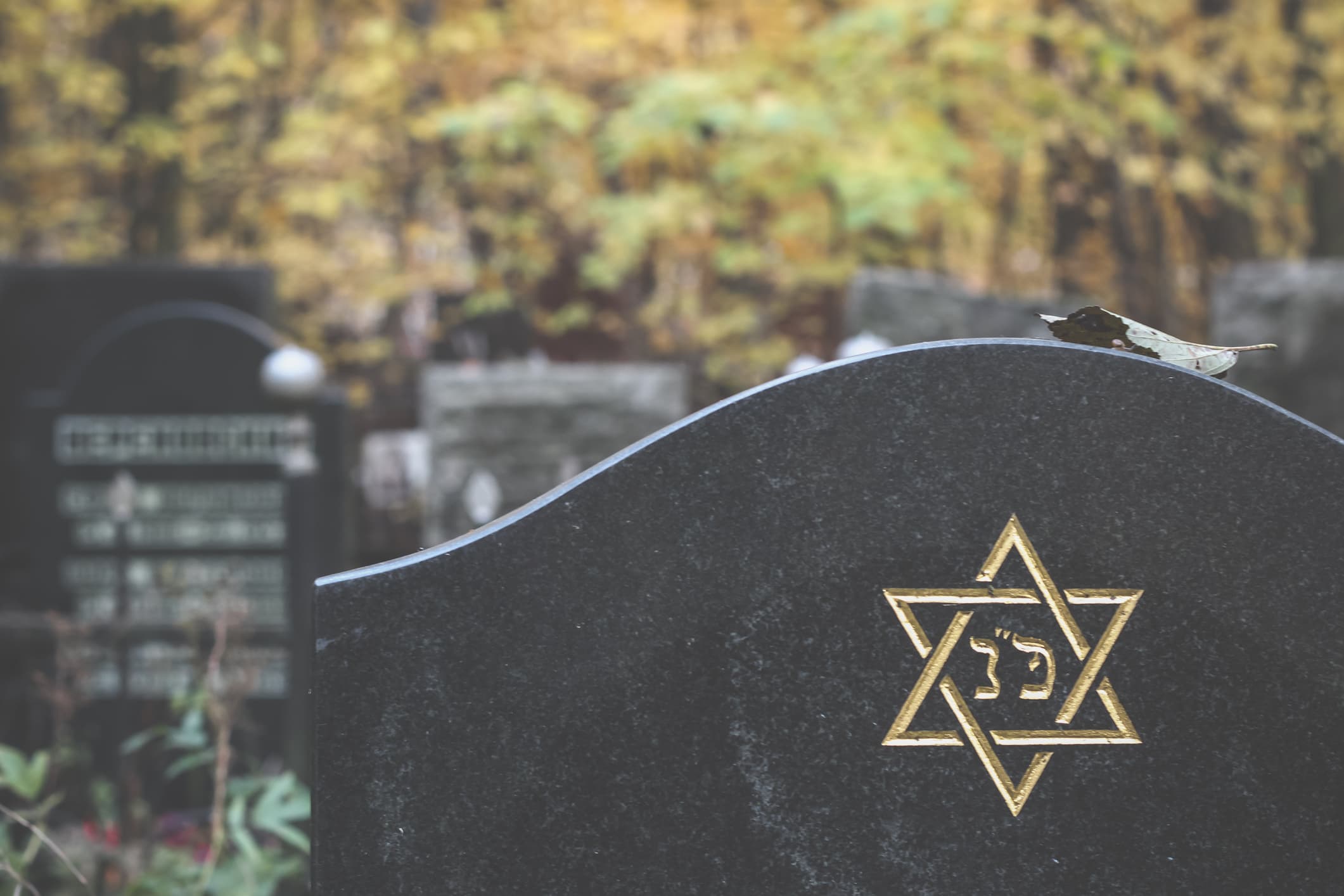
In Victoria, there are more than 60 synagogues across the state. With real estate prices through the roof, it is not an exaggeration to state that these buildings, which are often underutilised and minimally full, and represent millions of dollars of community assets, may need to justify to new generations their reasons for existing.

After all, why own a million-dollar building when it is utilised five hours of the week? Surely a rental agreement makes more financial sense in such a case.

I’m not suggesting that there is not a place for synagogues, but I am framing my question around the thoughts of many people who choose not to come to services. 

Sometimes, people have a lack of Jewish literacy, where they are unable to navigate a basic service. Some do not feel connected to prayer or religion.

Other times, there is a lack of enthusiasm about engaging in something so ancient which does not feel authentic to one’s modern values, particularly in Orthodox services, where separation between men and women is the standard, and the question of how to engage women in leadership is ongoing.

I do not blame anyone for having these thoughts. But at the same time, I am a rabbi and I strongly believe in the value of prayer, faith-based community and gathering together for religious and monumental occasions. 

I acknowledge that rabbis are often struggling with their mandates on how to best engage the next generation, but I remain an optimist. While the trend is certainly away from affiliating to religion and religious communities of worship, I can attest that the pandemic also encouraged a larger-than-expected return to synagogues. 

When people were alone, locked down and unable to gather, there was an increase in fondness for the activities we previously took for granted. At the most recent Passover celebrations at my synagogue, we had a record number of attendees at all our programs. Perhaps, because Melbourne was locked down over two high holiday festival periods, people missed their communities and synagogues. 

If rabbis and community leaders want community, they must actively go out and seek it. They must innovate.They must grapple with 21st-century values.

But I want to address something more, something beyond the people who may have already inclined to come to services and after the lockdown returned in force. I want to address my fellow rabbis and spiritual leaders: we cannot expect the same level of commitment and affiliation that we have always taken for granted from previous generations. 

If we want people in our buildings, we must work for those people to be there. The title rabbi no longer creates an instant congregation alongside the title. If rabbis and community leaders want community, they must actively go out and seek it. They must innovate.

They must grapple with 21st century values that require responsibility to the environment, gender equality and questions around inclusion for our most marginalised communities, including members of the LGBQTI community. It’s not enough to pay lip service, but concrete changes must be implemented. 

Synagogues that are being underutilised should consider new and innovative ways to engage the next generation. Buildings should not sit empty. There is so much need in our community for quality, safe, gathering spaces. Synagogues should consider lending out their buildings to youth groups, or for cultural activities outside of services, and hosting events.

While the wish list for changes may be long, and Halacha may not always permit what is being requested, things can certainly be better than they are. The new generation are digital natives. They have grown up in a world where it is widely understood that things do not always have to stay the same. They have lived through incredible technical and communication advancements that have changed how society functions, socialises and talks to each other. 

Services do not have to be lengthier than necessary. Women should be included. Jewish people who identify with the LGBQTI+ community should be welcomed with open arms. These are basic building blocks of any Jewish community that wants to stay relevant in the 21st century. 

I invite readers to come and visit their local synagogue. It may have been a while, but give it a chance, go, and check it out. If you are disappointed by what you see, provide feedback and if it is a rabbi who will not consider your input, you have not yet found your congregation. If you like what you see, who knows, you might be back, and before long you may realise the benefits of a community that is centred around spiritual worship. 

There are plenty of seats available.

Photo: Ballarat synagogue

You might also like
  • Sanctioning settlements is a defence of Israel, not an attack
    Elisheva Madar
  • Sanctions must influence, not just perform disapproval
    Adam Slonim
  • Confronting Richard Flanagan and the myth of the Israel lobby
    Mary Garden
logomark.67a07ee3
We believe in the free flow of information

Republish our articles for free, online or in print, by using our Creative Commons licence

You might also like

    jiff26-cancelled.jpg
    ReflectionArts & Culture

    On despair: A reflection after watching ‘Cancelled’

    Deborah Stone
    Generation change Template
    Generation ChangeInterviewAustralia

    Ash Densham: Building community through Humanistic Judaism

    Gideon Cohen
    antisemitism online
    NewsAustralia

    Proposed digital care law to offer protection against online antisemitism

    Deborah Stone

About the author

Gabi Kaltmann

Gabi Kaltmann

Rabbi Gabi Kaltmann is the Rabbi of the Ark Centre, a Jewish community centre with a synagogue in the middle. In addition to holding a Masters of Social Work from Deakin University, Rabbi Gabi is an AFL Multicultural Ambassador, the chairman of the Melbourne Fightback Against Parkinsons charity, an advisor to the Scanlon Foundation Research Advisory committee and a representative to the Coronial Council of Victoria Reference Group.

More from the author

OpinionAustralia

We need good vilification laws, not knee-jerk bans on Nazi symbols

OpinionAustralia

‘A difficult and sensitive question’: Orthodox rabbis and abortion

Opinion

Where do transgender Jews belong in an orthodox synagogue?