Aa
  • Read, Watch, Listen
  • TJI Series
  • Community Action
  • Events
  • Zedi
Follow us and continue the conversation
  • LinkedIn
  • Instagram
  • FaceBook
  • X
  • YouTube
Test yourself with the TJI Quiz!

Adjust size of text

Aa

Follow us and continue the conversation

  • LinkedIn
  • Instagram
  • FaceBook
  • X
  • YouTube

Your saved articles

You haven't saved any articles

What are you looking for?

Original reporting, insightful analysis and diverse views, delivered straight to your inbox

  • LinkedIn
  • Instagram
  • FaceBook
  • X
  • YouTube
Your support fuels our mission to inform, entertain and inspire.

The Jewish Independent is bound by the Standards of Practice of the Australian Press Council. If you believe the Standards may have been breached, you may approach The Jewish Independent or make a complaint to the Australian Press Council in writing at www.presscouncil.org.au. The Council may also be contacted on 1800 025 712.

  • Our Story
  • Contact us
  • Our Team
  • Support us
  • Guidelines
  • Pitch your idea
  • Republishing us
  • Community Action
  • Our Awards
  • LinkedIn
  • Instagram
  • FaceBook
  • X
  • YouTube
Aboriginal FlagTorres Strait Islanders Flag

The Jewish Independent acknowledges Aboriginal and Torres Strait Islander peoples as the Traditional Owners and Custodians of Country throughout Australia. We pay our respects to Elders past and present, and strive to honour their rich history of storytelling in our work and mission.

© The Jewish Independent 2026All Rights Reserved
Website design and development by Your Creative, MelbourneTerms & ConditionsPrivacy Policy
HomeRead, Watch, ListenLifestyle
Gen ZehReflectionLifestyle

The consequences of conditional friendship

Our friendships should not be dependent on us giving up on our identities to save face and keep the peace.
Miriam Itzkowitz
Print this
Star of david necklace and broken heart necklace

“As my connections with the outside world grew, my connection with my Jewish identity faded” (Image: TJI).

Published: 1 July 2025

Last updated: 15 September 2025

Perhaps I was just a naive, idealistic girl, or perhaps I simply tried to see the best in everyone, but I used to think that intercultural friendships were easy and they were the height of a post-segregationist world, in which everyone could get along, if only they learnt to respect each other's cultural differences and faith (or lack thereof) backgrounds.

This seemed like the reasonable, logical thing to do, after all. 

However, I was gravely mistaken. As my connections with the outside world grew, my connection with my Jewish identity faded, resulting in me neglecting core parts of my personal values, just for the sake of being accepted by my non-Jewish peers.

And so, I commenced my journey on the trail of conditional friendships. Conditional in the sense that unless I assimilated and acculturated myself in such a way that I could still identify as Jewish and be tokenised in that way, I would still be a tolerable sort of Jewish friend. But, if I were to step one foot out of line, have an incorrect opinion, be too culturally invested or involved in my own heritage, then this would be a major problem – as I would later discover. 

I was the person willing to befriend people from across the political aisle, people who opposed the very existence of the Jewish state.

It was here too that I discovered the difference between tolerance and acceptance. I, personally, was a model acceptor. Perhaps it was just the people-pleaser in me, or perhaps I am just very good at following the arbitrary rules, but I would accept anyone and everyone, even if it felt instinctively wrong.
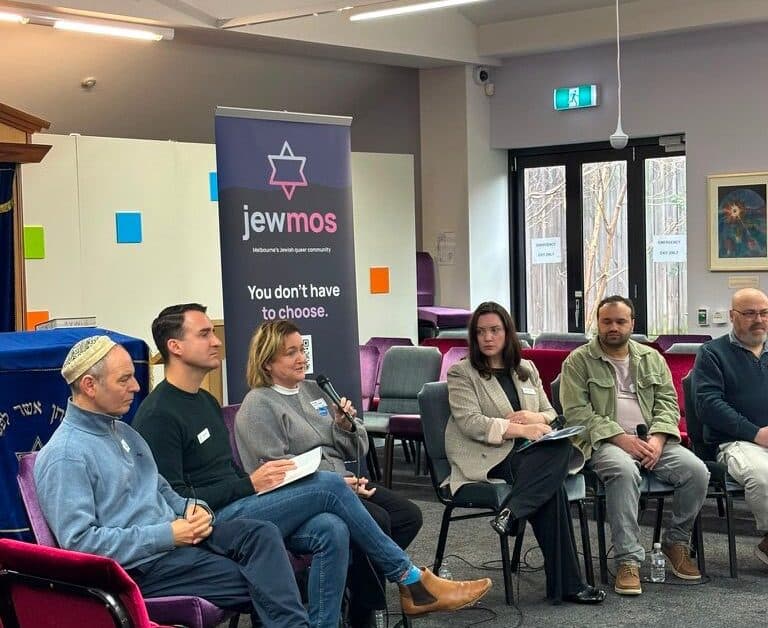
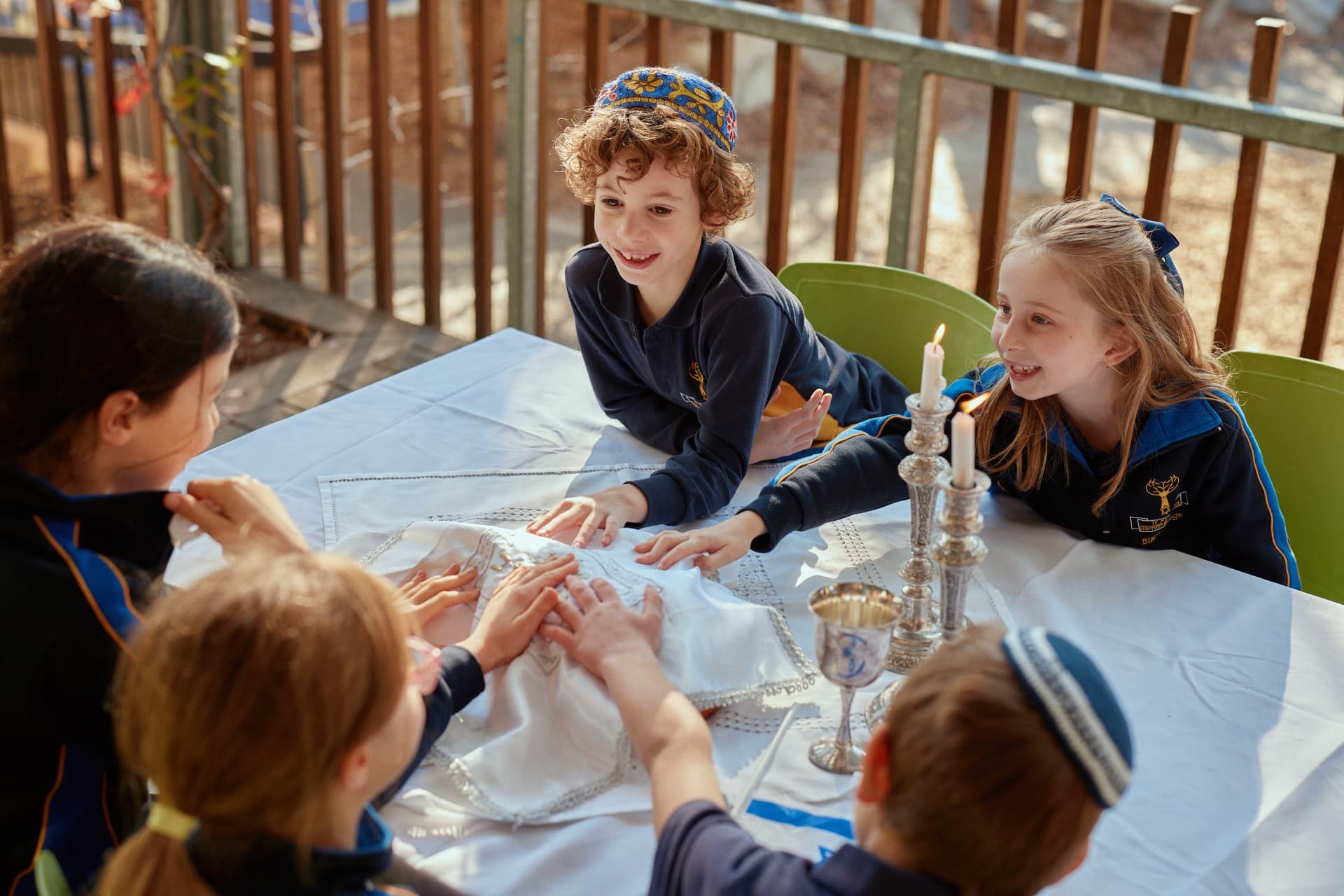
I was the person willing to befriend people from across the political aisle, people who opposed the very existence of the Jewish state, just for the sake of saving face, making Jews seem accessible and normal, and trying to fit in. 

My friends at the time, however, were tolerators. They would tolerate me being Jewish until it was an inconvenience. I SHOULD want to have a non-Jewish partner. I SHOULD believe that people should have two children maximum. I SHOULD think that circumcision is either wrong or only up to the will of the father. I SHOULD just eat non-kosher food. While I am appreciative of the fact that Jewish identity manifests itself in different ways for everyone individually, these were regular issues in my previous friendships, and if I did not comply, I would no longer have friends. 

In other words, it was tolerable that I am Jewish, but if I engaged in Jewish thought or activity, then it was unacceptable. 

The antisemitism I experienced in my first two years of university at my Jewish residential college was rife, even prior to October 7. I was called a "dirty little Jew", justified by the bully because I am "dirty, little, and Jewish".

People would use the term "Jew-ed out" and advocate for an absence of Jews from certain spaces, call kosher food "shitty", mock Jews by taking charge of Jewish events, and be openly anti-Israel. These "friends" even went so far as to try to out me as Jewish at the Ramadan Night Markets to see how people might react. 

We should be able to be as loudly and proudly Jewish as anyone else should be regarding their identities. 

Suffice it to say, I am no longer friends with these individuals. However, these experiences, and my experiences of friendship loss post-October 7, made me realise the friendships that Jews have with non-Jews, in many cases, are, unfortunately, conditional.

A lot of the time, at least in the university context, many non-Jews cannot reconcile Jewish identity within a friendship. There is a limit that is directly tied to Jewish identity within many friendships with non-Jews, from religious observance to Zionism. Unless we assimilate and conform to the ideal of people from outside our community, we are the inconvenient, unlikeable Jew. 

After October 7, I thought that my non-Jewish friends would be there for me. And some of them were. One of the first friends to reach out to me was a Muslim friend. But I also lost at least half – if not more – of my non-Jewish friends because those friendships were always conditional. Because I stepped out of line. Because I took the wrong political position. Because I was not willing to give up on my Jewish identity for the sake of keeping friendships. Because we should have lines too.

Our friendships should not be dependent on us giving up on our identities to save face and keep the peace. We should be able to be as loudly and proudly Jewish as anyone else should be regarding their identities. Why should we be the only ones to accept conditional friendships? 

This has been a new perspective about which I have been pondering, but it has made me more passionate and courageous in my convictions as a young Jewish woman, wanting to express my Jewishness even more so.

I would encourage others to do the same; do not hide your Jewish identity, be open and proud, and do not accept or tolerate friendships that require you to sacrifice your identity for the sake of saving face. 

You might also like
  • ‘Israel is systemically eliminating Palestinian collective life’:  B’Tselem
    Deborah Stone
  • Antisemitism, homophobia and a radical response to both
    Dennis Altman
  • Tame apologises – but with little grace
    Deborah Stone
logomark.67a07ee3
We believe in the free flow of information

Republish our articles for free, online or in print, by using our Creative Commons licence

You might also like

    original-6ACA4B6A-4208-4277-A4EE-E687C3C87523
    FeatureLifestyle

    The right to an ordinary Jewish life

    Jarod Rhine-Davis
    Housing
    Australia

    Housing insecurity hits home in Jewish community

    Jarod Rhine-Davis 1
    single – lead image
    FeatureLifestyle

    On my own (terms)

    Jarod Rhine-Davis

About the author

Miriam Itzkowitz

Miriam Itzkowitz

Miriam Itzkowitz, 22, is the AUJS National Marketing Coordinator. She has previously served as the organisation's Jewish Engagement Coordinator. She is currently studying linguistics, philosophy, and modern Hebrew at The University of Sydney. In 2023, Miriam published a book titled "I Went, I was Lost, I was Found, I Experienced" that explores her Jewish identity as a young woman in Australia.

Comments3

  • Avatar of Julie McCrossin

    Julie McCrossin9 August at 03:36 am

    Thank you for this frank and important description of the challenges you have faced as a Jewish woman. The behaviour of your non-Jewish friends who told you who you “should” be is not the behaviour of a true friend.

  • Avatar of Heidi Rielly

    Heidi Rielly3 July at 12:16 pm

    Insightful and powerful. Continue to share your life experiences, I learn and grow with you.

  • Avatar of Yael

    Yael3 July at 05:27 am

    Spot on!