Aa
  • Read, Watch, Listen
  • TJI Series
  • Community Action
  • Events
  • Zedi
Follow us and continue the conversation
  • LinkedIn
  • Instagram
  • FaceBook
  • X
  • YouTube
Test yourself with the TJI Quiz!

Adjust size of text

Aa

Follow us and continue the conversation

  • LinkedIn
  • Instagram
  • FaceBook
  • X
  • YouTube

Your saved articles

You haven't saved any articles

What are you looking for?

Original reporting, insightful analysis and diverse views, delivered straight to your inbox

  • LinkedIn
  • Instagram
  • FaceBook
  • X
  • YouTube
Your support fuels our mission to inform, entertain and inspire.

The Jewish Independent is bound by the Standards of Practice of the Australian Press Council. If you believe the Standards may have been breached, you may approach The Jewish Independent or make a complaint to the Australian Press Council in writing at www.presscouncil.org.au. The Council may also be contacted on 1800 025 712.

  • Our Story
  • Contact us
  • Our Team
  • Support us
  • Guidelines
  • Pitch your idea
  • Republishing us
  • Community Action
  • Our Awards
  • LinkedIn
  • Instagram
  • FaceBook
  • X
  • YouTube
Aboriginal FlagTorres Strait Islanders Flag

The Jewish Independent acknowledges Aboriginal and Torres Strait Islander peoples as the Traditional Owners and Custodians of Country throughout Australia. We pay our respects to Elders past and present, and strive to honour their rich history of storytelling in our work and mission.

© The Jewish Independent 2026All Rights Reserved
Website design and development by Your Creative, MelbourneTerms & ConditionsPrivacy Policy
HomeRead, Watch, ListenArts & Culture
InterviewArts & Culture

What makes a good story? Ask Academy award-winning producer Emile Sherman

The producer behind blockbusters Lion, The King’s Speech and One Life sits down with TJI to discuss his love of storytelling, the local cinematic landscape and why society needs curious conversations.
Ruby Kraner-Tucci
Print this
POTD_SFF TPOTD_Emile Shermanl_14

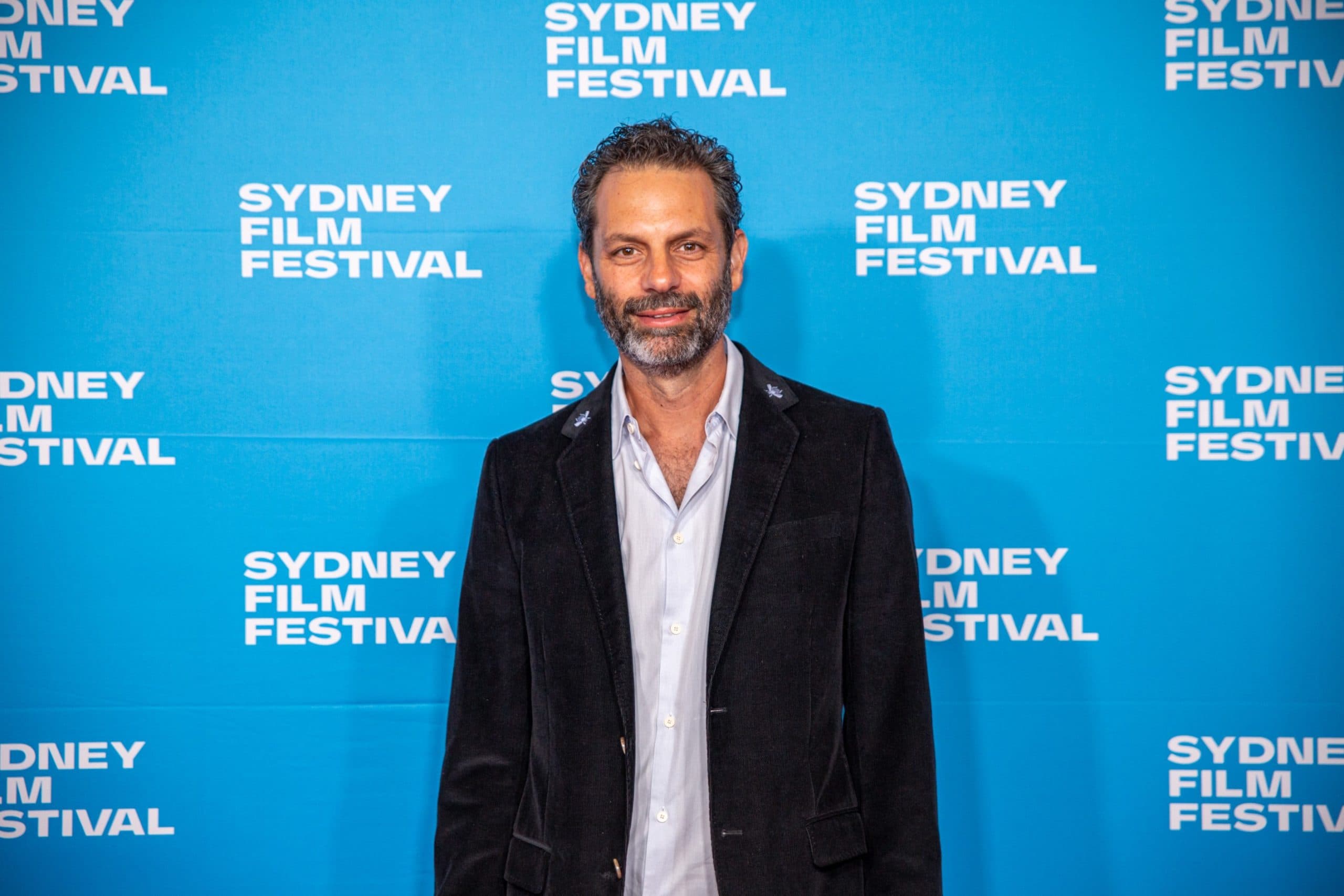
Academy award-winning Jewish-Australian producer Emile Sherman at the Sydney Film Festival premiere of The Power of the Dog (Image: supplied).

Published: 20 May 2024

Last updated: 20 May 2024

Emile Sherman is a natural storyteller. Zooming in from his chic home in Sydney, the Jewish-Australian producer is warm and laidback, as he speaks candidly about his contributions to international cinema.

His approachability, characteristic of many Aussies working in Hollywood, is refreshing considering Sherman is responsible for some of the biggest blockbusters of our time, both on the silver screen – The King’s Speech (2010), Lion (2016), One Life (2023) – and the small screen – Top of the Lake (2013), Slow Horses (2022).

It's impressive given Sherman had “no idea” what he would do after he graduated from the University of New South Wales with an arts/law degree and masters in English literature. He was introduced to film over two decades ago when a group of mates made Uncle Chatzkel – a documentary about Sherman’s great, great uncle who survived two world wars, lived through the Russian revolution and became a famous lexicographer.

“I sort of fell into film. I hadn’t studied producing at all, but found it made a lot of sense to me as I got into it. It combined a lot of elements I enjoyed doing,” Sherman told The Jewish Independent.

Those ‘elements’ are threefold: creative – understanding what makes a good narrative and how to best support storytellers; financial – managing a budget and accounts; and strategic – knowing how to push a project forward from development and funding through to production, editing and marketing.

“My background was the least strong in the physical production side, so I’ve had to learn about that. With my father being in funds management, I grew up talking about finance and found a love for it, which helped.”
In 2008 Sherman's output intensified and his name was put on the map when he partnered with English producer Iain Canning. Together they founded See-Saw Films, an innovative production house based in London and Sydney that is responsible for their box office success.

“The way I tend to see it is about how we support Australian storytelling, rather than Australian films. To do well as an industry, we need to create an ecosystem where Australian storytellers and their voice are supported.”

Emile Sherman

A raft of prestigious local and international awards have since followed, including five Academy Awards, 12 BAFTAs, 12 Emmys and 27 AACTAs, as well as the opportunity to work with A-Listers such as Anthony Hopkins, Jane Campion, Elisabeth Moss, Gary Oldman and Benedict Cumberbatch.

“It's very much grown as a company, but at its core, it’s still about finding great stories, supporting great writers and directors to tell those stories, and putting them together in the right way to make them resonate with audiences,” Sherman continued.

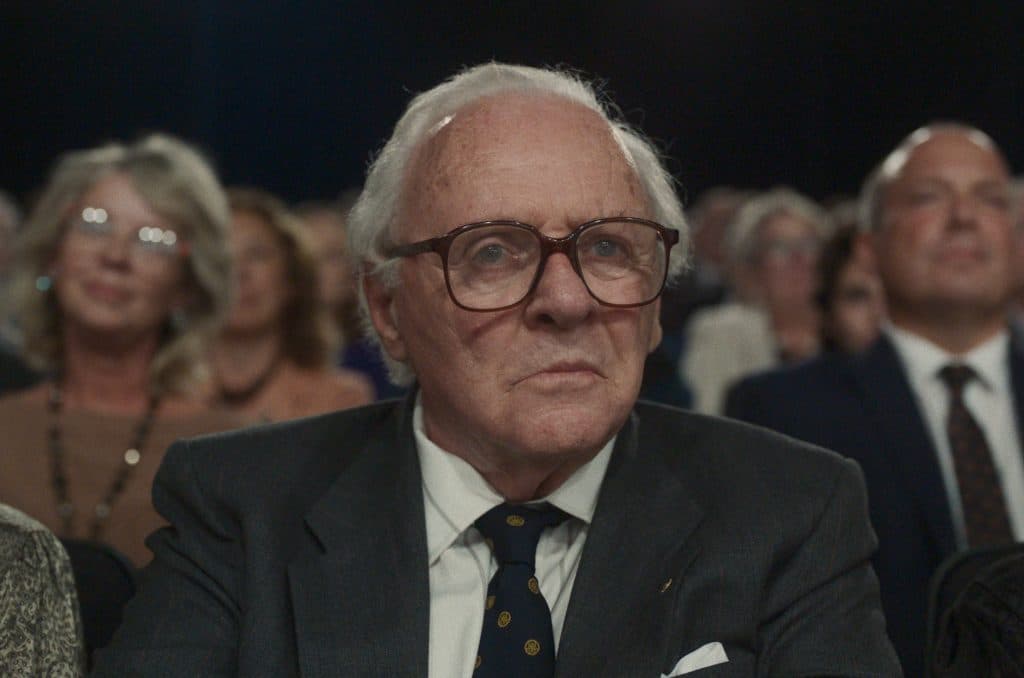
In One Life, Anthony Hopkins plays a British stockbroker and humanitarian who helped arrange the escape of 669 children from Czechoslovakia in 1939 (Image: supplied).

It’s not all roses though. Film has had a “bumpy ride” lately, with COVID leaving “a big mark on cinema audiences”. The repercussions are particularly difficult for review-driven theatrical movies (compared to remakes or franchise films), which Sherman mostly produces, as it's become harder to crack into the American market, release titles and finance new ones.

As for the local scene, increased competition and a smaller resource pool means making a good production in the first place is difficult. But Sherman says Australian audiences are keen for Australian stories, and argues that success requires a simple mindset shift.

“Noticeably Australian characters and worlds are, of course, very important, because we need to see our lives reflected back to us. But the way I tend to see it is about how we support Australian storytelling, rather than Australian films. To do well as an industry, we need to create an ecosystem where Australian storytellers and their voice are supported.”

Sherman says it’s not enough to simply relay a narrative anymore – the production must go deeper to find relevance for today’s audience.

“You’re only as good as your next project, so it’s a really difficult business to be in," he explained.

“Generally, what we’ve done is not be happy just to tell a good story, we ask ourselves, how do we see the story resonating for audiences? What question is it asking? What issue is it exploring? What emotional resonance are we hoping to tap into? So even if it might be set deeply in the past, like The King's Speech or The Power of the Dog, we know that at its core, what it's exploring is of relevance today.”

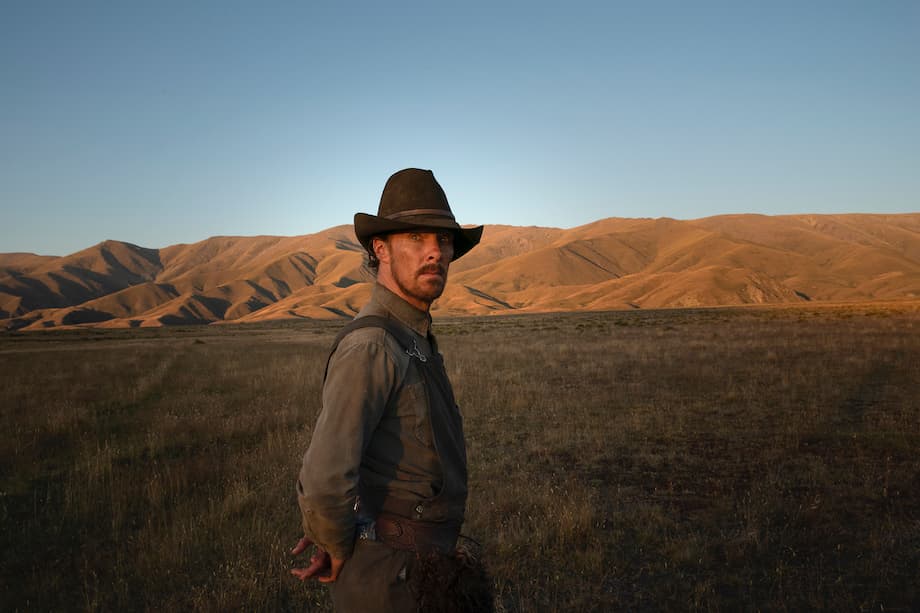
Benedict Cumberbatch stars in The Power of the Dog, directed by Jane Campion and produced by See-Saw Films (Image: KIRSTY GRIFFIN/NETFLIX 2021).

A good story isn’t only set in the film and television landscape for Sherman – it extends to the podcasting world too. Three years ago, he formed another successful partnership, this time with his cousin Lloyd Vogelman, to create Principle of Charity.

It’s a podcast with a simple premise – two expert guests who are rooted in a hot button social issue argue their side – but it comes with a twist: at some point in the show, each guest must present the strongest version of the other’s viewpoint.

“We can't hold our society together unless we at least understand and have respect for other viewpoints, even if we really don't agree with them.”

Emile Sherman

Sherman says the podcast is a commentary on the polarisation of our current society, our unwillingness to truly understand an opinion or view that differs from our own. It’s a particularly resonant concept for the Jewish community right now, especially those within the left who have felt abandoned by their political peers amid the ongoing war in Gaza – a group Sherman counts himself part of.

“The aim is not to change people’s minds necessarily – although that may happen – it’s to model generous, curious conversations.

“It's so easy to fall prey to own biases. Social media algorithms and other forces keep people in a sort of epistemic bubble, where we only see information fed back to us that we already believe.

“We can't hold our society together unless we at least understand and have respect for other viewpoints, even if we really don't agree with them – which is okay – what’s not okay is to dismiss ideas before you really understand them.”

Now nearing 60 episodes, the podcast has debated a range of topics from cultural appropriation, fat shaming and trigger warnings, to alternative medicine, Voluntary Assisted Dying and whether all Jews are white.

The name Principle of Charity was developed by legendary musician and actor Tim Minchin, a friend of Sherman's, to "encourage us to understand the most generous version of an idea before we reject it".

The podcast's next venture is a special live recording at the 2024 Sydney Writers' Festival, which begins today, pitting Boomers against Gen Z to discuss whether books are still relevant in our modern society.

The idea came from observing the habits of Sherman’s teenage boys, who consume information almost exclusively from videos, a stark contrast to his own bookish tendencies.

“Are books just a relatively recent technology that allowed information to be disseminated because we didn't yet have ability to disseminate videos? And now that we do, is it that helpful to be able to sit and wade our way through lots of words, when arguably, the more natural way to take in information is through an oral tradition? On the other hand, the depth and focus of reading, and the way it wires our brain for language is incredibly powerful and beneficial," Sherman concluded.

“All these conversations start with me and Lloyd genuinely not knowing the answer.

"I've learned an enormous amount doing the podcast and realised more and more strongly that the power of the endeavor is not in getting to a particular truth, but to understanding in a sense that truth is built up.

"It is built up of understanding, of different viewpoints and experiences – akin to different facets of a diamond."

Do We Need Books? will be held on Friday 24 May from 7.30pm at Carriageworks as part of the 2024 Sydney Writers’ Festival.

You might also like
  • On despair: A reflection after watching ‘Cancelled’
    Deborah Stone
  • What to see at the 2026 Jewish International Film Festival
    Kathy Laster
  • Antisemitism, homophobia and a radical response to both
    Dennis Altman
logomark.67a07ee3
We believe in the free flow of information

Republish our articles for free, online or in print, by using our Creative Commons licence

You might also like

    Amidah main
    FeatureArts & Culture

    A circle of communal healing on stage, with a dash of humour

    Miriam Hechtman
    Wake main 2nd
    FeatureArts & Culture

    New ‘spoken word’ festival in Sydney offers stories directly from creators

    Miriam Hechtman
    MJBW main
    FeatureArts & Culture

    Melbourne writers fest a place of connection both outward and inward

    Peter Kohn

About the author

Ruby Kraner-Tucci

Ruby Kraner-Tucci

Assistant Editor

Ruby Kraner-Tucci is a journalist and TJI's assistant editor. Her writing has appeared in The Age, Australian Jewish News, Time Out and Broadsheet, among others. Ruby was awarded Multicultural NSW’s Best Report in Multicultural Media 2025 and has been named a Top 36 Under 36 Jewish Changemaker by B'nai B'rith.

More from the author

FeatureAustralia

‘True essence of being an ally’: The non-Jews choosing to work in the Jewish community

InterviewAustralia

Elliot Szafran: food that feels like a hug from Zaide

NewsAustralia

Antisemitic incidents down from peak but still triple pre-Gaza war

FeatureArts & Culture

Bringing Terezin music to life 

Comments

No comments on this article yet. Be the first to add your thoughts.