Published: 5 June 2024
Last updated: 5 June 2024
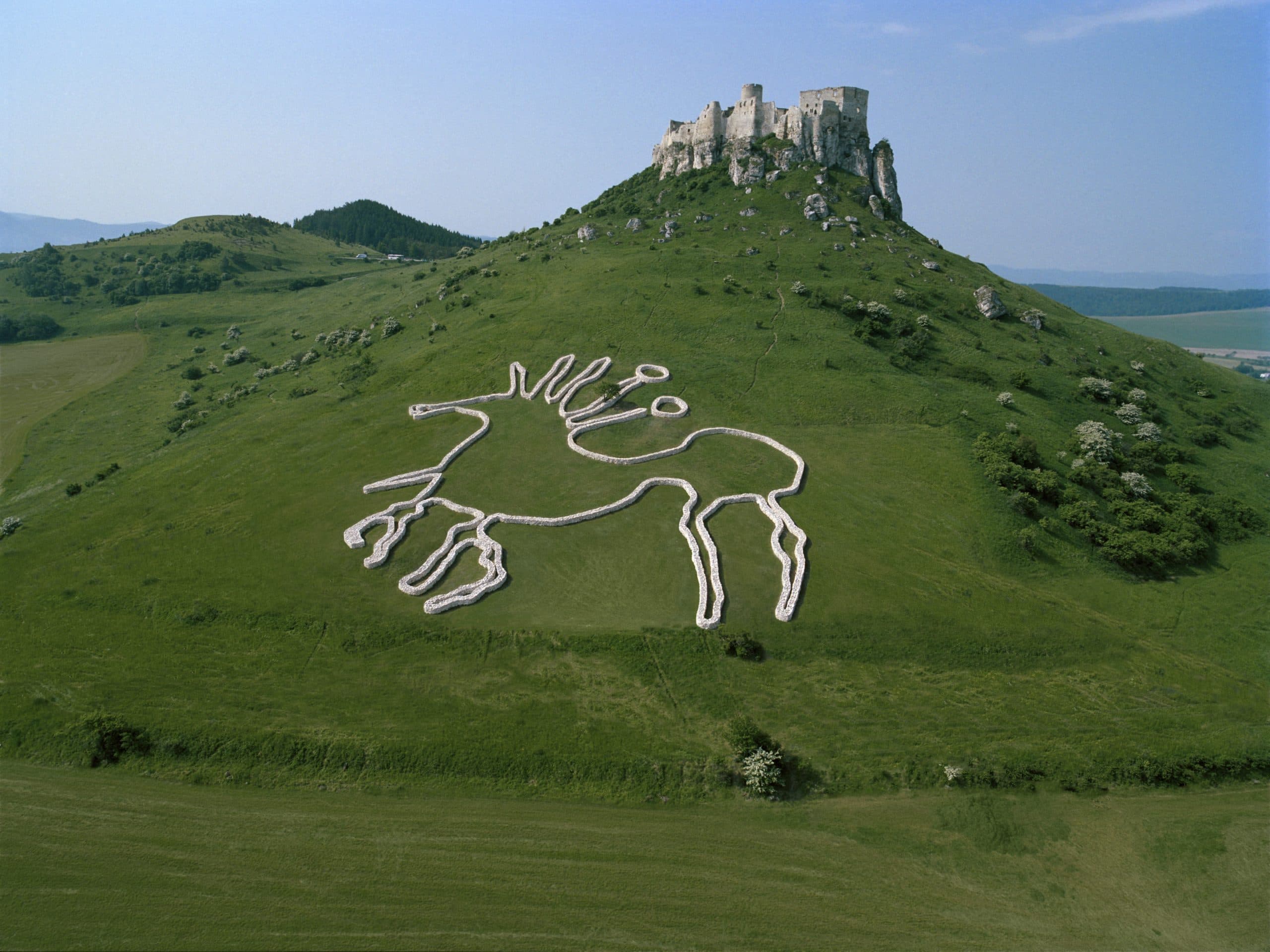
Andrew Rogers is known for thinking big. His contemporary sculptures are often huge, and his land art is vast enough to be photographed by satellite from space.
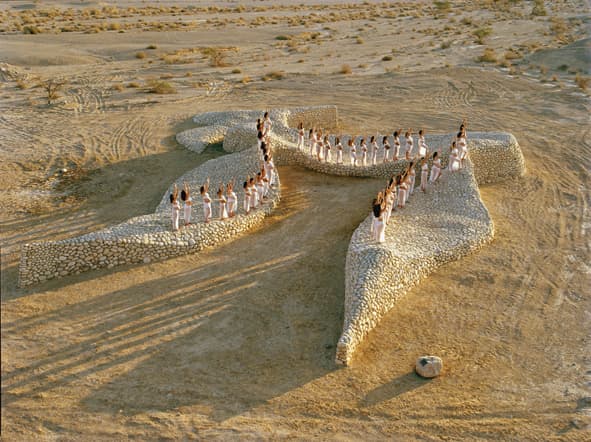
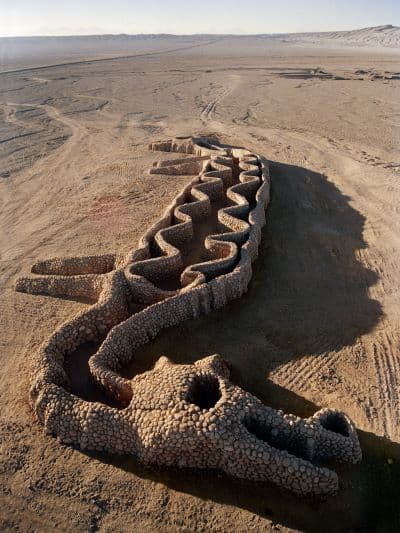
Readers may know his impressive geoglyph To Life (Chai) which spans more than 900 square metres of the Arava Desert in Israel. Or his powerful Buchenwald memorial at Springvale cemetery in Melbourne. Or some of his many abstract bronze sculptures found in Australian sculpture gardens.
Because several of his works are monumental, it is often only possible to see one at a time, but a retrospective now at the Jewish Museum of Australia will enable readers to enjoy many Rogers works through small scale models, photographs and videos.
Andrew Rogers: Where We Are looks at Rogers evolution as an artist from his early days to the abstract forms and massive land art that have made him famous.
Rogers doesn’t want his age divulged – he still feels young and has plenty more to do – but suffice to say the exhibition covers more than 40 years of work and an oevre that is vast in vision and in physical space.
“It's good to see where one started, and it's great to see the possibilities of where one can be heading. I started as a figurative sculptor, so I could teach myself to sculpt and capture all the planes and angles of the human form. It wasn't until I felt that I was competent that I began to abstract and what I create now is abstract, contemporary forms,” Rogers told The Jewish Independent.
Although most of Rogers work is abstract, he is inspired by ideas, not merely forms or places.
“It's always about the idea and how you express it. That's what's difficult.”