Published: 27 April 2026
Last updated: 4 May 2026
What is your artistic practice, and how long have you been working in this space?
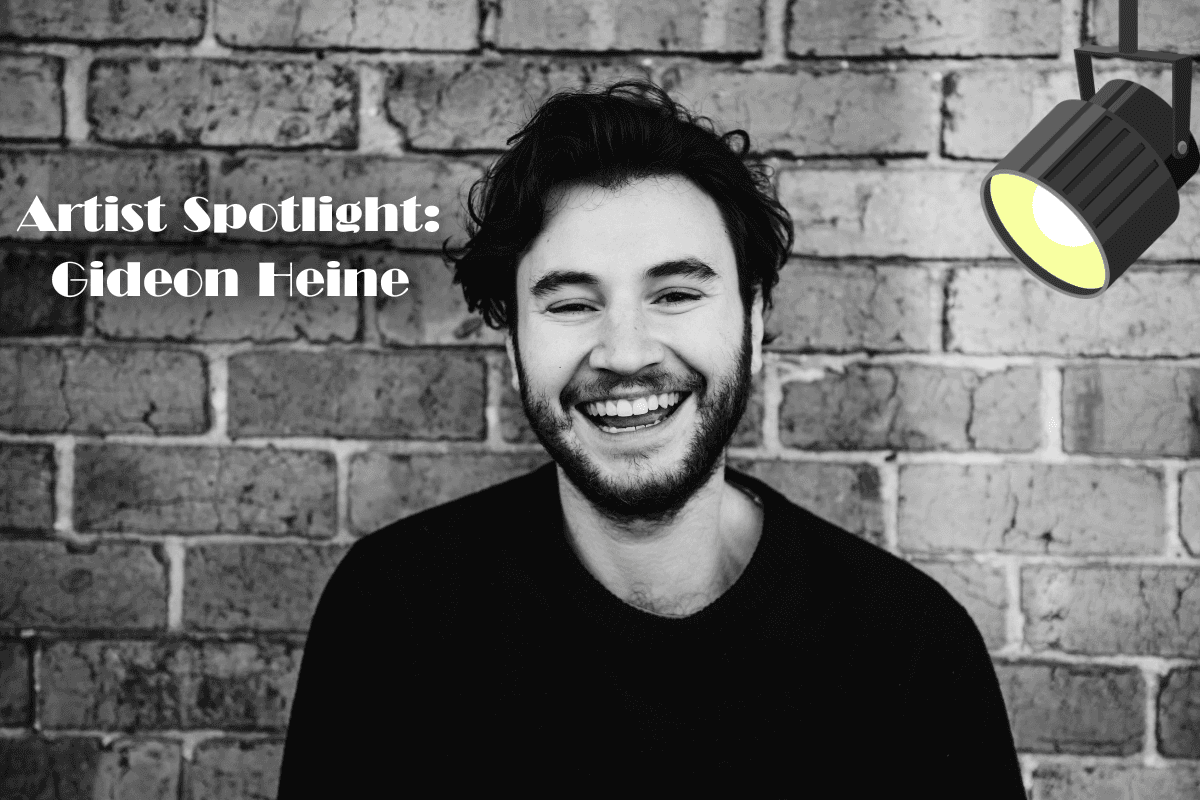
My practice is grounded in character driven storytelling, probably for the past 15 years. It's really based on stories from my grandparents, stories from our history and Jewish history, and often those add the most inspiration into the work I do.
Things that explore identity, memory, belonging, stories that feel deeply personal. Stories that are definitely something larger than just one person. They are about an entire tribe of people. My practice is about sitting down in front of a computer, trying to write whatever comes out every day. Sometimes you write amazing things, and sometimes you just sit all day. Both are still part of the practice.
Did you always know you wanted to be a filmmaker?
I was always interested in perception, and I studied psychology. After that, I thought I am not built for the education system in that sense of studying. So I moved over to New York, and over there, I found myself a job off Craigslist, working for this magazine, and they were into videos as a way to tell stories. I was drawn to that medium of a way to do so.
So I would say, even now, I am more drawn to stories than to film as a medium. Right now, I'm in love with film as a medium to tell stories, but I also have other ways to tell stories.
What are you currently working on? Why did you write it now?
Right now, every second of my day is trying to make the film called Wish You a Long Life. I wrote this film in two parts, one from grieving and the loss of a friend, and the other one is from the absence of Jewish stories on screen. I've never seen this Jewish Australian story ever told on film, and there's never been a government funded Jewish Australian feature film.
This film is really about identity and visibility and what those cost. I think right now, those questions are really urgent. In this climate, do we retreat into our caves and do our things in the shadows, or are we loud and we proud of who we are? This film is a coming-of-age story about being seen and being who you are and being proud of that.
What is the biggest barrier for Jewish films now?
I think there's a perception that Jewish stories are either too niche or already understood. There's been a lot of stories about what happened in the Holocaust, but nothing really about why the Holocaust happened. I think the reality is, being Jewish isn't just one point of view.
This film showcases not just one type of Jewish person, but multiple different cultures of Jewish people and different narratives around that. It’s incredibly important right now, not just for other Jews to learn about, but also for the wider community.
How collaborative and inclusive was your writing practice, and the importance for authentic representation?
Collaboration is super important. I’ve been working with a lot of people from diverse backgrounds and telling their stories. There's a scene in the film where you have these two Holocaust surviving bubbas watching a game of AFL and they are cursing at the umpire in Yiddish. You don’t get things like that without bringing real representation to the writing process.
There was a lot of learning from my end. The process isn't just about the story; it's also about yourself. You have to learn a lot along the way about all your characters and who they are, and you can only find that out by engaging with people who have lived those lives.
Now is the time for collaboration, for us to come together. If we can’t even tell our own stories how can we expect everyone else to understand them?
What do you hope people’s reactions will be to your film?
From Jewish audiences, I get a lot of feedback after people read the scripts, and some of them have been kind, I get a lot of thanks because they feel so validated and seen in a time when these stories have not been told. For younger Jewish audience members, I want to show that you can be Jewish and define it however you want.
More broadly, I hope it creates understanding. I used to host Shabbat dinners for my non-Jewish friends and they all loved it and got into it. That’s an easy gateway to show what Judaism is about. We shouldn’t start with overseas politics, everyone knows that, let’s start with the easy things. Start getting to know each other, things that you can agree on, and from that foundation you can really build a deeper sense of what it means.
How can people support your project?
Every dollar counts. Every grant application we can fulfil, every foundation we can speak to, any philanthropy and anyone who supports Jewish arts. This film is really made out of passion, the budget is very small for what it should be, and the people involved are sharing their time and passion to take our stories from the Jewish community to the world.
People can share our website, tell their friends and family, and ultimately support independent Jewish storytelling. These films don't exist without community backing. I know a lot of people in the Jewish arts community are feeling isolated from the wider community, so getting into the rooms with those people, with everyone who feels this way, and creating a fun, safe and collaborative space is most important.
Now is the time for Jewish people to come together, regardless of your politics, to represent Jewish stories. Let’s get into rooms. Let’s talk about it. Let’s see how we can bring things to life.
What is your favourite thing about Judaism?
I love elderly Jewish people. I love hearing about the lives people have lived. At every party, I'm always sitting with the oldest person. I love chatting to anyone who's got all this Jewish experience and stories. It's definitely the culture.
I think Judaism is about your connection to the world and finding your place in your own spiritual energy with God. If you don’t like the word God, I prefer to use the word creator. So in this creative universe, that was created for us, finding your place, your own little miracle of creation, whether that’s in art, in storytelling, in food, energy, science. I think that’s Judaism.
What is your favourite Jewish food?
My favourite food is definitely Jachnun, it's Yemenite. I have to give it to the Mizrachi community for having the best food.
Which Jewish storytelling most inspires you?
I have to say Steven Spielberg. My dream, as much as it is to have a successful film that does really well, it actually would be to get a text message from Steven Spielberg saying that he likes my film.
I’m most inspired by Jewish storytelling that holds both trauma and humour at the same time. It’s easier to make someone laugh over making someone cry, and it’s even harder to do both at the same time. That’s the genre of storytelling that inspires me the most.
What piece of advice would you offer other Jewish artists navigating the creative industry right now?
Tell your story, even if it is different or difficult, even if there's no space for it. It’s the hardest thing to do, but it’s worth doing. If you’re a Jewish artist, don’t be scared to reach out to fellow Jewish artists.
Right now, it seems like a time where a lot of people don’t want, or aren’t interested in Jewish stories, and if they are, they only want to talk about it from a political sense. In saying that, the most important thing right now is to keep your stories humble, keep them from an artistic endeavour, keep them from a place of goodwill, joy and collaboration. Now is the time for collaboration, for us to come together. If we can’t even tell our own stories how can we expect everyone else to understand them? Share your contacts. Share to anyone who wants to talk about it.
Listening - what is your current music/podcast obsession?
I’ve been listening to Shotei Hanevuah, Zusha and Ear Worms.
My favourite film at the moment is a film called ‘How to Make Millions Before Grandma Dies’. It’s about family, love and taking care of the elderly. I cried, I laughed, I cried. It did incredibly well.
In regard to Jewish films, I watched A Quiet Heart recently. I love The Believer, and the Hungarian film, Son of Saul.
I’m so Jewish, I feel I’m always reading Jewish books. Outwitting History by Aaron Lansky, it’s about how one man saved Yiddish culture post Holocaust. Hostage by Eli Sharabi, everyone needs to read it, it’s such a haunting and beautiful book. One Day We’re All Going to Die by Elise Esther Hearst.
About the author
Doron Chester is a multidisciplinary performer, and strives to promote and elevate Jewish culture and the voices of Jewish artists.