Published: 18 November 2022
Last updated: 5 March 2024
A creative not-for-profit funds Israeli Arabs to teach Arabic to Jewish children, forging better communication across Israeli society, reports TOBIAS SIEGAL.
While Israeli Arabs are expected to know basic Hebrew, only 10% of Israeli Jews can communicate in Arabic – and many fewer can read and write.
Beyond any big strides on the political front, solving the Israeli-Palestinian conflict will ultimately come down to interpersonal connections between Jews and Arabs, and that requires communication.
The AMAL nonprofit organisation positions language education at the core of its mission to create meaningful engagements between Jews and Arabs.
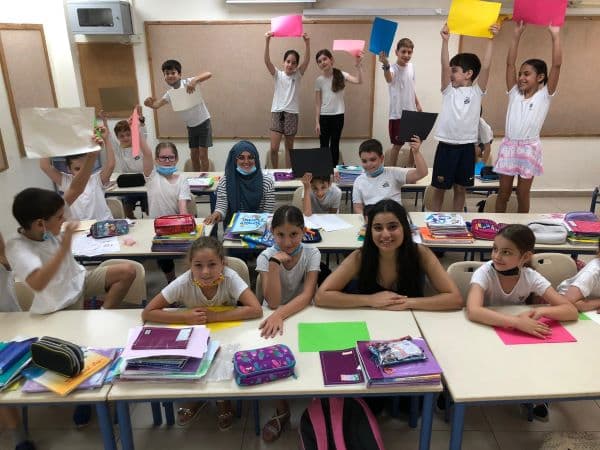
AMAL, a Hebrew acronym for “spoken Arabic for all,” offers college scholarships to enable Arab students to teach Arabic to Jewish primary school students.
"Kids here believe that the Arabic language is only good for security reasons that have nothing to do with human beings.”
Arabic teacher Sima Wattad
“The main issue for us was the lack of dialogue between Arabs and Jews, Palestinians and Israelis. Making progress in that regard is very hard when you lack the language,” says AMAL co-founder Ishmael Ben-Israel about the reasons that made him launch the initiative some 10 years ago.
Arabic was an official language in Israel until mid-2018, when the Knesset passed the 2018 Nation-State Bill. The controversial legislation defined the state as inherently Jewish and Hebrew its only official language, while Arabic was given a “special status”.
Learning Arabic in the Israeli Jewish education system is mostly optional, and data released by the Education Ministry in January found that the number of Jewish students taking matriculation exams in Arabic has dropped by a third in the past five years.