Published: 27 January 2023
Last updated: 5 March 2024
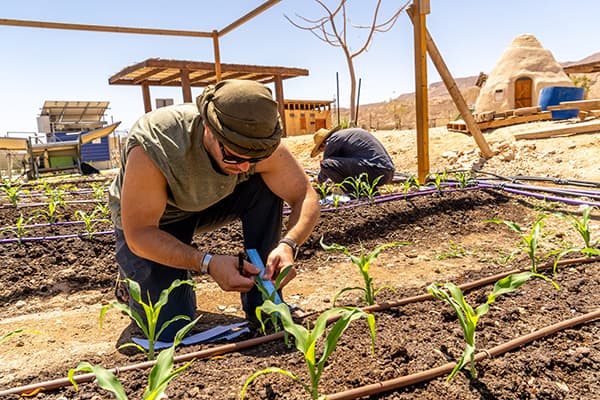
TOBIAS SIEGAL reports on the Arava Institute, where environmental cooperation continues to enable peacebuilding against the political trends.
“Here, the idea that nature knows no political borders is more than a belief. It is a fact, a curriculum, and a way of life” - Arava Institute
The common Israeli belief that there is no Palestinian partner with whom to negotiate peace is refuted by the work of the Arava Institute in southern Israel.
Established in 1996 in the heyday of the Oslo Accords, the Institute thrives where the accords have stalled, addressing environmental and geopolitical issues by connecting young Israelis, Palestinians and internationals.
The participants work together to solve environmental challenges of our time while acknowledging and respecting each other’s narratives.
Deputy Director Eliza Mayo said the institute’s work arose directly from the optimism of the 1990s’ peace process between Israel and the Palestinian Liberation Organisation.
“There was a very strong sense that we were making peace agreements with our enemies and that we should start working on environmental cooperation.
“The idea was to use the environment as a tool for cooperation and cooperation as a tool for the environment.”
That approach is reflected in the institution’s location on Kibbutz Ketura in the Arava Valley – unique in that it is a desert area bordering both Israel and Jordan and reaching the southern tip of the Dead Sea, not far from the West Bank.
The location allows the institute to address regional environmental challenges like water scarcity while engaging in effective cross-border initiatives on its doorstep.
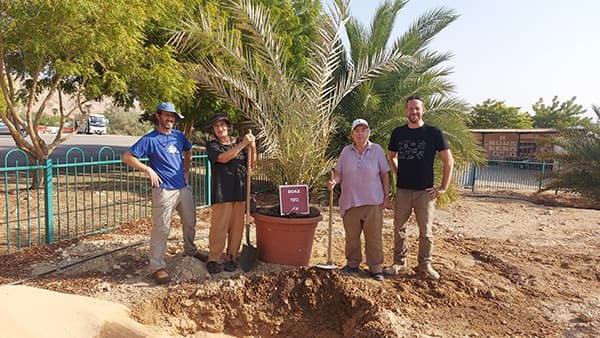
Kibbutz Ketura, described by Mayo as “a very proudly cooperative community,” was founded by American Jewish immigrants in 1973. In the early days of the institute, families on the kibbutz would host students during their studies. Today, students lead an environmental-educational project on the kibbutz every semester. Arava Institute alumni describe a “symbiotic” relationship between the institute and the kibbutz.