Aa
  • Read, Watch, Listen
  • TJI Series
  • Community Action
  • Events
  • Zedi
Follow us and continue the conversation
  • LinkedIn
  • Instagram
  • FaceBook
  • X
  • YouTube
Test yourself with the TJI Quiz!

Adjust size of text

Aa

Follow us and continue the conversation

  • LinkedIn
  • Instagram
  • FaceBook
  • X
  • YouTube

Your saved articles

You haven't saved any articles

What are you looking for?

Original reporting, insightful analysis and diverse views, delivered straight to your inbox

  • LinkedIn
  • Instagram
  • FaceBook
  • X
  • YouTube
Your support fuels our mission to inform, entertain and inspire.

The Jewish Independent is bound by the Standards of Practice of the Australian Press Council. If you believe the Standards may have been breached, you may approach The Jewish Independent or make a complaint to the Australian Press Council in writing at www.presscouncil.org.au. The Council may also be contacted on 1800 025 712.

  • Our Story
  • Contact us
  • Our Team
  • Support us
  • Guidelines
  • Pitch your idea
  • Republishing us
  • Community Action
  • Our Awards
  • LinkedIn
  • Instagram
  • FaceBook
  • X
  • YouTube
Aboriginal FlagTorres Strait Islanders Flag

The Jewish Independent acknowledges Aboriginal and Torres Strait Islander peoples as the Traditional Owners and Custodians of Country throughout Australia. We pay our respects to Elders past and present, and strive to honour their rich history of storytelling in our work and mission.

© The Jewish Independent 2026All Rights Reserved
Website design and development by Your Creative, MelbourneTerms & ConditionsPrivacy Policy
HomeRead, Watch, ListenIsrael
OpinionIsrael

Are Israel’s West Bank raids preventing or fuelling bloodshed?

Ben Lynfield
Print this

Published: 4 October 2022

Last updated: 5 March 2024

Two Palestinian militants were killed yesterday, four last week. The wave of military raids aims to prevent attacks on Israel, but they could provoke more violence, writes BEN LYNFIELD.

Perhaps, as Prime Minister Yair Lapid depicted it, the army's raid on a Jenin refugee camp on September 28 was a deterrent to Palestinian attacks.

After all, the IDF had killed the two wanted Palestinian men they had come for.

They also killed another two Palestinians and wounded 44 people after firefights broke out, according to Palestinian officials. It was the latest instalment of Operation Break the Wave, the military offensive launched after a deadly wave of Palestinian attacks in March and April.

Abed Khazem, the brother of Raad Khazem, the assailant who shot dead three Israelis in a Tel Aviv pub in March, and Mohammed Elwaneh, a Palestinian security forces member turned militant, were killed after troops surrounded them in a house. Both were said by the army to be planning attacks on Israeli targets.

Yesterday, Israeli forces killed two Palestinians who tried to run over soldiers operating in the Jalazone refugee camp on Monday and arrested 16 further suspects in the West Bank.

But it is unclear whether these raids will act as a deterrent or as fuel for further bloodshed. "The more Israeli violence there is, the more it increases the following of the armed groups," Palestinian analyst Jihad Harb told The Jewish Independent.

Thousands attended Khazem's funeral. And when IDF troops in August killed Ibrahim al-Nabulsi, a young militant leader in Nablus wanted for shooting attacks, thousands took to the streets for his funeral. Many youths in the West Bank now wear necklaces with the picture of "the Lion of Nablus".

Harb, a former senior analyst at the Palestinian Centre for Policy and Survey Research, offers a perspective absent in much of the Israeli coverage of Operation Break the Wave.
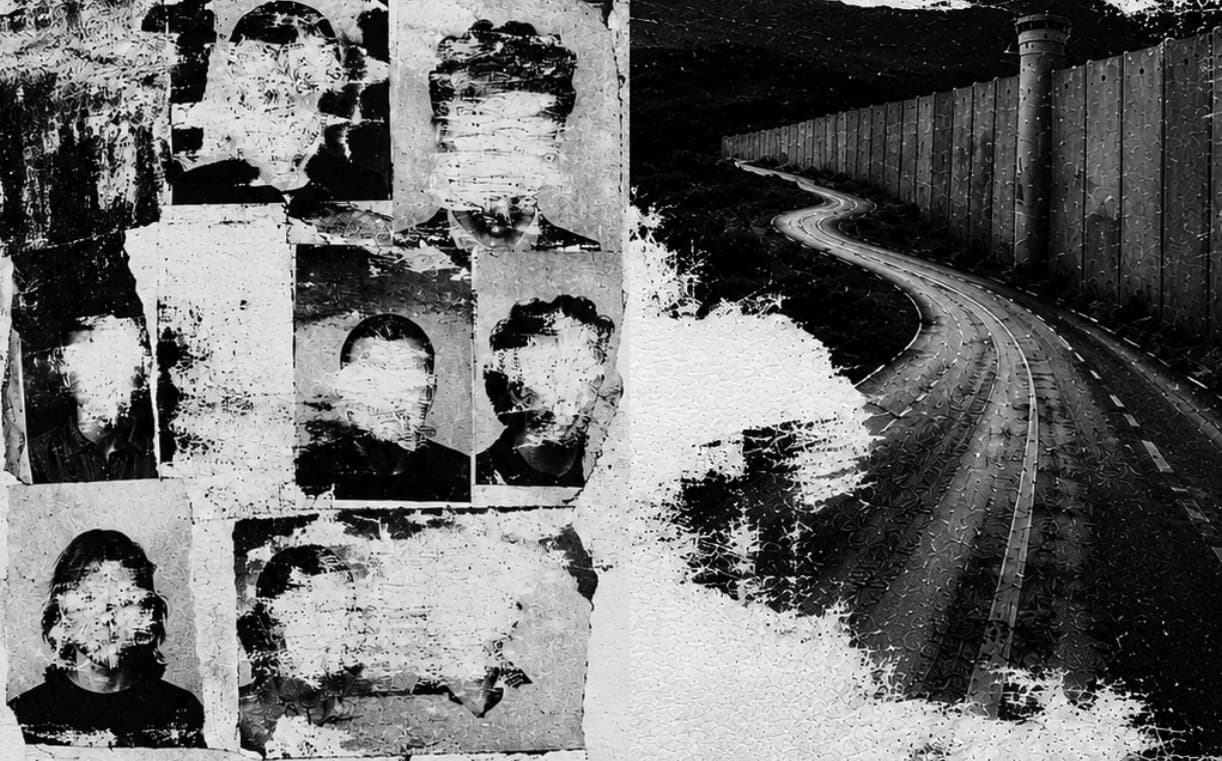

In particular, he stresses that the young people in Jenin camp not only suffer from the poverty and hopelessness that can put them on the path to take up weapons. History also plays a role.

In addition to the 1948 Naqba, the camp's collective memory harkens back to a 2002 battle with the Israeli army that lasted for eight days. It resulted in heavy casualties on both sides and much of the camp was destroyed.

"Jenin camp is a place of confrontation with the occupation. Maybe your father was martyred, your house destroyed, maybe your friend was injured, all this increases the possibility you will join an armed group," Harb says.

As a result, Israeli raids in effect help fuel a relentless cycle of violence, he explains.

Israel argues there is no choice but to raid. Yaacov Amidror, the former head of Israel's National Security Council, told The Jewish Independent he is aware of the dynamics on the Palestinian side but believes there is no alternative to Israel sending the IDF into places like Jenin camp to safeguard Israeli lives.

"These are the two alternatives: to go in and frustrate the Palestinians, or not to go in and let them kill as many Israelis as they want," Amidror says.

Another factor that has impelled Israel to act is that Palestinian Authority security forces are unwilling to confront the militants, he adds. "They are not ready to fight their own people."

But Palestinian analysts claim it is Israel that seriously undermines the PA's already tenuous standing, by repeatedly and lethally carrying out the raids in areas nominally under its self-rule.

The IDF says all its steps in Operation Break the Wave are essential for Israeli security. In a statement to The Jewish Independent, the IDF said it undertakes counterterrorism activities "in various locations in Judea and Samaria to prevent terrorism before it reaches the Israeli home front. The IDF's counterterrorism activity is based on precise intelligence and ongoing situational assessments."

This has come at a high cost for Palestinians. Operation Break the Wave has contributed to a death toll of nearly a hundred Palestinians from IDF and settler gunfire this year, the highest toll in seven years.

Twenty-two people in Israel and on settlements have been killed by Palestinians in the same period. An Israeli car driver was lightly injured and a bus windshield was hit on Sunday in a Palestinian shooting attack, the army said in a statement.

Ghassan Khatib, former PA Minister of Labor, says the Israeli army may succeed in defeating the young gunmen, but armed resistance will come back in the long term unless there is a political horizon leading to Palestinian self-determination and freedom. "Jenin camp fought during the second intifada and now the second generation is doing the same because the occupation is still there," he said.

Khatib argues that contrary to the IDF's stated position, Israel's aims in the West Bank are far from defensive. "The immediate goal is to consolidate control and enable settler expansion. The idea is to confine the Palestinians to a minimum of land to allow for the expansion of settlements."

Recent action by the army would seem to support his claim. With the support of settler leaders, IDF forces are currently involved in what rights groups consider to be an internationally banned forcible removal of Palestinians in the Masafer Yatta area of the West Bank. The army says it is acting in keeping with a decision by the Supreme Court in May.

Harb argues that the Israeli raids of Operation Breaking the Wave are actually not pegged to thwarting specific Palestinian attacks. "The idea is to kill Palestinians, not to stop a specific operation by a Palestinian. The occupation doesn't want any kind of resistance to the occupation and the colonialist settlement project. It does not want any armed groups to exist that threaten the stability of the settlements in the West Bank."

Harb also sees the Israeli elections on November 1 as a factor. "It shows the Israeli public this government is fighting terrorism." And the fact that there are rarely IDF casualties means it can do this without cost, he added.

Indeed, Harb predicts there will not be a major military operation to reconquer the northern West Bank because leaving IDF forces on the ground would result in casualties.

Menachem Klein, emeritus professor of political science at Bar Ilan University, does not rule out such an operation, which would bring back memories of Operation Defensive Shield, the 2002 reconquest of West Bank cities triggered by a devastating suicide bombing at the resort of Netanya which killed 30 people.

"It all depends how many Israelis would be killed. Imagine if there is a brutal attack and a whole family is killed. Public opinion will push the government to instruct the army to carry out Defensive Shield Two."

Whatever course things take, it will be set by military measures, Klein predicts. "No one suggests to leave everything aside and go for a political process," he says.

Harb stresses that Israel is not considering what he thinks is the best way to solve the problem. "The simple solution is to end the occupation. End the oppression, end the lack of hope. As long as there is occupation, there will be armed resistance."

RELATED STORIES

Two Palestinians Killed After Trying to Run Over Israeli Soldiers, IDF Says (Haaretz)
Palestinians deny the claim that Basel Basbous and Khalid Anbar tried to harm the Israeli forces. Fatah announces a general strike and a day of mourning in the region in response

Abbas orders PA security forces to enforce order, avert massive IDF operation (Jerusalem Post)
Palestinian President Mahmoud Abbas stressed the need to restore law and order to Palestinian cities, villages and refugee camps in the West Bank.

Israel-US tensions grow over West Bank escalation (Al-Monitor)
With elections just a month out and despite American warnings, Prime Minister Yair Lapid is sticking with his hawkish line on West Bank security escalation.

Family of Palestinian Boy Who Died During Raid: ‘Children Don’t Feel Safe’ (Haaretz)
Rian, his family says, was a healthy second-greater whose heart stopped from the terror he felt when soldiers arrived looking for stone throwers. The IDF says preliminary investigation shows the boy's death was unconnected to the army's actions

6 Arab Israelis arrested for alleged IS ties, plans to attack Nazareth Muslim school (Times of Israel)
Security agency says men consumed jihadist content online, sought to also attack busy bus stop, tourist site and police station in northern Israel

Photo: Mourners chant slogans during the funeral ceremony of one of the four militants killed by Israeli troops last week. (Nasser Ishtayeh / SOPA Images/Sipa USA/ AAP)

You might also like
  • Fear of Netanyahu victory may drive big surge in Palestinian voter turnout
    Ben Lynfield
  • Israel is cementing its control over the West Bank and East Jerusalem while the world is distracted
    Martin Kear
  • Abuse by IDF soldiers humiliates Muslim Palestinians
    Ben Lynfield
logomark.67a07ee3
We believe in the free flow of information

Republish our articles for free, online or in print, by using our Creative Commons licence

You might also like

    altalena
    Israel Votes 2026OpinionIsrael

    The Altalena should be a warning, not a political weapon

    Shahar Burla 1
    Rozana Beit Oula
    PeacebuildingOpinionIsrael

    Peacebuilding through the eyes of a sceptic

    Ron Finkel
    ISRAEL-LGBTQ-PRIDE-PARADE-PALESTINIAN-CONFLICT-HOSTAGES
    NewsIsrael

    LGBT asylum seekers caught between Palestinian violence and Israeli bureaucracy

    Jarod Rhine-Davis

About the author

Ben Lynfield

Ben Lynfield

Ben Lynfield covered Israeli and Palestinian politics for The Independent and served as Middle Eastern affairs correspondent at The Jerusalem Post. He writes for publications in the region and has contributed to the Christian Science Monitor, Foreign Policy and the New Statesman.

More from the author

FeatureIsrael

Fear of Netanyahu victory may drive big surge in Palestinian voter turnout

NewsIsrael

Abuse by IDF soldiers humiliates Muslim Palestinians

OpinionIsrael

Qusra siege exposes shared agenda of IDF and settler extremists

AnalysisIsrael

IDF ordered to evict West Bank camp in election show of strength