Aa
  • Read, Watch, Listen
  • TJI Series
  • Community Action
  • Events
  • Zedi
Follow us and continue the conversation
  • LinkedIn
  • Instagram
  • FaceBook
  • X
  • YouTube
Test yourself with the TJI Quiz!

Adjust size of text

Aa

Follow us and continue the conversation

  • LinkedIn
  • Instagram
  • FaceBook
  • X
  • YouTube

Your saved articles

You haven't saved any articles

What are you looking for?

Original reporting, insightful analysis and diverse views, delivered straight to your inbox

  • LinkedIn
  • Instagram
  • FaceBook
  • X
  • YouTube
Your support fuels our mission to inform, entertain and inspire.

The Jewish Independent is bound by the Standards of Practice of the Australian Press Council. If you believe the Standards may have been breached, you may approach The Jewish Independent or make a complaint to the Australian Press Council in writing at www.presscouncil.org.au. The Council may also be contacted on 1800 025 712.

  • Our Story
  • Contact us
  • Our Team
  • Support us
  • Guidelines
  • Pitch your idea
  • Republishing us
  • Community Action
  • Our Awards
  • LinkedIn
  • Instagram
  • FaceBook
  • X
  • YouTube
Aboriginal FlagTorres Strait Islanders Flag

The Jewish Independent acknowledges Aboriginal and Torres Strait Islander peoples as the Traditional Owners and Custodians of Country throughout Australia. We pay our respects to Elders past and present, and strive to honour their rich history of storytelling in our work and mission.

© The Jewish Independent 2026All Rights Reserved
Website design and development by Your Creative, MelbourneTerms & ConditionsPrivacy Policy
HomeRead, Watch, ListenIsrael
AnalysisIsrael

IDF ordered to evict West Bank camp in election show of strength

Defence Minister’s ‘anti-terror’ announcement follows violent settler-villager clash and attack on mosque
Ben Lynfield
Print this
APTOPIX Israel Palestinians

Children stand outside a mosque that was burned during an attack by Israeli settlers early in the morning in the West Bank village of Qusra, Sunday, July 26, 2026, as on its wall Hebrew graffiti reads “Revenge Benayahu”, referring to an Israeli settler killed during clashes with Palestinians in the village of Tell, on Friday July 24, 2026 (AP Photo/Leo Correa)

Published: 30 July 2026

Last updated: 30 July 2026

Amid a spike in tensions in the West Bank, Israeli Defence Minister Israel Katz announced on Tuesday that he had given orders to the IDF to conquer a Palestinian refugee camp and forcibly evict its residents.

Although he did not specify which one, Katz probably reasoned that just creating the image in voters’ minds of IDF soldiers levelling a camp would help Prime Minister Benjamin Netanyahu as his coalition fights desperately to stay in power in the October 27 election.

Katz took pains to make clear he had ordered that residents be expelled, even though such actions are deemed war crimes or crimes against humanity by Israeli rights groups.

The decision, he said, was aimed at “expanding the offensive activity against the Palestinian terror which is trying to raise its head”.

Katz’s announcement followed heightened settler violence and army sweeps after a deadly confrontation near Nablus last Friday. In that incident, four Palestinians, a soldier and a settler security coordinator were killed when a crowd of settlers approached Tell village.
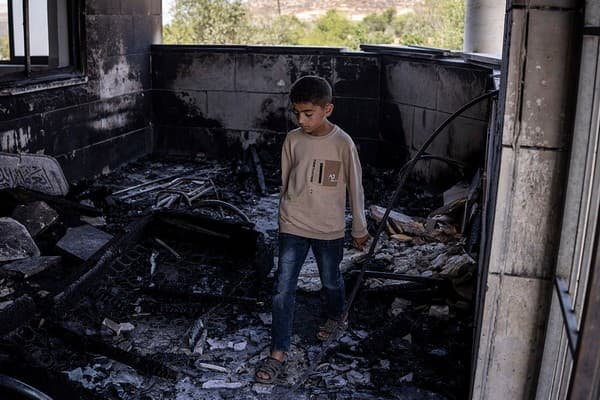
Palestinian boy in a mosque allegedly burned by Israeli settlers in Qusra, south of Nablus, on July 26, 2026 (John Wessels/AFP via Getty)

The army and settlers labelled it a “terrorist attack”, but former defence minister Moshe Yaalon and others blamed the settlers for initiating friction, and the army itself said settlers had failed to gain prior approval.
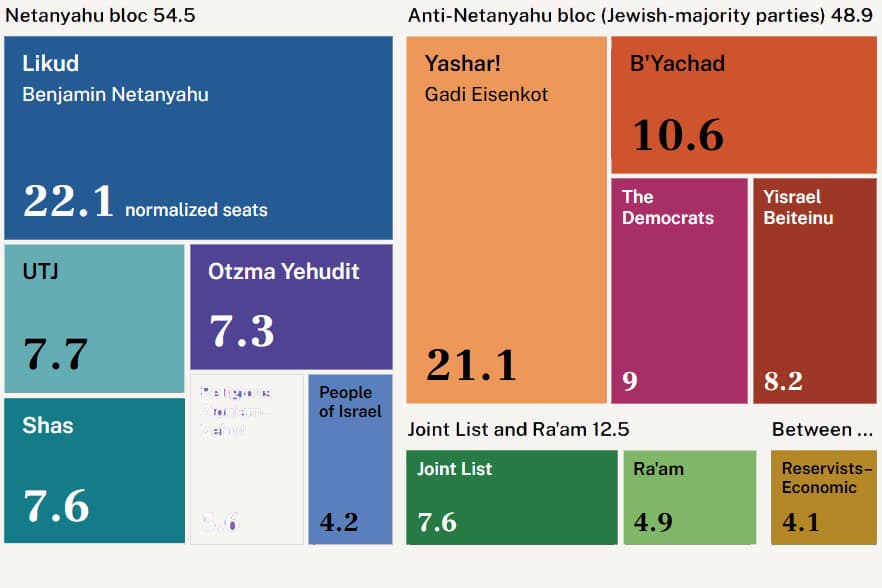
Katz’s call, despite its devastating humanitarian implications, evoked little comment other than praise from hawks. “This is the type of thing that thwarts terrorism, and if it is widened, I’m in favour of it,” Amir Avivi, director of the Israel Defense and Security Forum, told The Jewish Independent.

Nablus governor Ghassan Daghlas told TJI he could not discern “if Katz means it or if he is campaigning for the elections”.

He said the security situation in Nablus is under control and there is no reason for an Israeli military operation. “There are tensions in the area that the settlers impose, not the Palestinians.”

Risk of dispossession heightened

The predominance of strident voices like Avivi, and what Palestinian and left-wing Israeli analysts allege is wide public support for policies that harm Palestinians, leaves the civilian population of the West Bank at risk of being dispossessed with even greater intensity than previously during the coming period of campaign, elections, and what follows, analysts say.

“I don’t think we’ve had a more dangerous phase for our people and our cause since 1967,” says Ghassan Khatib, a veteran Ramallah analyst and former Palestinian Authority minister of labour. One main reason, he suggests, is that Israel is no longer a country whose people Palestinians can communicate with. “The Israelis have changed in many ways, including becoming very brutal and harmful,” he says.

“Any interaction becomes a big danger to [Palestinian] lives and property,” adds Khatib, who was recently involved in efforts to repair damage after settlers set fire to a mosque and burned cars in Jibya village near Ramallah.

Khalil Shikaki, director of the Palestinian Center for Policy and Survey Research in Ramallah, stresses: “It is [now] popular among Israelis to support extreme measures against Palestinians. This is something that materialised after October 7 and continues to be the view of the majority of Israelis.”

Israel denies wrongdoing in its policies towards Palestinians. Its defenders say actions are subject to review by the Supreme Court, which has also shifted to the right on Palestinian humanitarian issues.

Israelis feel tougher stance justified by Oct 7

Many Israelis feel that suspicion towards Arabs and adopting a tough security posture were necessitated by the Hamas atrocities against Gaza border communities.

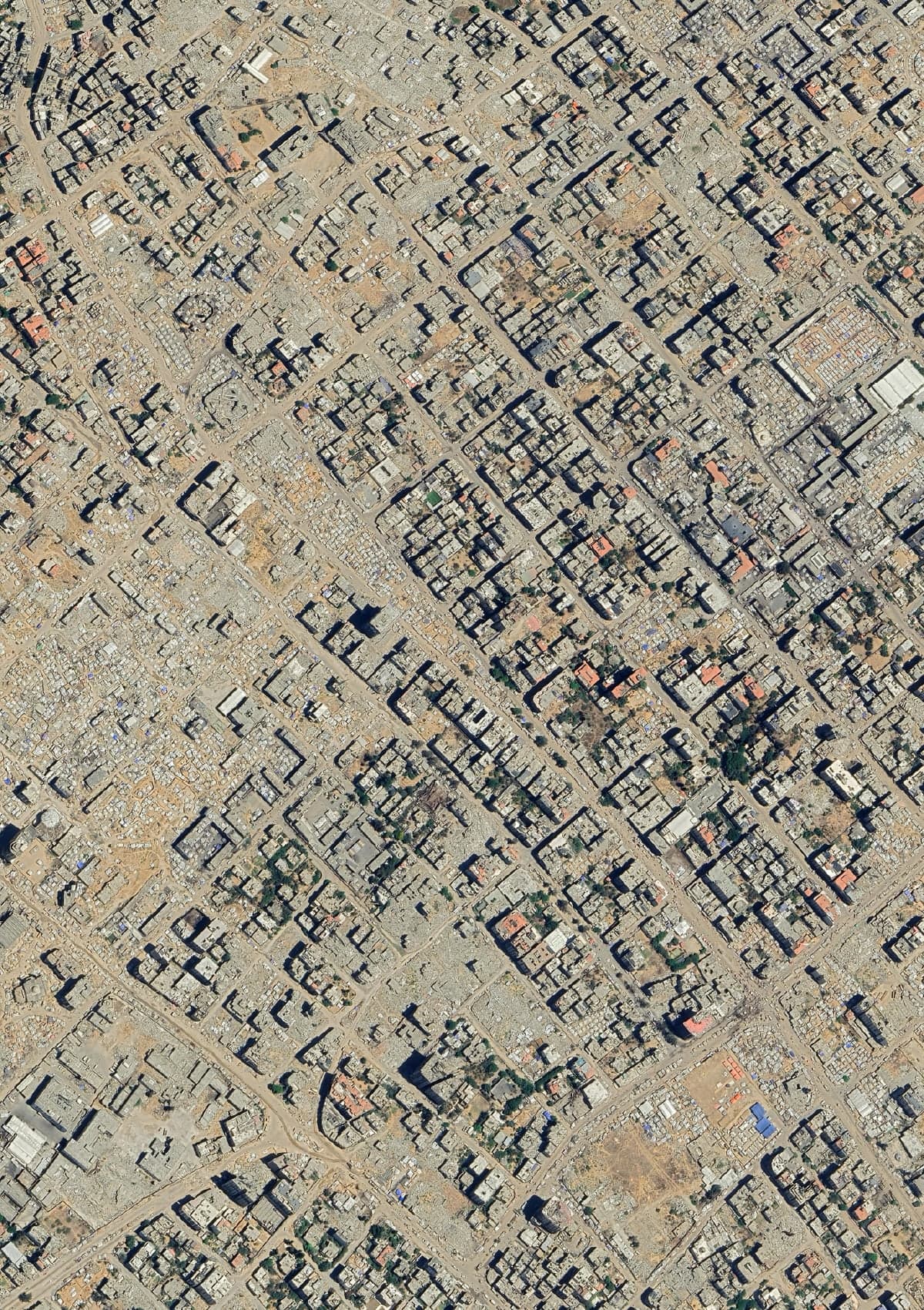
But relatively few Israelis have raised questions about alleged war crimes and the high death toll among civilians, continuing daily child fatalities, the deaths of more than 100 detainees, the levelling of most of the Strip’s buildings or even why the IDF continues to bar independent media access.

The West Bank analysts argue that similar tolerance or support has already been applied to alleged crimes by the army and settlers in their own occupied territory and that Palestinians will pay more individually and collectively for this behaviour.

The IDF says soldiers are under orders to detain violent settlers, although video evidence frequently shows soldiers cooperating with settlers or standing by idly as they attack Palestinians.

Last year, Religious Zionism party leader Bezalel Smotrich unveiled a plan to concentrate the Palestinian population into disjointed enclaves in just 12 per cent of the West Bank. Since October 7, state-sponsored settler violence has clearly emerged as the means for doing that, according to observers.

It is hard to overstate the degree of concern and feeling of vulnerability of Palestinians at this moment. The closer it gets towards election day, the greater the chances of mass expulsion and killing of Palestinians, warns Shikaki. The precedent is already in place, he argues, with West Bank communities' locales being destroyed and their inhabitants permanently forced out.

“I believe Gaza has already happened in area C,” he says, referring to the part of the West Bank under full Israeli control according to self-rule agreements, where many herding communities have disappeared under pressure from settlers and the army.

“Gaza has happened in parts of area B (under Israeli military control and Palestinian civil control according to the agreements) and in area A (specified by the agreements as being under full Palestinian control).”

Shikaki emphasised that in three refugee camps situated in area A, “the army has remained exactly in the same fashion that it has destroyed and ethnically cleansed and stayed in in Gaza.”

He believes we are likely to soon see a change on the ground that Netanyahu and Smotrich are sure to exploit: desperate Palestinians turning to individual or “lone wolf attacks” against Israeli targets using knives, vehicles and guns if they have them.

Anger could spark ‘lone wolf’ attacks

“There is no doubt a lot of people have reached the point when they will begin to act out the frustration and hatred they feel towards the settlers, army and Israeli government. It’s just a matter of time.”

He predicts this will play into the hands of Netanyahu and Smotrich and enable them to implement large expulsions and other drastic Gaza-style steps. “They have reason to believe the Israeli public will support such measures and reward them on election day.”

Menachem Klein, emeritus professor of political science at Bar-Ilan University, agrees with Shikaki that the coming period will likely see major changes in the West Bank at Palestinian expense. “It’s very reasonable to believe that we are on the brink of ‘concentration and expansion’.

“This means not the occupation of all of the West Bank, but rather moving and concentrating the population into big cities and disconnecting the cities.”

Precedent for this is being established in the northern city of Jenin, where Israel is building an army base where refugee camp residents lived until their expulsion last year.

He predicts a very large number of Palestinians will be displaced, with no meaningful Israeli or foreign opposition. “The international community doesn’t care. What’s the problem? Israel has done this in Gaza on a larger scale.”

You might also like
  • Israel is cementing its control over the West Bank and East Jerusalem while the world is distracted
    Martin Kear
  • Abuse by IDF soldiers humiliates Muslim Palestinians
    Ben Lynfield
  • Zomi investigation delivers new low in Australia-Israel relations
    Michael Visontay
logomark.67a07ee3
We believe in the free flow of information

Republish our articles for free, online or in print, by using our Creative Commons licence

You might also like

    beautiful six hostages
    Israel Votes 2026OpinionIsrael

    The memory of the hostages should guide Israel’s choices for the future

    Nirit Eylon
    Ofer_Winter_2026
    Israel Votes 2026AnalysisIsrael

    Who is Ofer Winter and could he upset Netanyahu’s election?

    Shahar Burla
    fly to vote
    Israel Votes 2026OpinionIsrael

    Flying to vote is an act of love, not impudence

    Shahar Burla

About the author

Ben Lynfield

Ben Lynfield

Ben Lynfield covered Israeli and Palestinian politics for The Independent and served as Middle Eastern affairs correspondent at The Jerusalem Post. He writes for publications in the region and has contributed to the Christian Science Monitor, Foreign Policy and the New Statesman.

More from the author

NewsIsrael

Abuse by IDF soldiers humiliates Muslim Palestinians

OpinionIsrael

Qusra siege exposes shared agenda of IDF and settler extremists

FeatureIsrael

Abuse of Palestinian detainees a ‘systemic issue’, say Israeli doctors

Comments2

  • Avatar of Mark Ian

    Mark Ian2 August at 10:47 pm

    The Fanatics amongst the Jewish and Arabic are causing violence that prevent reconciliation among peoples .

  • Avatar of Steve Holstein

    Steve Holstein30 July at 09:05 am

    This incitement seems to be endorsed in moves barely concealed by the current extremists in the Netanyahu led govt. It is their ONLY election strategy at this critical time for Israel. The violence and incitement has also, of late, targeted independent, mainstream Israeli journalists and respected judges in Tel Aviv. Netanyahu handed effective control of the police in Israel and the territories to his fruitcake extreme right ministers. Sadly the “election” violence looks set to continue.