Aa
  • Read, Watch, Listen
  • TJI Series
  • Community Action
  • Events
  • Zedi
Follow us and continue the conversation
  • LinkedIn
  • Instagram
  • FaceBook
  • X
  • YouTube
Test yourself with the TJI Quiz!

Adjust size of text

Aa

Follow us and continue the conversation

  • LinkedIn
  • Instagram
  • FaceBook
  • X
  • YouTube

Your saved articles

You haven't saved any articles

What are you looking for?

Original reporting, insightful analysis and diverse views, delivered straight to your inbox

  • LinkedIn
  • Instagram
  • FaceBook
  • X
  • YouTube
Your support fuels our mission to inform, entertain and inspire.

The Jewish Independent is bound by the Standards of Practice of the Australian Press Council. If you believe the Standards may have been breached, you may approach The Jewish Independent or make a complaint to the Australian Press Council in writing at www.presscouncil.org.au. The Council may also be contacted on 1800 025 712.

  • Our Story
  • Contact us
  • Our Team
  • Support us
  • Guidelines
  • Pitch your idea
  • Republishing us
  • Community Action
  • Our Awards
  • LinkedIn
  • Instagram
  • FaceBook
  • X
  • YouTube
Aboriginal FlagTorres Strait Islanders Flag

The Jewish Independent acknowledges Aboriginal and Torres Strait Islander peoples as the Traditional Owners and Custodians of Country throughout Australia. We pay our respects to Elders past and present, and strive to honour their rich history of storytelling in our work and mission.

© The Jewish Independent 2026All Rights Reserved
Website design and development by Your Creative, MelbourneTerms & ConditionsPrivacy Policy
HomeRead, Watch, ListenIsrael
OpinionIsrael

Qusra siege exposes shared agenda of IDF and settler extremists

When the IDF fails to protect Palestinians attacked by extremists, it is facilitating ethnic cleansing and the government is as culpable as the settlers
Ben Lynfield
Print this
Activists attempt to deliver supplies to Palestinian families near Nablus

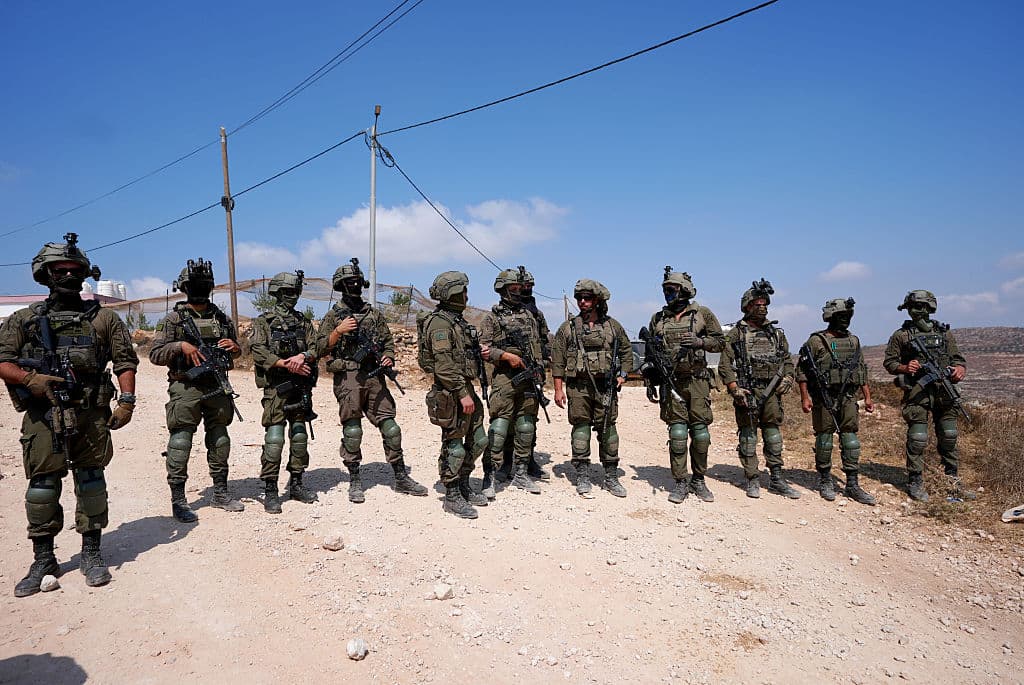
Israeli soldiers block access to Qusra, where extremists are laying siege to Palestinian homes (Issam Rimawi/Anadolu via Getty Images)

Published: 20 August 2026

Last updated: 24 August 2026

As a settler siege in the occupied West Bank village of Qusra continues, an uncomfortable question intensifies: is there a genuine distinction between IDF soldiers and extremist settlers bent on ethnic cleansing?

The settler siege of three houses in the village of Qusra, south of Nablus, marked its 11th day on Wednesday. It appears settlers besieging Palestinian homes are trying to oust the residents and move into their dwellings. The IDF could speedily end the siege but has not done so.

Leading Israeli analysts say that the army shares the same goal as the settlers, that of the far-right Netanyahu government: forcing Palestinians from as much of the West Bank as possible and annexing the territory.

“There is a government policy of ethnic cleansing,” says Salim Brake, a political scientist at the Open University. “Who does it? The settlers with the backing of the army.”

At the time of this writing, it remained unclear if Israel was hoping to wait out the bad publicity and keep up the siege or if some external pressure could still stop the forced removal of the Palestinians and theft of their houses.

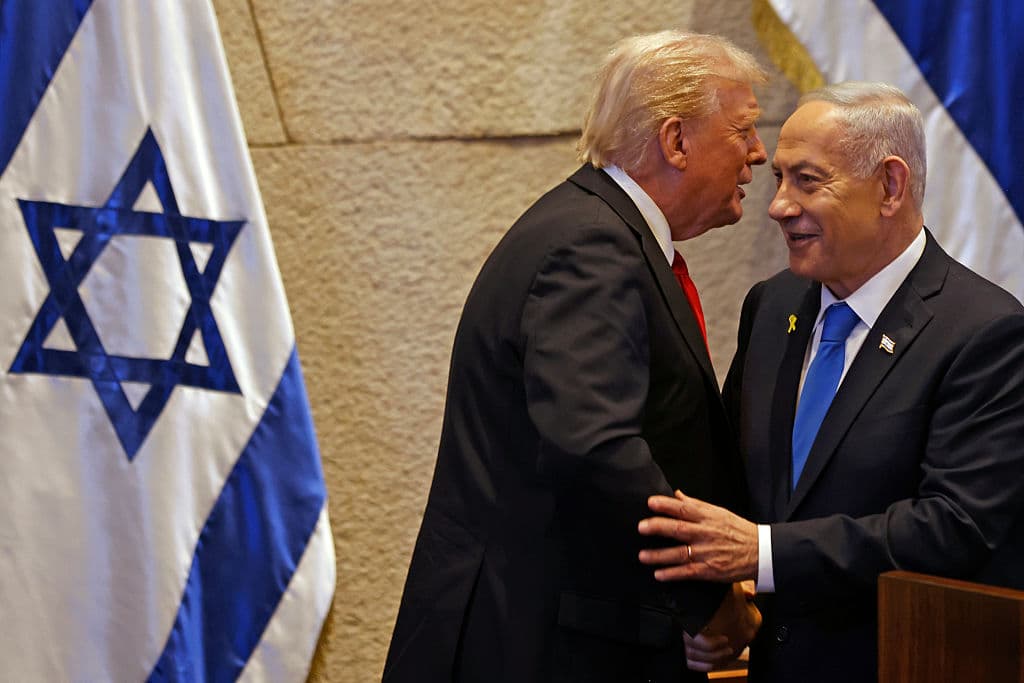
As the siege and its accompanying Israeli public relations fiasco continued, Defense Minister Israel Katz announced Friday that he had instructed the IDF to formulate a plan to transfer law enforcement involving Israeli civilians in the West Bank to the Israel Police from the IDF. This would mean a reversal of practice in effect since 1967, a violation of international law which defines the army as the occupying power, and a major annexation step.

Dalal Iriqat, a political scientist and member of the Fatah Revolutionary Council, a leadership grouping of the political movement headed by Mahmoud Abbas, told The Jewish Independent that Katz’s remarks are a “green light to settlers to attack Palestinians”.
“I only see violence erupting. I don’t see anyone stopping the settlers. Israeli soldiers are protecting them. The international community didn’t do anything to stop this. They are besieged in their own homes, this has been ongoing for a while and nobody has stopped them.” She added that the West Bank as a whole is extremely volatile because of “a continued system of terrorising Palestinians”.

“I’m warning that this will lead to confrontations because people need to protect themselves and deserve protection,” Iriqat said.

Israeli analyst Yossi Alpher said Katz’s announcement was likely meant to stave off criticism of his handling of the siege. “It’s a way for Katz to evade responsibility,” he said. It seemed questionable that the statement was intended for rapid implementation, coming just two months before elections. Brake dismissed it entirely as a “strange proposal” that would not be followed up. It aimed at misleading the international community to believe that such a change would bring about action against settler violence, he added.

Although settler leaders say that only a very small number of people are involved in crimes against Palestinians, Brake says the violence campaign, which, according to UN figures, has fully or partly displaced 127 communities since January 2023, is a comprehensive policy based on “division of labour”.

Settler media depicted the Qusra trespassers as a very small group, and the head of the Yesha council representing 500,000 settlers strongly condemned the siege, perhaps out of concern it was giving the settlement enterprise as a whole a bad name. “What happened in Qusra is improper and unacceptable to us,” Israel Ganz said.

However, Brake says settler leaders are an integral part of the problem in Qusra and elsewhere. “Whoever says it is a few people is lying. The settlers help and send people and finance it, so does the army and so does the government. If a settler sets up a booth somewhere, the government comes and brings electricity, water and a phone connection. They will say ‘it’s the Hilltop Youth’, but it’s clear there is an overarching policy.”

Developments thus far do not augur well for the owners. After a cut-off of water and electricity to the homes to start the siege, and the setting up by settlers of a tent for an outpost, IDF soldiers who arrived at the scene, rather than detain the settlers, warmly greeted them and recited prayers with them.

What followed was a series of dubious attempts to dislodge the settlers that fell short of undermining them, even though last Wednesday soldiers took down the tent and fired sound grenades. But then the troops withdrew.

Soldiers early on had declared a closed military zone, but they applied it to Palestinians and solidarity activists, not settlers. Rights groups say IDF soldiers generally stand idly by or join settlers in violence. The army says soldiers have orders to detain violent settlers, though the solidarity activists say that settlers tell soldiers who to arrest. In recent months, settlers, using government and army-backed outposts as springboards, have turned to a new tactic of laying siege to individual houses on the edge of villages, which are larger than the herding communities they have eliminated or are in the process of eradicating.

The case of Qusra became high-profile largely because one of the homes is owned by an American citizen, placing a media spotlight on the IDF’s role and the government’s harsh West Bank policies. Prime Minister Benjamin Netanyahu has made no comment on the siege.

On Monday, when Palestinian-American Louai Ridi arrived from the US in a bid to save his house, he found four settlers squatting outside, CNN reported. He raised a US flag over the house, hoping it would spur the US government into action. Despite US ambassador Mike Huckabee at one point terming the settlers “terrorists”, it has not been lost on West Bank Palestinians with American citizenship that, thus far, the US does not seem to be using its leverage to force Israel to lift the siege.

“The inaction of the US is very concerning,” Yasser Alqam, external relations director of the municipality of the nearby village of Turmusaya, most of whose residents are US citizens, told The Jewish Independent. “What if this happens in Turmusaya or other towns? Is it going to be the same?”

Israeli political parties, most of which are competing for right-wing voters, won’t be coming to the rescue of the threatened homeowners either, though Gilad Kariv, a legislator from the left-wing Democrats party, criticised the siege.

“Netanyahu does not want to sharply criticise this for fear of losing supporters in his own camp,” Alpher says. As for the opposition, everyone besides the Democrats is either centrists or right-wingers, he notes. “They feel that the way to pull voters away from the coalition is not to criticise Qusra and the behaviour of the extremist settlers but rather to attack other points that are more mainstream.”

Of Netanyahu’s main challenger, Alpher adds: “ [Gadi] Eisenkot won’t criticise what is happening in the West Bank too closely for fear of losing votes,” he said.

“The bottom line is that this is increasingly a right, racist, messianic country,” Alpher says.

You might also like
  • ‘Israel is systemically eliminating Palestinian collective life’:  B’Tselem
    Deborah Stone
  • Tame apologises – but with little grace
    Deborah Stone
  • Confronting Richard Flanagan and the myth of the Israel lobby
    Mary Garden
logomark.67a07ee3
We believe in the free flow of information

Republish our articles for free, online or in print, by using our Creative Commons licence

You might also like

    ISRAEL-LGBTQ-PRIDE-PARADE-PALESTINIAN-CONFLICT-HOSTAGES
    NewsIsrael

    LGBT asylum seekers caught between Palestinian violence and Israeli bureaucracy

    Jarod Rhine-Davis
    Arab Israeli Palestinian election vote
    Israel Votes 2026FeatureIsrael

    Fear of Netanyahu victory may drive big surge in Palestinian voter turnout

    Ben Lynfield
    Rozana Beit Oula
    PeacebuildingOpinionIsrael

    Peacebuilding through the eyes of a sceptic

    Ron Finkel

About the author

Ben Lynfield

Ben Lynfield

Ben Lynfield covered Israeli and Palestinian politics for The Independent and served as Middle Eastern affairs correspondent at The Jerusalem Post. He writes for publications in the region and has contributed to the Christian Science Monitor, Foreign Policy and the New Statesman.

More from the author

FeatureIsrael

Fear of Netanyahu victory may drive big surge in Palestinian voter turnout

NewsIsrael

Abuse by IDF soldiers humiliates Muslim Palestinians

AnalysisIsrael

IDF ordered to evict West Bank camp in election show of strength

Comments

No comments on this article yet. Be the first to add your thoughts.