Aa
  • Read, Watch, Listen
  • TJI Series
  • Community Action
  • Events
  • Zedi
Follow us and continue the conversation
  • LinkedIn
  • Instagram
  • FaceBook
  • X
  • YouTube
Test yourself with the TJI Quiz!

Adjust size of text

Aa

Follow us and continue the conversation

  • LinkedIn
  • Instagram
  • FaceBook
  • X
  • YouTube

Your saved articles

You haven't saved any articles

What are you looking for?

Original reporting, insightful analysis and diverse views, delivered straight to your inbox

  • LinkedIn
  • Instagram
  • FaceBook
  • X
  • YouTube
Your support fuels our mission to inform, entertain and inspire.

The Jewish Independent is bound by the Standards of Practice of the Australian Press Council. If you believe the Standards may have been breached, you may approach The Jewish Independent or make a complaint to the Australian Press Council in writing at www.presscouncil.org.au. The Council may also be contacted on 1800 025 712.

  • Our Story
  • Contact us
  • Our Team
  • Support us
  • Guidelines
  • Pitch your idea
  • Republishing us
  • Community Action
  • Our Awards
  • LinkedIn
  • Instagram
  • FaceBook
  • X
  • YouTube
Aboriginal FlagTorres Strait Islanders Flag

The Jewish Independent acknowledges Aboriginal and Torres Strait Islander peoples as the Traditional Owners and Custodians of Country throughout Australia. We pay our respects to Elders past and present, and strive to honour their rich history of storytelling in our work and mission.

© The Jewish Independent 2026All Rights Reserved
Website design and development by Your Creative, MelbourneTerms & ConditionsPrivacy Policy
HomeRead, Watch, ListenIsrael
NewsIsrael

Abuse by IDF soldiers humiliates Muslim Palestinians

IDF soldiers forced the mayor and eleven municipal councillors of Beit Furik to remain in a Muslim prayer position at gunpoint while inflicting physical and verbal abuse, victims told The Jewish Independent
Ben Lynfield
Print this
Ibrahim Khatatbe

Ibrahim Khatatbe, next mayor of Beit Furik who was among those attacked by IDF soldiers (Ben Lynfield)

Published: 27 August 2026

Last updated: 27 August 2026

IDF soldiers forced the mayor and 11 municipal councillors of Beit Furik, near Nablus, to remain for hours in a Muslim prayer position at gunpoint, beating or kicking them if they moved, victims of the attack last Saturday told The Jewish Independent.

“They demanded that we put our hands behind our heads and put our heads on the ground as in prayer. Anyone who moved got hit hard.” Ahmad Nasasrah, executive director of the municipality, said during an interview at his home, as he winced in pain from two broken ribs.

Those present during the attack said it was carried out by four men in IDF uniforms who had used a car with civilian, not military, license plates. The license plates suggest the soldiers are settlers who are in army units charged with guarding settlements.

The victims said they were also subject to verbal abuse, telling them, “You are terrorists, you were happy on October 7”, “You will be expelled to Jordan,” and “You are happy when there are terror operations.”

Nasasrah and three other local leaders were treated at Rafidya Hospital in Nablus while others were treated at a local clinic after the attack. The IDF did not respond to a request for comment.
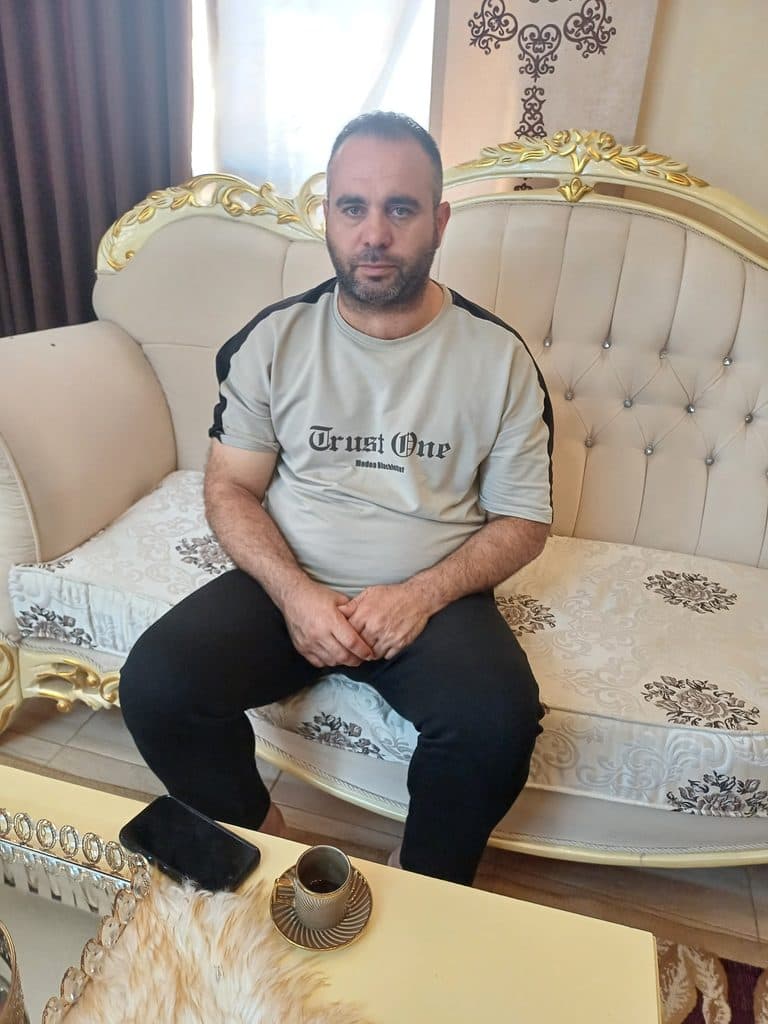
Ahmad Nasasrah, one of the victims of the attack

The problem inside the IDF

The Beit Furik attacks stand out for both the humiliating use of Islamic prayer and the prominence of the people who were targeted.

It casts a spotlight on the grey zone between settler attacks and IDF abuse. Palestinian civilians in the West Bank are often depicted as suffering mainly at the hands of extremist settlers, not the military, even by left-wing politicians. But some of the settlers are soldiers, and many of the soldiers enable or even participate in attacks.
Doron Meinrath, a retired colonel who served as director of planning on the IDF general staff and is now an activist in the group Looking the Occupation in the Eye, said the incident was severe and part of a moral and operational deterioration in the army.

“The soldiers used their authority to embitter life for the Palestinians, in this case honourables and local councillors. In general, it shows a very, very, very serious problem in the army.”

Meinrath said the soldiers are most likely members of the army’s settlement security unit, whose personnel are fully fledged IDF soldiers who come from settlements. They are supposed to defend the settlements but very often attack Palestinian areas, according to rights groups and Palestinians.

Religion was the focus of the abuse

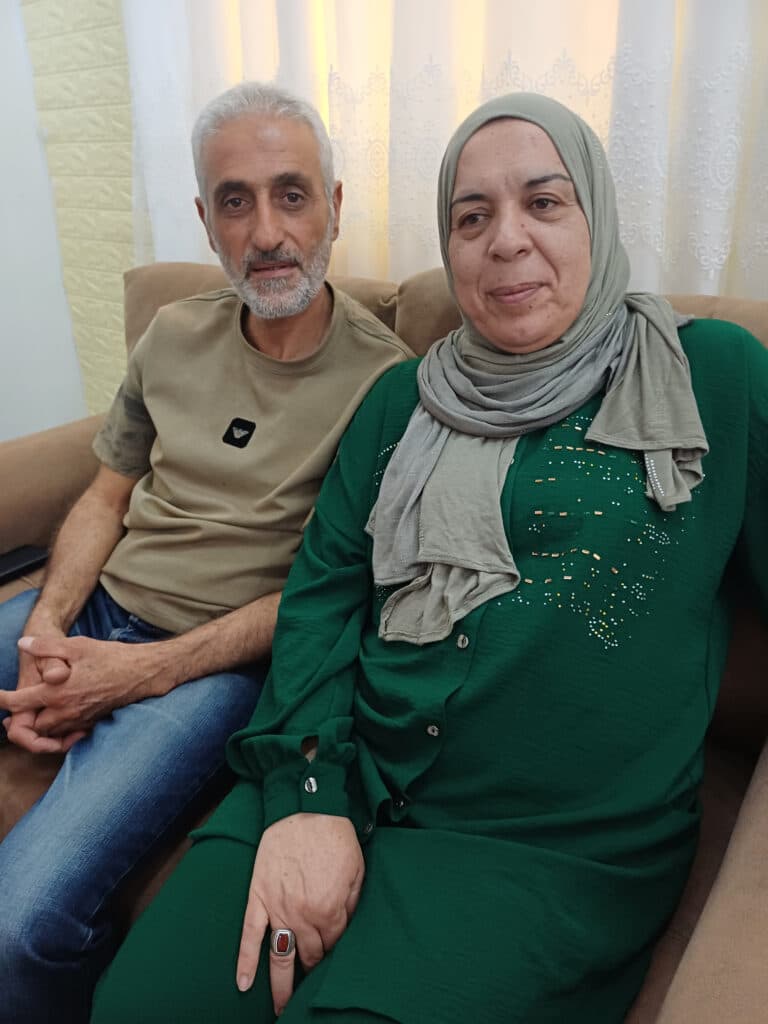
Amal Nasasrah, 49, a nurse from the same extended family, who is one of four women on the town council, said all four of them were also forced into the prayer position, though they were not beaten. She said the local officials were on their way to an eastern part of Beit Furik to hold their weekly meeting when the soldiers stopped each of the four cars they were travelling in.

The idea had been to hold the meeting outside the municipality building in a mosque situated on Beit Furik land in an area facing settler violence, to show solidarity with residents there, Amal Nasasrah said. That area is classified as area B according to self-rule agreements, placing it under Palestinian civilian control and Israeli security control.

The last car to be stopped was occupied by Yusuf Hanani, current mayor of Beit Furik, she said.

“When the soldiers saw everyone had come, they said, ‘You are Muslims. You must pray’.” The soldiers had forced them into an olive grove, she said.

“Ahmad [Nasasrah] told them, “its not the prayer time now.” A soldier shouted to him, shut up and put your head to the ground.

They forced them into three rows as if it was real mosque prayers and positioned one councillor, Zeid Ali Nasasrah, opposite the others in the role of the imam, or prayer leader, she said.

“The soldiers lined us up and forced us to do the raka [prostation],” she said.  “I thought we were going to die, that they might open fire on us.

Amal Nasasrah (right) with her husband after the attack

“I couldn’t breathe. I told the soldiers I can’t stay in this position. The soldier said no, put your head on the ground. Ahmad Masasrah said that when the group tried to speak up against their treatment, the soldiers “shot a sound bomb from two to three metres away. It was very dangerous because it was so close. They also fired two tear gas canisters on the land near us.”

'They left me for dead'

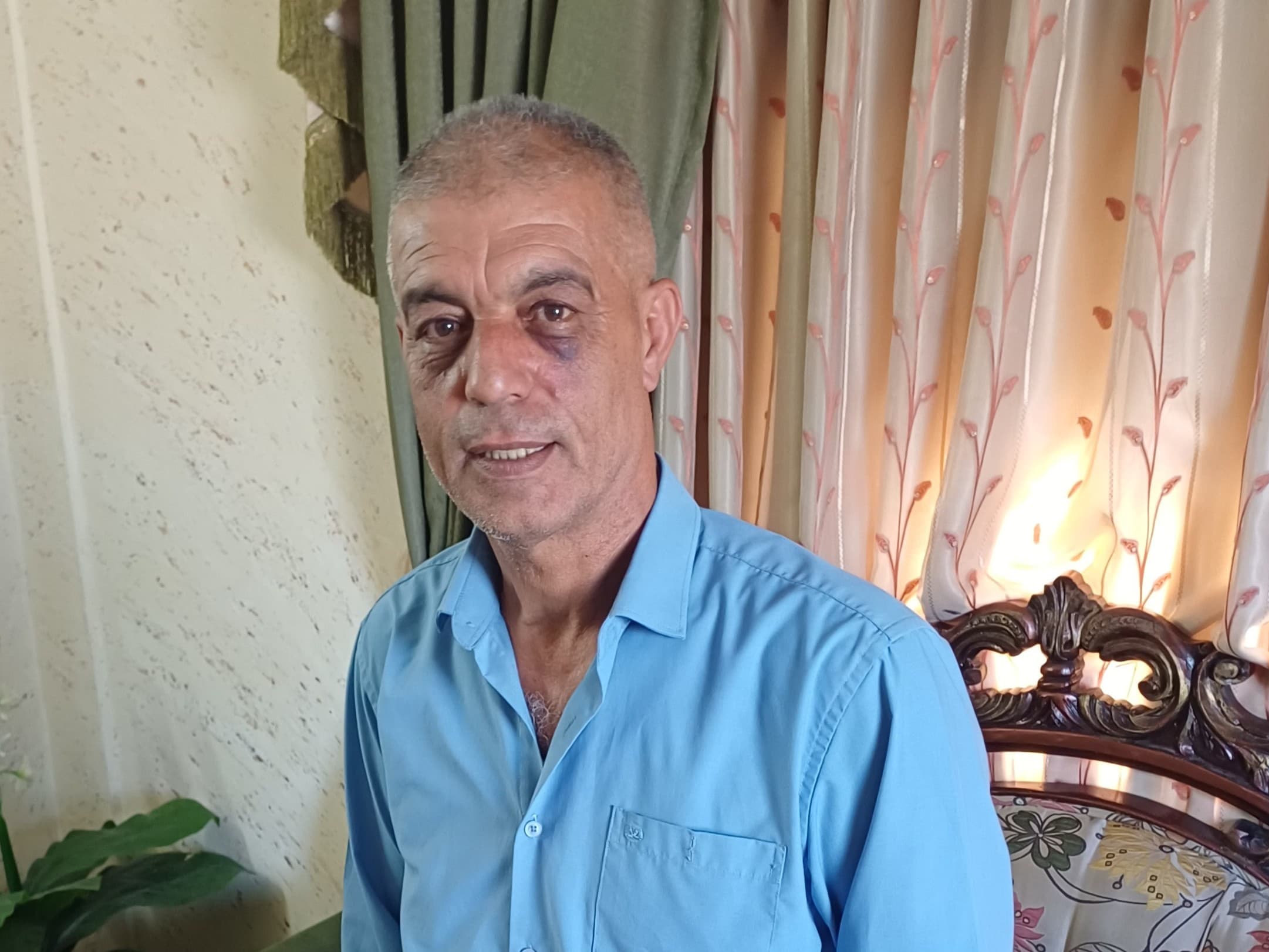
A 60-year-old retired colonel in Palestinian Authority security forces, Ibrahim Khatatbe, who is scheduled to become the next mayor of Beit Furik, was separated from the rest of the group and severely beaten. He was also cuffed behind his back with plastic restraints. His daughter told The Jewish Independent at his home that he was kicked, hit with an M-16, and struck with brass knuckles. His eyes were visibly blackened and swollen, and he had incurred a broken rib. He said a soldier had touched his eye with a gun as he lay on the ground and that he suffered bleeding. “They thought I was dead, they left me for dead,” he said.

Khatatbe said the attack was carried out “because the settler terror wants to scare the people so they will leave their houses and flee”. He said this is happening across the West Bank, an assessment shared by much of the international community. Settler leaders say the issue is being exaggerated and that the real security problem in the West Bank comes from Palestinian attacks on Israeli citizens.

“I don’t know if this was settlers, security or the army,” he said.

Ahmad Masasrah said that people from the town heard about what was happening and gathered near where they were being held. He said the soldiers prevented an ambulance from evacuating the wounded.

But then other soldiers pulled up in a jeep, gave people water, and let the ambulance pick up Ahmad Nasasrah and told the group they could take the wounded. It had been a three-hour ordeal.

Amal Nasasrah said the soldiers in the jeep were friendly to the ones who had staged the abuse, with one giving them a thumbs up and another fist bumps.

She said the councillors will try again to reach the troubled area they were kept from. “Another Saturday we will go and do the same. But you have people who are afraid to go to their land,” she said.

You might also like
  • Beinart takes a wrecking ball to Israel
    Michael Visontay
  • Zomi investigation delivers new low in Australia-Israel relations
    Michael Visontay
  • Qusra siege exposes shared agenda of IDF and settler extremists
    Ben Lynfield
logomark.67a07ee3
We believe in the free flow of information

Republish our articles for free, online or in print, by using our Creative Commons licence

You might also like

    US President Donald Trump greets Israeli Prime Minister Benjamin Netanyahu
    Israel Hamas WarAnalysisIsrael

    Netanyahu rejects Trump’s Gaza plan, testing US influence in the region

    Shahar Burla 2
    Democracy protest
    Israel Votes 2026AnalysisIsrael

    What ‘Zionism’ means in Israel:  it’s not what you think

    Ittay Flescher 1
    Palestinians Inspect Fire-Damaged Home Following Settler Attack Near Nablus
    OpinionIsrael

    The West Bank After Tel: a line in the sand has been crossed

    Mohammad Asideh

About the author

Ben Lynfield

Ben Lynfield

Ben Lynfield covered Israeli and Palestinian politics for The Independent and served as Middle Eastern affairs correspondent at The Jerusalem Post. He writes for publications in the region and has contributed to the Christian Science Monitor, Foreign Policy and the New Statesman.

More from the author

OpinionIsrael

Qusra siege exposes shared agenda of IDF and settler extremists

AnalysisIsrael

IDF ordered to evict West Bank camp in election show of strength

FeatureIsrael

Abuse of Palestinian detainees a ‘systemic issue’, say Israeli doctors

Comments

No comments on this article yet. Be the first to add your thoughts.